
Government to Overhaul Outdated Cooperatives Law
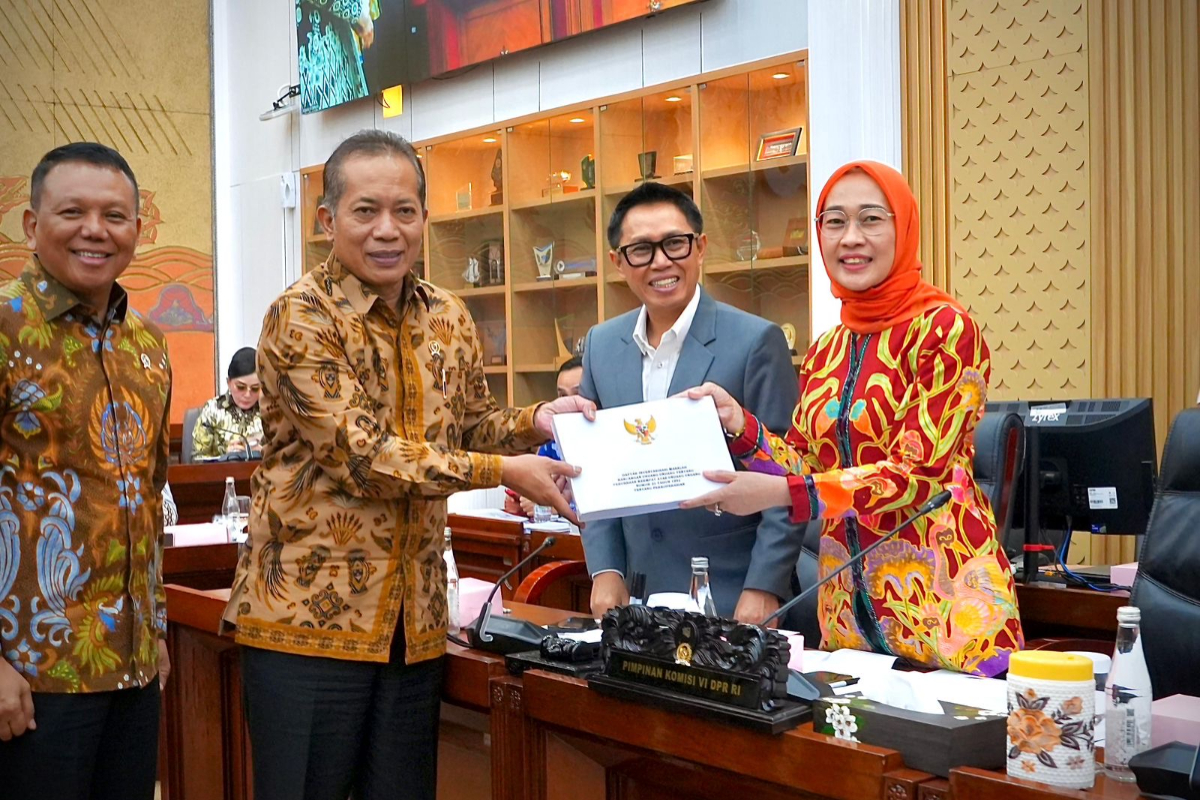
The government has declared its full commitment to overhauling Indonesia’s cooperative regulations, which are considered outdated. This move is marked by the government’s readiness to discuss the Draft Law on the Fourth Amendment to Law Number 25 of 1992 concerning Cooperatives.
Minister of Cooperatives Ferry Juliantono revealed that the existing Cooperatives Law is 34 years old and no longer relevant to current dynamics. This House of Representatives initiative bill is seen as a significant momentum to reorganise the cooperative ecosystem holistically and comprehensively.
“In its development, Law Number 25 of 1992 is considered no longer relevant. This is a major momentum for the nation to thoroughly reorganise cooperative life in Indonesia,” Ferry stated during a working meeting with House Commission VI in Jakarta on Wednesday.
After examining the draft bill proposed by the House, Ferry outlined several crucial issues requiring further deliberation, one of which concerns the adoption of digital technology by cooperatives. According to him, digitalisation offers great opportunities for speed, ease, and affordability of services, as well as improving accountability and transparency. However, he stressed the need to deepen regulations regarding the types of technology and their management to ensure safe utilisation.
The next crucial issue concerns supervision and the protection of members’ funds. The government highlights the importance of establishing an institution that handles licensing, regulation, and supervision of cooperative savings and loan businesses, as well as the formation of a Cooperative Deposit Insurance Corporation. This institution would guarantee members’ savings in Savings and Loan Cooperatives.
“It is hoped that this will increase the confidence of members and the public to use savings services in cooperatives without fear of default, as occurred in 2020,” he said.
In addition to deposit protection, the instrument of law enforcement through criminal sanction provisions is also a sharp focus of the government. The Minister of Cooperatives considers that criminal sanctions are, in principle, needed to protect the interests of cooperative members and the wider community. Nevertheless, he cautioned that the formulation of these criminal articles must be done with great care.
“Caution is needed in the formulation so that it is not counterproductive, not misdirected, and does not open opportunities for criminalisation, taking into account the literacy level of administrators, supervisors, members, or the general public,” he stressed.
Lastly, he also mentioned the need to deepen provisions regarding the ecosystem and the roles and functions of each stakeholder with the government. The government is optimistic that if this bill is passed by accommodating these strategic issues, the face of Indonesian cooperatives will be completely transformed and able to restore its position as a pillar of the national economy.
“With this law, we believe the dream of making cooperatives the pillar of the Indonesian economy is more likely to be achieved. Including the dream of delivering one or several Indonesian cooperatives into the ranks of the world’s top 300 cooperatives within the next 10 to 20 years can be realised,” Ferry explained.