
Government to Overhaul Fortified Rice Governance
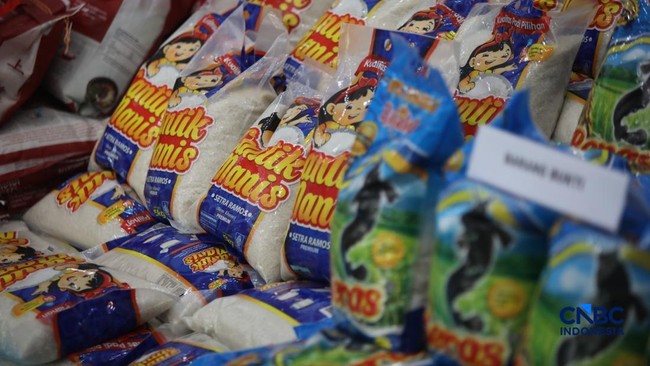
Jakarta, CNBC Indonesia — The government is beginning to overhaul the management of fortified rice distribution in Indonesia. One issue now under scrutiny is the lack of clarity over which government authority is responsible for verifying the quality of fortification kernels used by producers.
The National Food Agency (Bapanas) says it has not received assurances that the fortification kernels used to produce fortified rice have undergone quality verification. These kernels contain vitamins and micronutrients that are a key component of fortified rice products.
Andriko Noto Susanto, Bapanas deputy for consumption diversification and food safety, said the agency is coordinating with the Food and Drug Monitoring Agency (BPOM) and the Ministry of Industry to determine which authority should verify the kernels.
“We have also yet to receive assurances that the quality of the fortification rice kernels has been verified. We have established the standards. We are coordinating with BPOM and the Ministry of Industry on which authority should verify the kernels,” Andriko said in a statement quoted on Tuesday (3 November 2026).
According to Andriko, one issue identified in monitoring fortified rice and reported by Bapanas to the National Police was nutritional content that did not match the claims on product labels.
In production, fortification kernels are mixed with ordinary rice. The kernels are the vehicle for the vitamins and micronutrients added to the product.
“One reason the fortified rice recently failed to meet requirements was that its nutritional content did not match the claims. We believe that if there is an authority to verify the kernels, such as BPOM or the Ministry of Industry, that would establish that the kernels used by fortified-rice producers have been verified. The resulting product should then be sound,” he said.
As part of the overhaul, Bapanas has also imposed a moratorium on issuing Fresh Plant-Origin Food (PSAT) distribution permits for fortified rice. The measure followed monitoring results showing that most of the fortified-rice brands inspected failed to meet requirements. Of the 27 brands tested, 25 were found to have problems.
“As the head of Bapanas, Amran Sulaiman, has said, 25 of the 27 brands failed to meet the requirements for fortified rice. We have also issued a letter imposing a moratorium, given that fewer than 10% of businesses producing fortified rice meet the requirements,” he said.
The moratorium also affects businesses seeking to resume production of fortified rice. Andriko said eight businesses in East Java had applied to produce it again, but their applications could not be processed until the government had established better governance arrangements.
“Eight businesses in East Java have recently applied to produce fortified rice again, but we are imposing a moratorium until we have improved governance for fortified rice,” Andriko said.
Previously, Bapanas head and Agriculture Minister Amran Sulaiman said the moratorium on PSAT distribution permits for fortified rice was intended to protect consumers.
“For fortified rice, we have imposed a moratorium. This must not happen again. It is simply deceiving our consumers. There can be no tolerance for this. President Prabowo has ordered that mafias and corruptors be driven out of the Republic of Indonesia,” Amran said.
The 25 problematic brands were identified through Bapanas monitoring conducted from July to August 2026 in 11 provinces. The agency collected 190 fortified-rice samples representing 27 brand names available on the market.
The 25 brands were produced by 11 companies. Two producers, whose products account for nine brands, have been confirmed as subject to investigation by the National Police’s Food Task Force. The findings followed Bapanas monitoring in late July 2026, when laboratory results showed that 80% of 15 brand samples tested had nutritional content that did not match label claims. Some fortified-rice samples were also found to lack PSAT distribution permits.
Based on its monitoring and sample testing, Bapanas estimates that the price difference in these products could have caused consumer losses of Rp89 trillion.
Source: jawawa.id (https://jawawa.id/newsitem/government-to-overhaul-fortified-rice-governance-1793685052)
Originally published by CNBC Indonesia (https://www.cnbcindonesia.com/news/20261103101037-4-781802/pemerintah-akan-perbaiki-total-tata-kelola-beras-fortifikasi), translated from Indonesian