
Government to optimise dryland horticulture cultivation in 13 regions
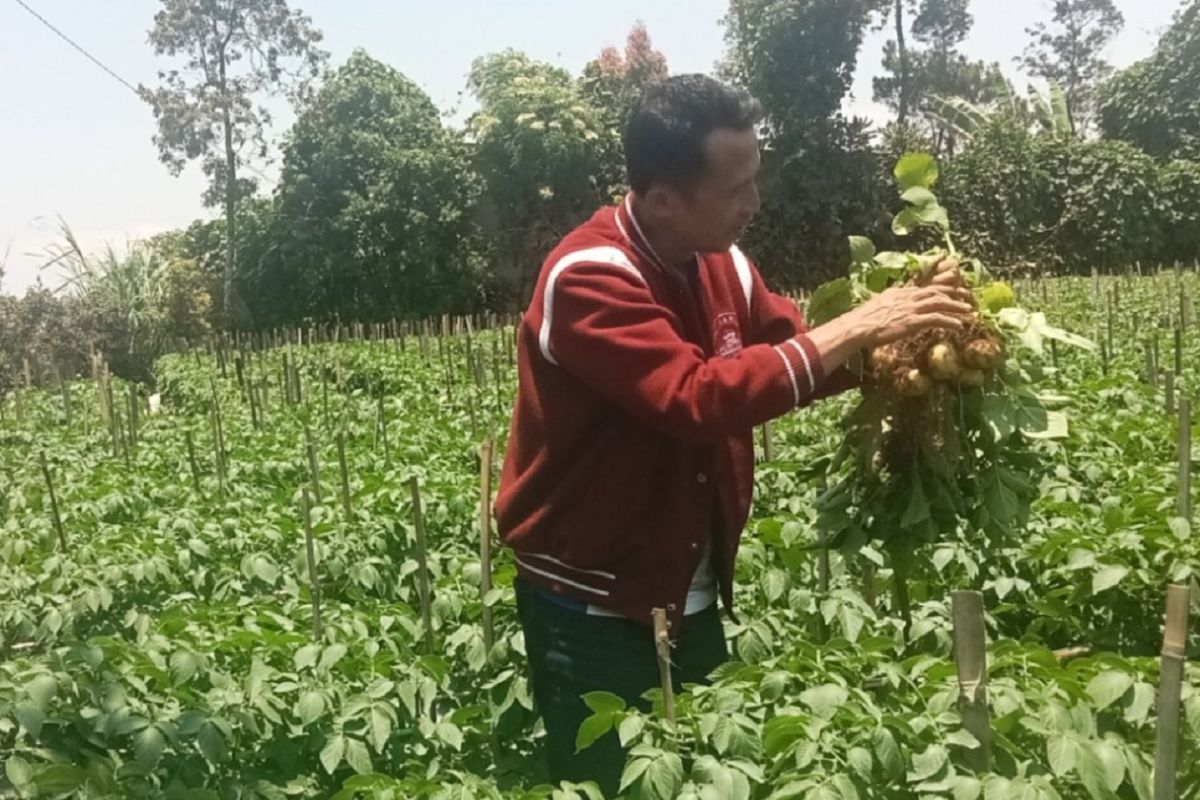
Jakarta (ANTARA) – The Agriculture Ministry, together with the Asian Development Bank (ADB) and the International Fund for Agricultural Development (IFAD), is preparing to optimise dryland areas for horticulture cultivation under the Horticulture Development in Dryland Areas Project (HDDAP).
Leli Nuryati, director of horticulture protection at the ministry’s Directorate General of Horticulture, said the project is planned for 2024–2029 and will cover 13 regencies in seven provinces. It aims to develop 10,000 hectares, or 1,000 horticulture clusters, involving 25,000 farmers.
“Dryland in Indonesia is like a sleeping giant. With its considerable potential, this marginal land can become a driver of the village economy. Horticulture cultivation is one way to achieve that,” she said in Jakarta on Wednesday.
Agriculture Ministry data show that Indonesia has 144.31 million hectares of dryland, of which 91.53 million hectares (63.4 per cent) are considered suitable for agriculture.
Of this potentially arable area, about 1.09 million hectares (1.19 per cent) are suitable for cultivating highland vegetables, while 53.59 million hectares (58.55 per cent) are suitable for fruit.
“Unfortunately, horticulture cultivation on this dryland has not yet been optimised,” she said during a webinar on strengthening plant protection and seed systems across the horticulture value chain, organised by Tabloid Sinar Tani.
HDDAP will cover a range of horticultural commodities, from fruit and vegetables to medicinal plants.
In North Sumatra, activities will take place in Pakpak Bharat, Dairi and Karo, focusing on chillies, shallots, potatoes, carrots, oranges and salak fruit.
In Ende, East Nusa Tenggara, the project will develop avocados and ginger. In Buleleng, Bali, it will focus on durians, mangosteens, shallots and leafy vegetables, while in Enrekang and Gowa, South Sulawesi, it will support shallots, potatoes and chillies.
On Java, the project will operate in Sumenep, Lumajang and Gresik in East Java, developing bananas, shallots, chillies and turmeric.
In Central Java, HDDAP will target Batang and Wonosobo regencies, developing avocados, bananas, potatoes and salak fruit. In West Java, it will operate in Sumedang, focusing on mangoes and chillies.
Leli said plant protection was one of the components in the HDDAP project design, alongside improvements to inputs, land, infrastructure and water services.
The component also covers seed and nursery production, soil fertility, water and land infrastructure, cultivation, and agricultural machinery.
To support horticulture protection, the Directorate of Horticulture Protection is preparing to build the capacity of plant pest and disease observers, provide protection equipment, promote environmentally friendly pest and disease control, and develop soil microbiology production units.
Meanwhile, Muhammad Agung Sunusi, the Agriculture Ministry’s director of horticulture seed production, said HDDAP was a concrete step towards building a stronger seed system over the next three years.
Local genetic resources will be a priority, supported by investment in research and development, infrastructure, and stronger seed-sector institutions.
“Through HDDAP, over the next three years we will focus our efforts in 12 regencies and cities, with local genetic resources as a key priority,” he said.
Agung said seed development must cover the entire value chain. Strengthening efforts will begin at horticulture seed centres, with oversight by plant seed inspectors, and then involve seed growers and farmer economic institutions before seeds reach farmers.
Adhi Nurcholis, head of the Adhi Guna Farm farmers’ group in Wonosobo, Central Java, said his group had been tasked with supplying certified distribution seed to meet farmers’ needs in one HDDAP cluster.
He said he hoped the involvement of local seed growers would make quality seeds more accessible and affordable for farmers. With seed supplies available locally, farmers would not need to rely as heavily on supplies from other regions.
Source: jawawa.id (https://jawawa.id/newsitem/government-to-optimise-dryland-horticulture-cultivation-in-13-regions-1793760782)
Originally published by Antara (Indonesian) (https://www.antaranews.com/berita/5830475/pemerintah-optimalkan-budi-daya-hortikultura-lahan-kering-13-wilayah), translated from Indonesian