
Government to optimise degraded land for biofuel production
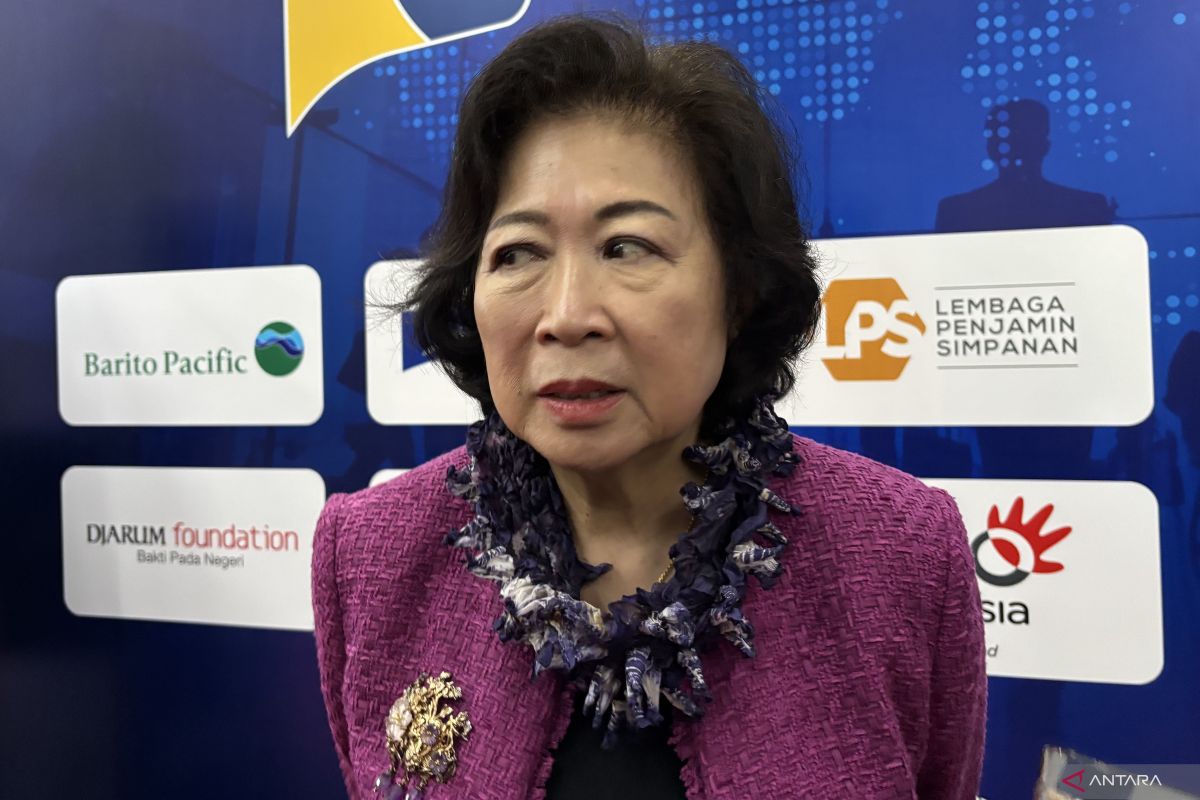
Jakarta (ANTARA) - The Special Envoy of the President for International Trade and Multilateral Cooperation, Mari Elka Pangestu, stated that the government will utilise degraded land for food production intended as raw materials for biofuels, ensuring that energy development does not require the clearing of new land.
Speaking at the Indonesia International Sustainability Forum in Jakarta on Tuesday, she noted that Indonesia possesses more than 12 million hectares of degraded land with the potential to be used to increase food and biofuel production. According to her, the government is committed to increasing food production for biofuels without engaging in deforestation to open new areas.
“We are committed to no longer conducting deforestation to expand food production. This means the plan to allocate 2 million hectares announced last year for food production is no longer necessary,” said Mari Elka.
She added that this plan has been discussed with the Minister of Agriculture and the Minister of Forestry. Both parties have agreed that food production used as raw materials for biofuels will henceforth be directed towards the utilisation of degraded land.
Furthermore, the use of such land will also be part of the Ministry of Forestry’s programmes regarding afforestation, reforestation, and revegetation.
Mari Elka noted that this policy also opens opportunities for investment and international cooperation in the development of food and biofuel production based on degraded land. She explained that increasing food production for biofuels must also be achieved through intensification, simultaneously improving productivity, resilience, and sustainability.
In her view, these efforts can be achieved through the development of higher-productivity seeds capable of adapting to more limited water conditions and higher temperatures, as well as more efficient use of fertilisers and water. Therefore, she believes that research and development (R&D) and international cooperation, including genome sequencing, are necessary to produce seeds with higher yields that can still adapt to water scarcity and warmer climates.
The Indonesian government continues to push biofuels as part of the clean energy transition while reducing dependence on fossil fuel imports. Currently, Indonesia has been implementing the 50 per cent biodiesel programme (B50) since last July and is preparing for the implementation of 20 per cent bioethanol (E20). Additionally, the government plans to increase the blending level to B60 next year.
The Indonesian Palm Oil Association (GAPKI) estimates that the implementation of B60 will require a supply of approximately 22 to 23 million tonnes of crude palm oil (CPO). Meanwhile, the Plantation Fund Management Agency (BPDP) projects that national CPO production will only be around 60 million tonnes by 2045, partly due to land limitations.
Furthermore, the Clean Transition Coalition estimates that the implementation of B50 alone will require an additional 5.36 million hectares of palm oil land by 2039, with a potential deforestation of 1.5 million hectares. To support national plant-based energy needs, the Minister of Agriculture, Andi Amran Sulaiman, stated that he will prepare land development of up to 2 million hectares to strengthen the national bioethanol industry.
Source: jawawa.id (https://jawawa.id/newsitem/government-to-optimise-degraded-land-for-biofuel-production-1791288088)
Originally published by Antara (Indonesian) (https://www.antaranews.com/berita/5773756/pemerintah-akan-optimalkan-lahan-terdegradasi-untuk-biofuel), translated from Indonesian