
Government to Mitigate Capital Round Tripping Risk in Indonesia Financial Centre Plan
The government has considered the risks associated with the establishment of the Pusat Financial Indonesia (PFII), including money laundering and capital round tripping. Capital round tripping is a financial practice where domestic funds are channelled abroad, often through a tax haven, and then returned to the country as Foreign Direct Investment (FDI).
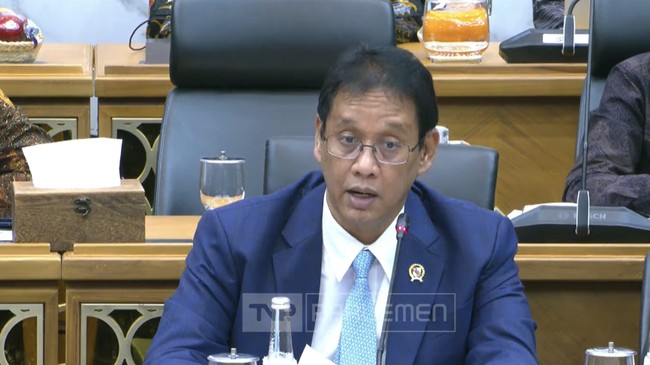
“Thank you for the input, but we will prevent that risk from occurring. Because we will regulate it. We are currently discussing it, it’s easy, we will regulate it later,” said Deputy Minister of Finance Purbaya Yudhi Sadewa when met at the DPR RI building on Tuesday (7/7/2026).
Capital round tripping is a practice where funds belonging to domestic business actors are first placed abroad before being returned to Indonesia as foreign investment in order to obtain various tax facilities.
Legal experts have also urged the government and the DPR to strengthen the supervisory mechanism for the PFII within the Draft Law (RUU) on PFII currently being designed. During a Public Hearing Meeting (RDPU) on the PFII Bill at Commission XI of the DPR on Monday (6/7/2026), Professor of International Law at Ganesha University of Education, Prof. Dewa Gede Sudika Mangku, stated that the PFII must be supervised by two institutional layers, namely the PFII Council and the PFII Authority Body.
He added that this council must be supervised in layers by existing authority bodies, such as Bank Indonesia (BI), the Financial Services Authority (OJK), the Deposit Insurance Corporation (LPS), the Financial Transaction Reports and Analysis Centre (PPATK), and the DPR along with the Audit Board of Indonesia.
“This PFII Council will be supervised in layers by existing regulators or authorities, so that it can manage and mitigate risks from the early planning stages of the PFII Draft Law,” said Dewa during the RDPU with the PFII Bill Working Committee at the Commission XI DPR meeting room on Monday (6/7/2026).
With this layered supervision, risks such as money laundering practices, overlapping authority between institutions, and others can be prevented. “Risk mitigation for money laundering and concealment of beneficial ownership, institutional overlap, capital flow volatility, tax haven labelling, legal uncertainty and low investor confidence, as well as cybercrime and data leaks can be suppressed if mitigation is carried out properly,” explained Dewa.
Source: jawawa.id (https://jawawa.id/newsitem/government-to-mitigate-capital-round-tripping-risk-in-indonesia-financial-centre-plan-1783432426)
Originally published by CNBC Indonesia (https://www.cnbcindonesia.com/news/20260707181227-4-748915/purbaya-respons-soal-risiko-praktik-capital-round-tripping-di-pfii), translated from Indonesian