
Government to Increase Installation of Detection Tools on Toll Roads to Target Overloaded Trucks
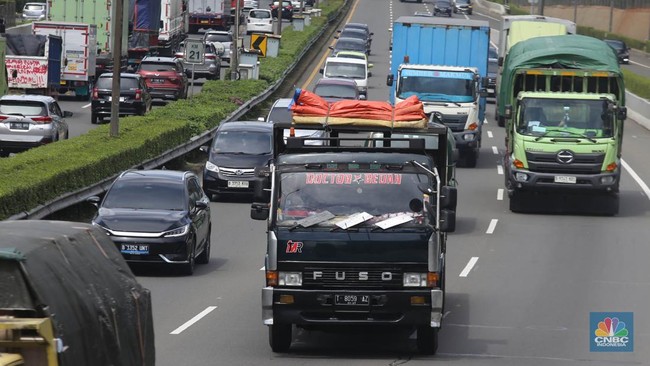
The government is tightening supervision of Over Dimension Over Loading (ODOL) vehicles traversing toll roads. Currently, 47 weigh-in-motion (WIM) detection devices have been installed across several toll road sections.
The Head of the Toll Road Management Agency (BPJT) of the Ministry of Public Works, Ni Komang Rasminiati, stated that the government plans to add another 10 units. The installation of WIM is part of the government’s efforts to strengthen enforcement against ODOL vehicles.
“Currently, we have installed 47 weigh-in-motion or WIM units on toll roads, and we plan to add another 10 WIM units,” said Komang during a Hearing with Commission V of the Indonesian House of Representatives (DPR RI) in the Parliament Complex, Jakarta, on Tuesday (22/09/2026).
Komang explained that the supervision of ODOL vehicles will involve the Ministry of Transportation and the National Police. The WIM system will also be integrated with the electronic enforcement systems owned by both agencies.
“The objective is to ensure that enforcement against ODOL vehicles, in coordination with the Ministry of Transportation and the Police, and integrated with the Police’s ETLE and the Ministry of Transportation’s BLUe systems, can run smoothly and more efficiently,” she said.
This integration is expected to make the monitoring and enforcement of ODOL vehicles on toll roads more effective. The government will not rely solely on manual inspections but will also utilise vehicle detection systems capable of measuring vehicle weight while in motion.
These efforts to regulate ODOL vehicles were presented by Komang during discussions regarding the strengthening of toll road management. In addition to the issue of ODOL vehicles, the government is also working to strengthen the fulfilment of Minimum Service Standards (SPM) for toll roads.
The BPJT is currently drafting a Ministerial Regulation Draft (Rapermen) regarding toll road SPM. This regulation will strengthen provisions previously regulated in Ministerial Regulation of Public Works Number 1le of 2014 and will be adjusted to the mandate of Government Regulation (PP) Number 23 of 2024 concerning toll roads.
“Previously, the regulation for SPM was from 2014, Ministerial Regulation of Public Works Number 16 of 2014; currently, we are drafting the SPM Ministerial Regulation Draft with enhancements in accordance with the mandate of PP 23 of 2024 regarding toll roads,” said Komang.
Under the new regulation, the government will also increase the frequency of inspections regarding the condition of toll road surfaces. The International Roughness Index (IRI) survey, which was previously conducted once a year, will be increased to four times a year.
“In this Ministerial Regulation Draft, we will strengthen this to be implemented four times a year. Therefore, an IRI survey or road surface roughness index recording will be conducted every quarter,” she noted.
The government is also preparing to strengthen administrative sanctions against toll road business entities that fail to meet SPM requirements.
“Furthermore, we are strengthening the imposition of administrative sanctions on toll road business entities that do not meet the SPM requirements stipulated in the PP, Ministerial Regulations, or the BPJT regulations,” she concluded.