
Government to Increase Coal Production This Year, Exclusively for PLN
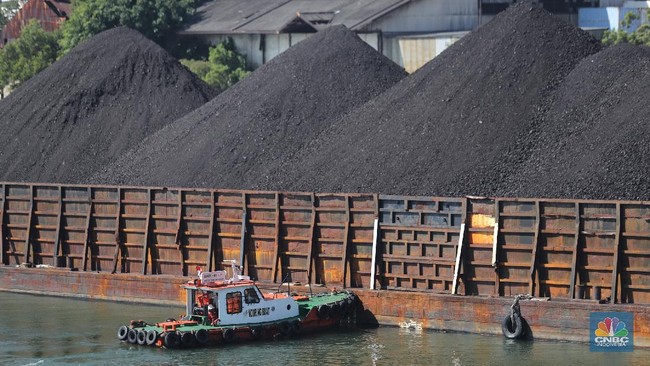
The Ministry of Energy and Mineral Resources (ESDM) will increase coal production this year in a revision of the Work Plan and Budget (RKAB). The additional output is exclusively intended to meet the needs of power plants owned by PT PLN (Persero).
Director General of Minerals and Coal at the ESDM Ministry, Tri Winarno, stressed that the government is prioritising domestic energy fulfilment above other interests. “The additional coal production is only for PLN. That’s it,” Tri said when met at the ESDM Ministry office in Jakarta on Friday (10/7/2026).
The planned production increase aims to close the gap between the realisation of procurement contracts and current power plant requirements. His office is currently calculating the detailed additional volume needed to keep electricity operations stable.
Although production will be increased, the government is ensuring that the coal supply is truly absorbed by PLN. Tri cautioned that any adjustment to production quotas must be made carefully to avoid triggering an oversupply situation in the market. “We must not have an oversupply. That’s it,” he stressed.
To date, the government is providing an opportunity for mining business operators to submit applications for the 2026 RKAB revision. The deadline for submission is set for the end of July 2026 at the latest, in order to accelerate certainty of national production volume in the second half of this year. “If they submit, the latest is 31 July, but regarding the amount and whether it is approved, that depends later,” he concluded.
In accordance with ESDM Ministerial Regulation Number 17 of 2025, business entities can indeed apply for RKAB changes after submitting periodic reports up to the second quarter or no later than 31 July of the current year. However, the submission of RKAB changes is not automatically approved.
The government continues to strive to maintain a balance between upstream and downstream interests. Miners need room to continue operating and running their investments, while the processing and refining industry requires an adequate supply of raw materials so that downstream activities can continue. At the same time, the government also needs to ensure that production does not grow excessively. Overly high production risks depressing commodity prices, accelerating reserve depletion, and reducing the effectiveness of national mining governance.
Previously, PT PLN (Persero) disclosed that the company would receive an additional coal supply of 16.8 million tonnes by the end of 2026. This is to meet the coal needs for Steam Power Plants (PLTU) which had faced constraints some time ago. PLN President Director Darmawan Prasodjo stated that from August to December 2026, PLN will receive an additional supply of 3 million tonnes of coal per month on top of existing supply contracts. In July 2026, PLN also secured an additional coal allocation of 1.8 million tonnes.
“Of course, we continue to maintain and improve this condition together through a system reliability strengthening programme that has been planned in accordance with the direction of the Minister of ESDM,” Darmawan said during a Hearing Meeting (RDP) with Commission XII of the Indonesian House of Representatives on Thursday (2/7/2026).
He explained that the additional supply is specifically for coal with a calorific value above 4,500 kcal/kg required by PLN’s power plants. This supply is capable of increasing the reliability of the electricity system in Java with an additional supply capacity of around 5 Giga Watts (GW), bringing the total supply capacity up from the previous 35.9 GW. “This is 1.8 million tonnes on top of the existing supply for July and 3 million tonnes per month from August to December, so there is an additional supply capacity of 5 GW above 35.9 GW, which of course makes the electricity system in Java much more reliable,” he said.
According to Darmawan, this step was taken after PLN and the ESDM Ministry evaluated changes in the composition of national coal production. In recent years, production of low-calorie coal has increased, while production of medium to high-calorie coal has actually declined. “Therefore, the ESDM Ministry and PLN are correcting this, with a specific supply of medium to high-calorie coal on top of the existing supply,” he stated.