
Government to Halt Fuel Subsidies Following IDR 33.98 Trillion IMF Debt Crisis
The Executive Board of the International Monetary Fund (IMF) has approved a 36-month loan programme for Bolivia under the Extended Fund Facility (EFF). The funding amounts to SDR 1.369 billion (US$1.9 billion), or approximately IDR 33.98 trillion (assuming an exchange rate of IDR 17,888).
With this approval, the Bolivian government can immediately disburse approximately US$214 million, or around IDR 3.82 trillion. Subsequent disbursements will be made in stages throughout the programme, subject to evaluations of the programme’s implementation.
Through this EFF, the IMF hopes the Bolivian government can restore macroeconomic stability, strengthen social safety nets, rebuild international foreign exchange reserves, reduce fiscal and external vulnerabilities, promote financial sector resilience, and lay the foundation for sustainable, inclusive, and private-sector-led growth. The IMF also supports fiscal measures backed by stronger authority and more efficient spending. The objective is to help place public debt on a stable downward trajectory while protecting vulnerable households.
The programme will also encourage a more flexible exchange rate regime, improve the monetary policy framework and financial supervision, and advance reforms to enhance governance, transparency, and the business environment to drive private investment and a job-rich recovery. IMF support is expected to trigger additional financing from other international financial institutions.
IMF Director for Bolivia, Nigel Clarke, stated that Bolivian authorities have taken significant action over the past year to address long-standing macroeconomic imbalances. He added that the Extended Fund Facility agreement will support Bolivia’s reform programme to restore macroeconomic stability, protect the most vulnerable groups, strengthen fiscal sustainability, rebuild reserves, promote financial resilience, and promote inclusive, private-sector-led growth.
“Sustainable implementation, robust contingency planning, and multilateral support will be crucial to the success of this programme,” said Nigel, as quoted from a written statement on Sunday (4/10/2026).
Fiscal sustainability is a key pillar of this programme, alongside strengthening support for vulnerable households. Nigel emphasised that the fiscal efforts undertaken in the early stages include the gradual removal of fuel subsidies through an automated pricing mechanism, alongside stronger and more targeted social protections.
Furthermore, he noted that increasing spending efficiency, addressing arrears, reforming state-owned enterprises, and strengthening fiscal institutions—including a medium-term fiscal framework based on debt reduction—will support the adjustments made with this support. The IMF considers a market-determined exchange rate and the preservation of a credible monetary framework essential to promoting external balance and maintaining price stability.
“The cessation of new central bank budget financing and the transition to reserve targeting are important steps in this regard,” said Nigel.
The IMF also encourages Bolivia to practice prudent liquidity management, accumulate reserves, limit foreign exchange interventions to handling irregular market conditions, and implement reforms to strengthen the autonomy, governance, and accountability of the central bank to enhance credibility.
At this juncture, the IMF also encourages the Bolivian government to strengthen financial sector supervision and crisis preparedness. Close monitoring of vulnerabilities remains essential, while prudential standards are modernised. Reforms to strengthen anti-money laundering and countering the financing of terrorism frameworks will also be vital.
Nigel emphasised that, overall, the government’s structural reform agenda aims to improve the business and governance environment, reduce market distortions, attract private investment, and promote formal employment.
“Well-planned capacity development and clear communication regarding programme objectives will be vital to supporting timely implementation and maintaining public support for the programme,” he asserted.
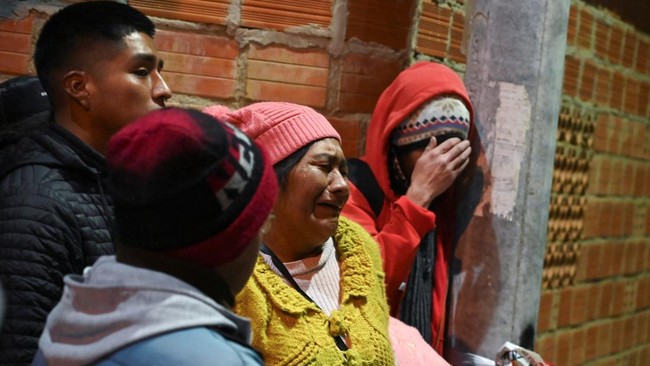
As background, Bolivia’s efforts to end a social and political crisis that lasted 50 days showed significant progress on Sunday (21/6/2026), as several road blockades paralysing the country began to reopen. However, this development was overshadowed by a military support aircraft crash that killed six people during crisis management operations.
Bolivian highway authorities reported, as cited by Reuters, that the number of ongoing blockades has decreased to 28 points following a series of breakthroughs in negotiations with protest groups.
This development follows a day after Bolivian President Rodrigo Paz declared a state of emergency to address the crisis triggered by anti-government blockades that for weeks closed major transport routes, trapping trucks and hindering the distribution of food, fuel, and medicine to various regions.
Source: jawawa.id (https://jawawa.id/newsitem/government-to-halt-fuel-subsidies-following-idr-33-98-trillion-imf-debt-crisis-1791103925)
Originally published by CNBC Indonesia (https://www.cnbcindonesia.com/tech/20261004123346-37-773138/pemerintah-setop-subsidi-bbm-usai-krisis-terlilit-utang-imf-rp3398-t), translated from Indonesian