
Government to Expand 'Sekolah Rakyat' Programme to 182 Locations in 2026
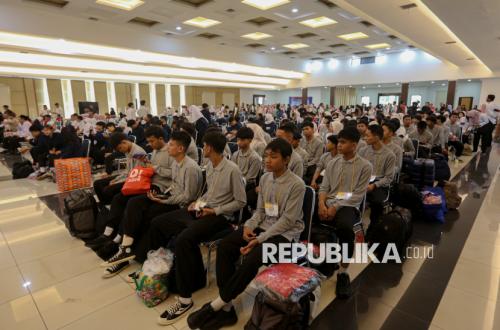
The government is committed to expanding the implementation of Sekolah Rakyat (SR) from 166 to 182 locations in 2026. In detail, the 182 schools consist of 93 permanent SRs ready for operation, 81 existing SR pilot schools, and 85 new SR pilot schools.
Kurnia Ramadhana, Deputy for Partnership and Media Relations at the Government Communication Agency (Bakom), stated that this expansion is part of the government’s gradual transition in developing SR from a pilot model into a more sustainable permanent education unit. ‘In the 2026/2027 Academic Year, the implementation of SR will be expanded from 166 to 182 schools,’ Kurnia said during a press conference on Wednesday (22/7/2026). The increase in the number of schools is expected to accommodate more students from poor and extremely poor families.
According to data from the Ministry of Social Affairs as of 17 July 2026, the 166 existing SR pilot schools operating across 141 districts/cities in 34 provinces have accommodated 14,776 students in the 2025/2026 academic year. This number is estimated to rise to 28,568 students in the 2026/2027 academic year along with the addition of SR units. This figure comprises 6,305 primary school students, 11,186 junior high school students, and 11,077 senior high school students. ‘Thus, the total number of SR students at the primary, junior high, and senior high levels, from both existing and provisional targets, reaches 43,344 individuals this year,’ he added.
Kurnia further stated that the boarding school programme, which targets children from poor and extremely poor families, will continue to be expanded annually as part of the government’s effort to break the chain of intergenerational poverty. In the 2027-2028 period, the government is targeting the addition of 100 to 200 SR locations per year. Subsequently, by 2029, the government aims to build SRs reaching 500 locations across 38 provinces and 416 districts/cities.
Kurnia expressed hope that the presence of SR will not only open access to education for children from underprivileged families but also bring new hope in easing the economic burden on their families.
Regarding student health issues, the government revealed the five most common health problems found among students through the School Free Health Check-up (CKG) Programme. Based on examination results from 1 January to 14 July 2026, dental caries or cavities were the most frequent complaint, followed by anaemia in adolescent girls and hypertension. Kurnia detailed that 40.8 per cent of students experienced caries or cavities. Secondly, 27.3 per cent of adolescent girls suffered from anaemia. The third finding was elevated blood pressure or hypertension at 21.7 per cent. Fourthly, 6.0 per cent of students had cerumen impaction or earwax blockage. Fifthly, 6.7 per cent of students were obese.
Kurnia noted that the implementation of the School CKG has received a positive response from students. One such response came from Nathan, a student at IPEKA Sunter who has participated in the programme twice. ‘He revealed that the examination conducted by the local community health centre helped him detect his eye condition earlier. He was advised to see a doctor immediately because his myopia had worsened,’ Kurnia said. A similar experience was shared by Callista, a student at IPEKA Sunter. She said the School CKG gave her new knowledge about her health condition and encouraged her to adopt a healthier lifestyle. ‘She was also motivated to change her lifestyle by exercising more diligently and eating fruits and vegetables,’ he explained.
The School CKG programme commenced simultaneously on 4 August 2025. It is held in schools ranging from primary to senior high levels, including Special Needs Schools (SLB) and Islamic boarding schools, targeting children aged 7 to 17 years. From 1 January to 14 July 2026, the School CKG has served 8,824,185 students in 96,567 schools spread across 511 districts/cities. ‘Meanwhile, overall, for the year 2026, the target number of students participating in the School CKG is 50,255,073 students in 303,263 schools,’ he concluded.