
Government to Direct State Spending Towards Patented Innovations
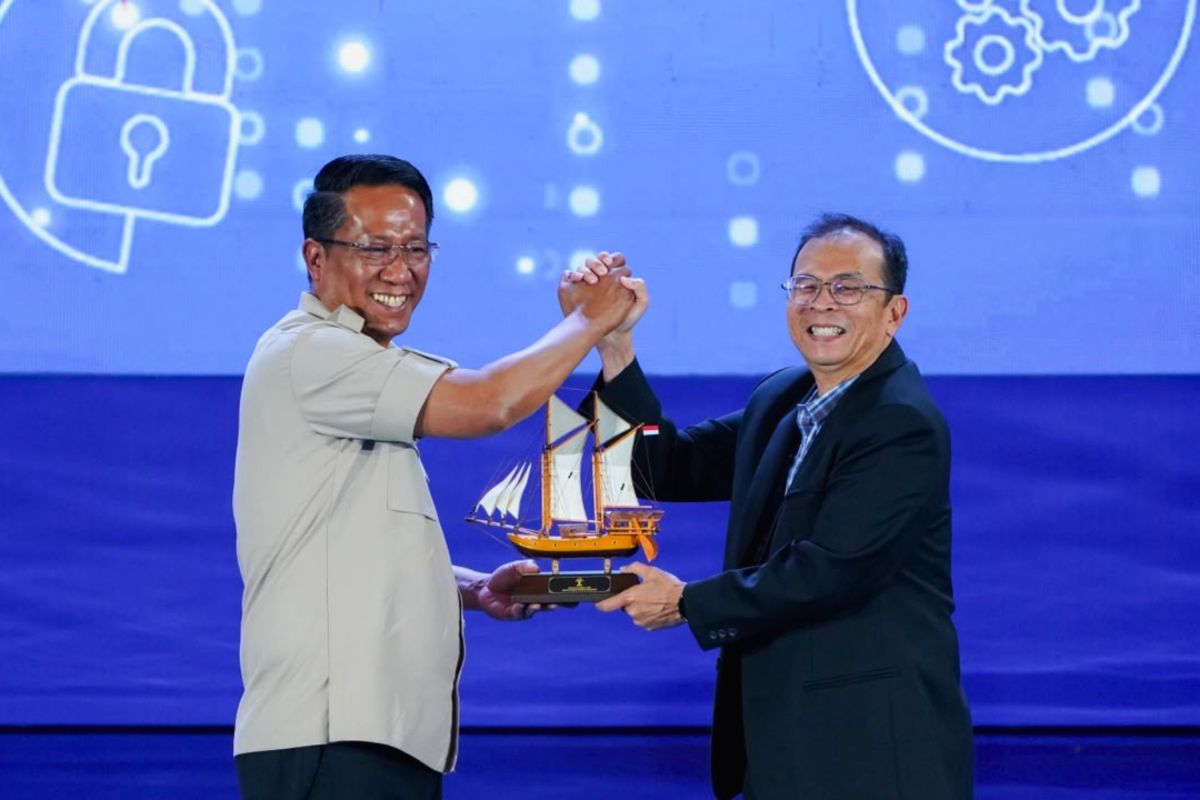
Jakarta (ANTARA) - The Minister of Law, Supramed Andi Agtas, stated that the government is striving to direct state spending towards utilising innovation results that have obtained patents and are registered with the Directorate General of Intellectual Property (DJKI) of the Ministry of Law.
As confirmed in Jakarta on Friday, Supratman noted that this policy is expected to encourage universities to increase research activities while producing innovations that can be developed and utilised by the public.
Supratman made these remarks during a press conference following the ‘What’s Up Campus Calls Out’ (WCCO) event at Airlangga University (Unair) in Surabaya, East Java, on Thursday (17/9).
“We, the government under the direction of President Prabowo, will endeavour to ensure that, at the very least, government spending is directed from the outset towards purchasing the results of innovations that already possess patents registered with the Ministry of Law,” he said.
According to Supratman, the protection of intellectual property should not end with the possession of a patent certificate, but must be followed by the utilisation and commercialisation of the innovative results.
During the event, the Ministry of Law, through the DJKI, facilitated the signing of four patent licensing contracts between patent holders and industries in need of such technology.
“The primary goal is business matching—connecting university research with industry,” Supratman stated.
The four contracts include agreements between the National Research and Innovation Agency (BRIN) and CV Inotek Karya Utama for a perforated drum-type organic waste processor, and the University of Surabaya with PT Alga Rosan Nusantara for a ready-to-drink teak leaf tea product.
Additionally, Airlangga University (Unair) partnered with idsMED for a portable textile-based cage phototherapy system and method for treating jaundice in infants, while Ciputra University collaborated with PT MSS GRUP for an integrated distribution and logistics management system.
In addition to the four licensing contracts, the Ministry of Law presented six patent certificates to several universities and industries.
Supratman stated that the government’s role is to build simple regulations, whereas the development of licensing schemes and the increase of intellectual property valuation are necessary to expand the economic benefits of research results.
He also encouraged the Ministry of Law to strengthen collaboration with universities to develop the utilisation of intellectual property.
Meanwhile, the Rector of Unair, Muhammad Madyan, noted that while the university has achieved high levels of publication and patent registration, research results must be pushed beyond mere academic publication.
“We hope that research at Airlangga University does not stop at publication, but that we also encourage it to produce creativity or products that can be enjoyed by the community,” he said.
Madyan added that Unair possesses the internal facilities and mechanisms to support the development of innovative products, including encouraging products to be commercialised or patented.
According to him, collaboration with the Ministry of Law is part of the effort to simplify the patent application process for innovations produced by the academic community.