
Government to Accelerate National Comics Industry Through More Equitable IP Distribution
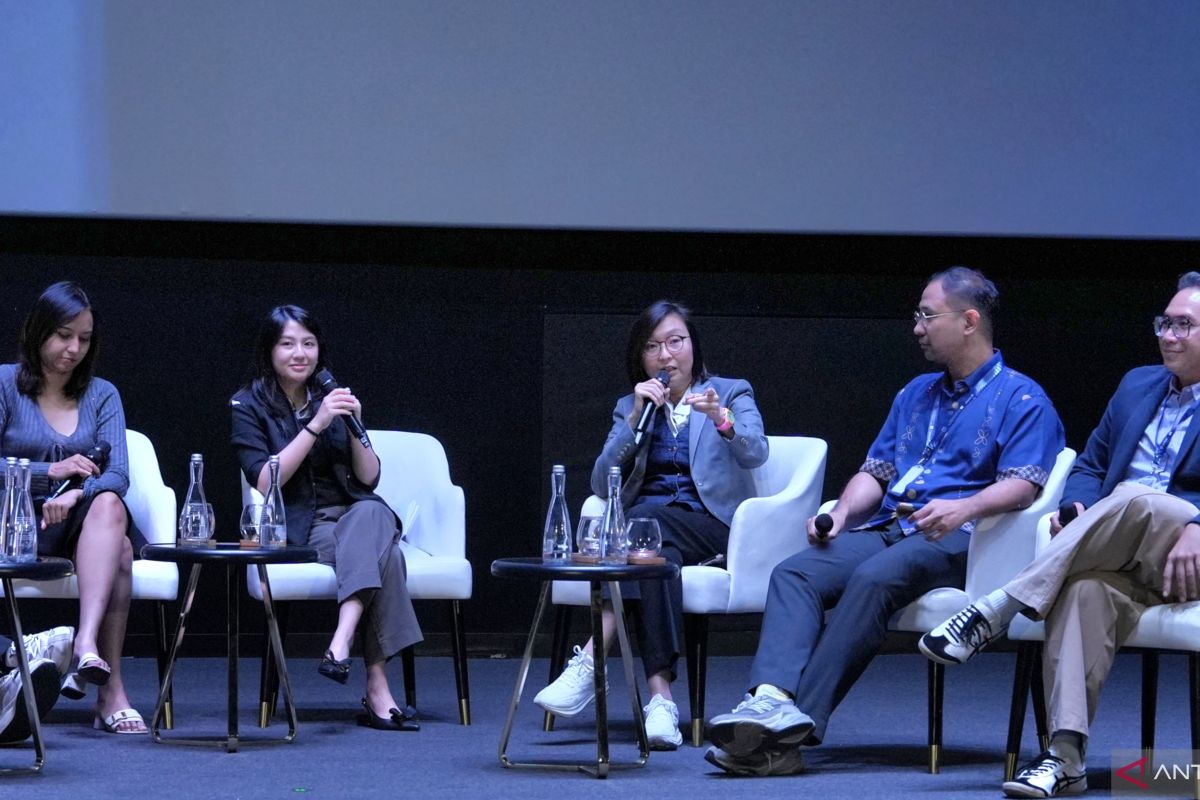
Jakarta (ANTARA) – Deputy Minister of Creative Economy and Deputy Head of the Creative Economy Agency Irene Umar said Indonesia’s comics industry could be accelerated by systematically mapping its ecosystem and recognising intellectual property (IP) as a high-value economic asset.
According to Irene, comics have potential beyond visual entertainment: their IP can be developed across a product timeline, from physical editions and collectible toys to adaptations in other media, including animation and games.
“The comics industry has enormous potential. We cannot look at comics solely in terms of print and digital formats. Their intellectual property can be developed into various products, with different layers of monetisation. We therefore also need to change public perceptions of comics and take a broader view of the industry’s potential,” Irene said in a statement received in Jakarta on Friday.
A discussion with participants from the national comics ecosystem, held during The Ultimate Indonesian Comic Debate by Malaka Books as part of the 5th World Conference on Creative Economy (WCCE) 2026, addressed issues requiring greater attention, including distribution and regulatory gaps.
In response, the Deputy Minister stressed that integrated data collection was essential to developing well-targeted policies. Mapping the comics ecosystem should cover the entire supply chain, from paper supply, printing and logistics to distribution efficiency, tax administration and copyright management.
Reliable data would strengthen the Government’s case for pursuing regulations that support the creative industries across ministries.
“If we do not have data, how can we advocate for the industry’s needs? I invite everyone to work together to build a strong database so that the industry’s potential and problems can be mapped concretely,” Irene said.
The discussion also featured Gideon Kamang, a comics researcher at RMIT, who identified logistics and distribution barriers as major challenges to the growth of Indonesia’s comics industry.
He said addressing these issues required regulation that ensured markets were accessible across the country, including outside the main urban areas.
“If I had to identify one thing that could have a major impact on transforming Indonesia’s comics ecosystem, I would say regulation that guarantees equitable distribution. This must include geographical access so that creative economy players, particularly comic artists, have a fair opportunity to reach markets and develop their work,” Gideon said.
Strengthening literacy from an early age, reducing production costs and aligning government policy with business readiness are key to the long-term sustainability of Indonesia’s comics industry.
Held in Jakarta from 21 to 23 October 2026 under the theme ‘Inclusively Creative: Collective Continuity’, WCCE 2026 reiterated the importance of connecting regulation and copyright protection with market expansion, so that Indonesian comics can lead in the domestic market and reach global audiences.