
Government Tightens Supervision of Fortified Rice to Combat Fraud
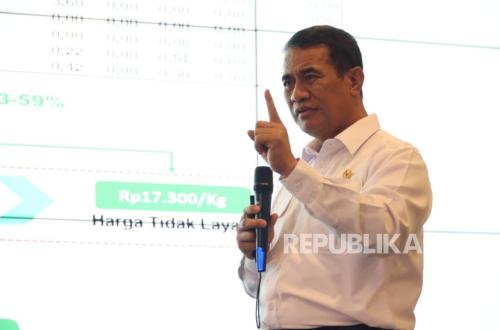
JAKARTA — Head of the National Food Agency (Bapanas) and Minister of Agriculture Andi Amran Sulaiman has confirmed that oversight of fortified rice will be tightened through broader inspections of quality, nutritional content, licensing, and the accuracy of product labels on the market.
“The crackdown on fortified rice in the market will continue to be carried out by the government to protect the public as consumers from suffering financial losses,” Amran said in a statement received in Jakarta on Thursday (6/8/2026).
He stressed that Bapanas, together with the Ministry of Agriculture, the Food Task Force, and related agencies, will strengthen supervision and take firm action against fraudulent practices, including suspected irregularities in the distribution of fortified rice.
According to him, the food fortification programme is a government effort to improve the nutritional quality of the public and prevent stunting, and therefore must not be misused as a means of profiting at the expense of consumer interests.
“I want to crack down on this within the next two to three weeks. This is something we must fight together. Fortification was created for the poor, to help prevent stunting and address malnutrition through the addition of vitamins and minerals,” Amran asserted.
This is mandated by Law Number 18 of 2012 on Food and Government Regulation Number 17 of 2015 on Food and Nutrition Security. Food fortification is an important strategy for improving the nutritional status of the public. Fortified rice has also become a national priority indicator in the 2025–2029 National Medium-Term Development Plan (RPJMN).
“We want to ensure the entire process is carried out thoroughly and that anyone proven to have misused the fortification programme is processed according to the law,” Amran said.
Separately, Deputy for Consumption Diversification and Food Safety at Bapanas Andriko Noto Sutanto added that oversight of fortified rice will be expanded, including ensuring conformity between distribution permits, packaging labels, and product information circulating in the market.
“For example, in the distribution permit he claims an Fe (iron) content of 84 percent, but on the label only 30 percent is written. That is already a violation because what is registered differs from what is written on the label. The objects of supervision will be sharpened further,” he explained.
“So, laboratory testing is only one object of supervision. There are still other objects of supervision. If a product has already violated administrative aspects alone, that is sufficient evidence for action to be taken,” Andriko added.
Bapanas stated that there are 40 brands of fortified rice with distribution permits for Fresh Food of Plant Origin (PSAT) in 11 provinces.
Previously, Bapanas found discrepancies in several brands of special rice circulating in the market based on supervision results in April 2026 in the Jakarta area. From that supervision, 15 samples were obtained, consisting of three fortified rice samples and 12 rice samples with nutritional claims. The fifteen samples came from nine producers with 15 brands.
Laboratory results showed that of the 12 rice samples with nutritional claims, three samples met the requirements, while nine samples did not. In addition, there were three samples that did not include nutritional value information in the form of the percentage of the Nutritional Adequacy Rate (AKG) on their packaging labels.
Fortified rice is required to meet the type and nutritional content requirements in accordance with Indonesian National Standard (SNI) 9372:2025. The SNI stipulates that every 100 grams of fortified rice must contain at least 0.25 milligrams of vitamin B1, 0.25–0.38 milligrams of folic acid, 1.0–1.5 micrograms of vitamin B12, 3.50–5.25 milligrams of iron, and 3.0–4.5 milligrams of zinc.
Producers of fortified rice are also required to obtain a PSAT distribution permit managed by Bapanas together with the Regional Food Safety Competent Authority (OKKPD). Bapanas has confirmed that processing the permit is free of charge and does not take a long time.
Furthermore, distribution permits for domestically produced fortified rice are issued by the governor through the provincial Investment and One-Stop Integrated Services Office (DPMPTSP) after verification by the office handling food affairs at the provincial level as the OKKPD.
To ensure compliance with safety requirements, quality, and conformity of nutritional content with applicable standards, testing of fortified rice must be carried out in accredited laboratories.