
Government Targets Completion of Human Rights Law Draft This Year
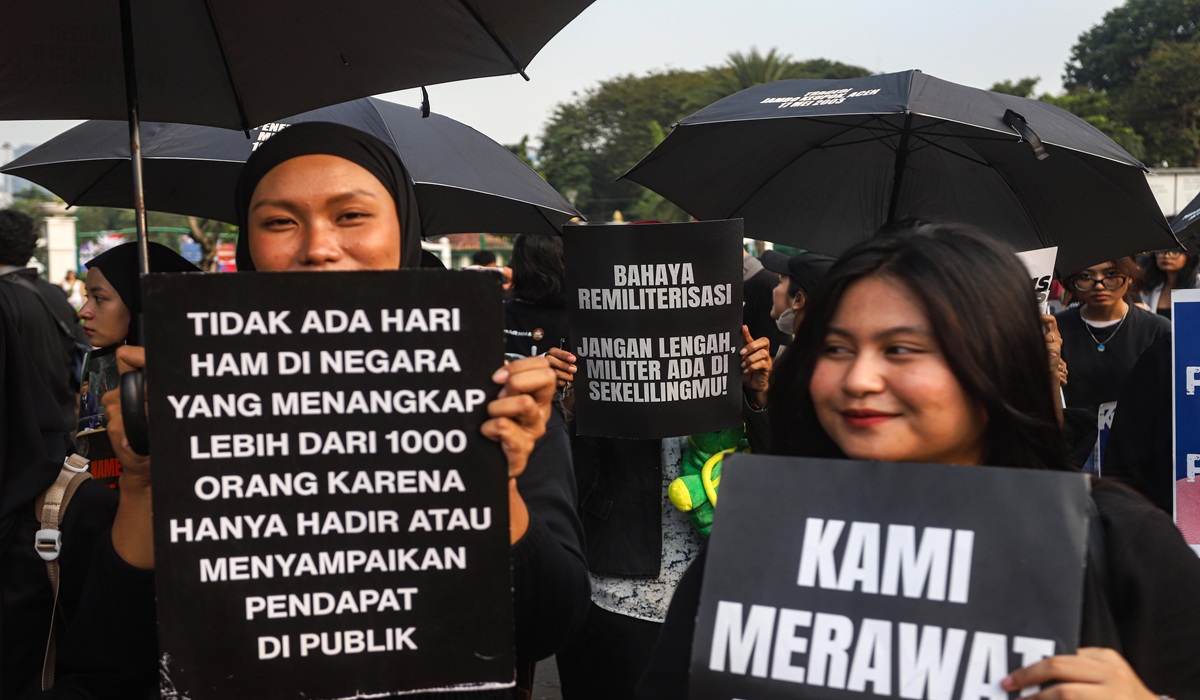
The government is targeting completion of the draft revision of Law Number 39 of 1999 on Human Rights, or the Human Rights Bill, this year before it is submitted to the House of Representatives (DPR) for deliberation.
Deputy Minister of Human Rights Mugiyanto dismissed the notion that the drafting of the regulation has lacked public participation. According to him, the government has repeatedly involved Komnas HAM, other national human rights institutions, civil society organisations and academics in the drafting process.
“What matters is that we in the government complete the draft this year. That means the government’s responsibility will have been fulfilled. Once it is with the DPR, it is up to the DPR,” Mugiyanto said during a discussion with journalists in Jakarta on Wednesday (22/7).
Mugiyanto explained that the Human Rights Bill has been included in the 2026 National Legislation Programme (Prolegnas) and is expected to be deliberated and passed by the DPR this year. However, he acknowledged that the government has no authority to control the legislative process once the draft is officially handed over to parliament.
Responding to criticism from a number of civil society groups who consider public participation to be still minimal, Mugiyanto stressed that such assessments do not reflect the process that has taken place. He said discussions on the revision of the Human Rights Law have long been under way with the involvement of various parties.
“This Human Rights Law has been discussed for a long time and there are already many documents. Komnas HAM, since previous periods, has had proposals for amendments. The desire to improve Law Number 39 has been going on for a long time,” he said.
He also rejected the perception that the government has not given Komnas HAM space to convey its views. According to Mugiyanto, the government has repeatedly invited Komnas HAM and other national human rights institutions to discussion forums and requested written input.
“Some of those national institutions are very active, some are not. In the end they do not come when we invite them, and when we ask for written input, it is not provided. But afterwards they claim they were not involved,” he said.
Mugiyanto further assured that the revision of the Human Rights Law is not intended to reduce the independence of Komnas HAM. The government, he said, actually has an interest in preserving the institution’s independence so that it continues to meet international standards, including maintaining the A accreditation held by Komnas HAM.
“The government does not want Komnas HAM to be non-independent or to have its independence diminished. We will not intervene, we will not weaken it. If necessary, we can make this more explicit in the formulation of the law,” he asserted.