
Government Targets Coal "Windfall Profits" to Secure State Budget
Jakarta (ANTARA) - President of the Republic of Indonesia Prabowo Subianto has instructed the optimisation of state revenues from coal commodities to capture windfall profits amid the rise in global energy prices, as a strategy to strengthen the state budget’s position, which is under pressure due to geopolitical tensions in the Middle East.
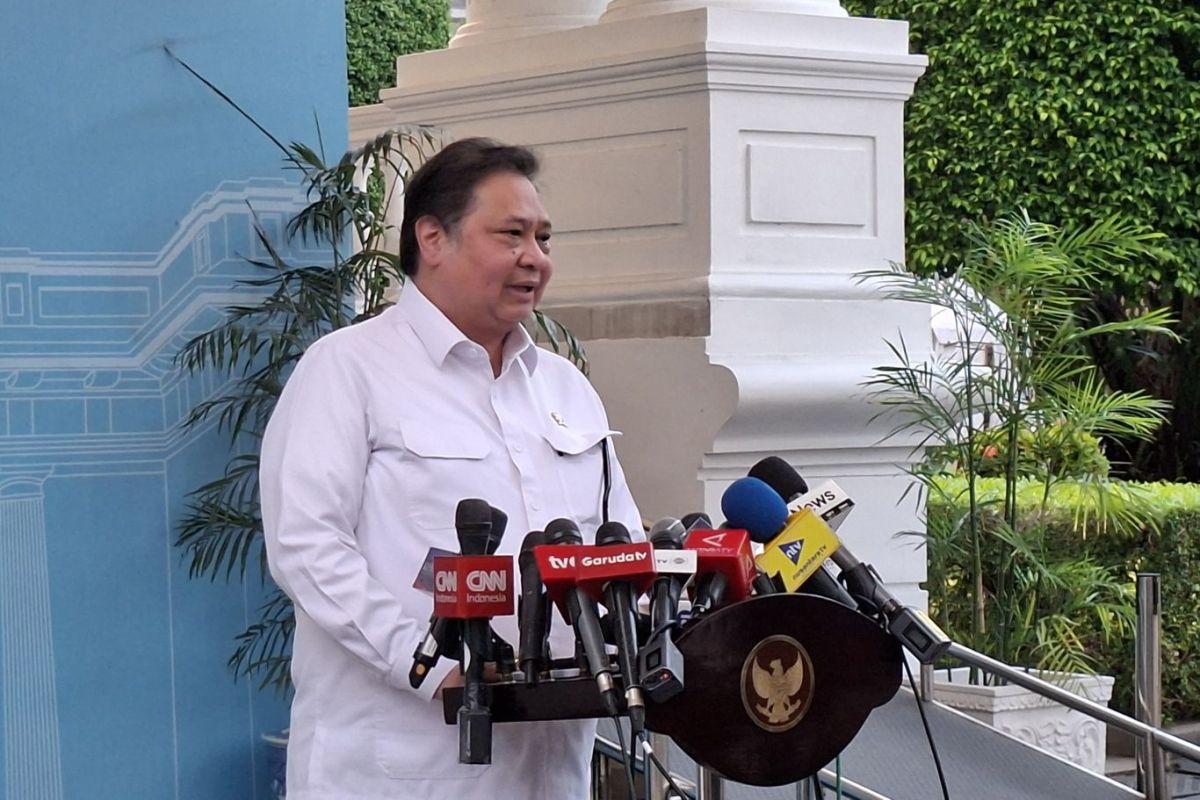
“Regarding the additional price increases, coal will also be calculated in relation to export taxes, the amount of which will later be reviewed by the team. The hope is that government revenues will also rise with the windfall profits,” said Coordinating Minister for the Economy Airlangga Hartarto during a press conference at the Presidential Palace Complex, Jakarta, on Thursday.
Airlangga explained that the current rise in coal prices is triggered by disruptions in the distribution of crude oil and liquefied natural gas (LNG) in the international market.
As a follow-up, the government plans to promptly revise the 2026 Coal Work Plan and Budget (RKAB) to adjust production targets and revenues.
In addition to maximising commodity revenues, the government is accelerating the conversion of Diesel Power Plants (PLTD) to Solar Power Plants (PLTS). This transition effort aims to reduce dependence on fuel oil (BBM), the price of which is currently volatile.
“The President has directed that this be realised immediately and calculated for conversion into solar power plants, and Danantara has been tasked with resolving those issues,” said Airlangga.
The government emphasised that it will not raise the budget deficit limit. President Prabowo has requested that the deficit be maintained strictly in accordance with the mandate of Law No. 17 of 2023 on State Finances.
“It was reported in the meeting with the President earlier; the President’s directive, the first of which is certainly related to maintaining the state budget so that the deficit remains below 3 percent,” he stated.
The government is also reviewing operational expenditures of ministries and agencies that are deemed able to be streamlined. One scheme being refined is work flexibility for civil servants (ASN) to reduce routine bureaucratic costs.
“Well, all of this we are preparing again. Once the concept is mature, we will immediately inform the public in more detail,” he said.