
Government Targets 60 Per Cent Local Content for Electric Vehicles by 2027
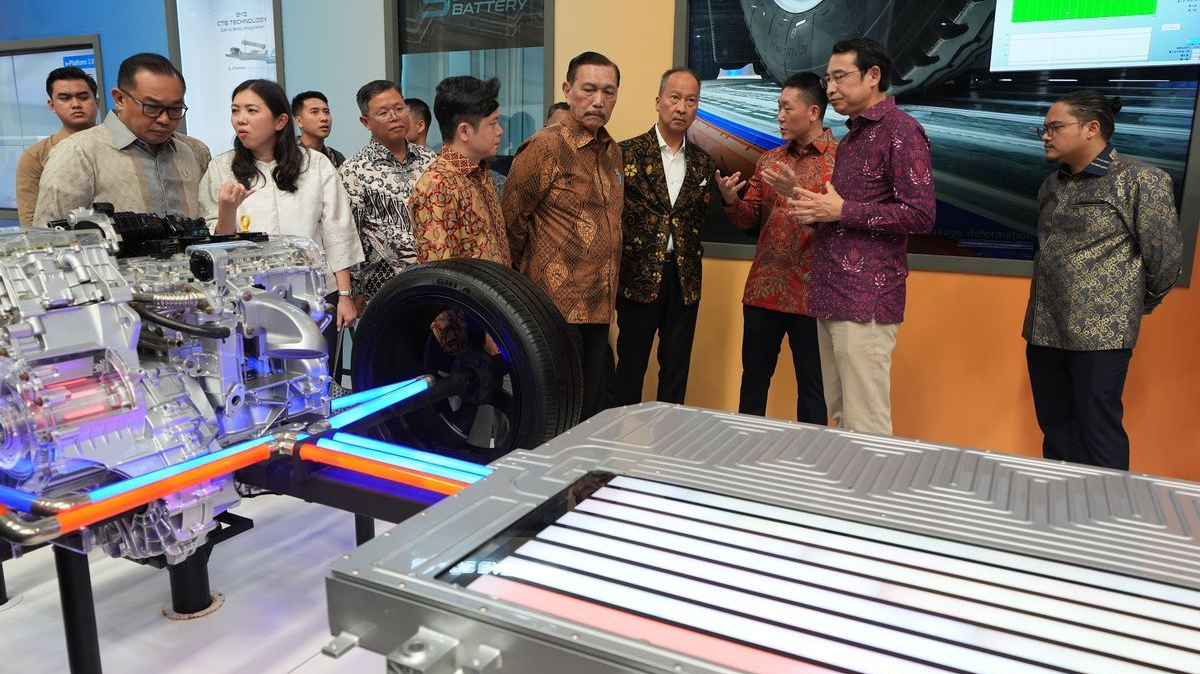
The Indonesian government is targeting a domestic component level (TKDN) of 60 per cent for electric vehicles starting in 2027. The aim of the target is to deepen the structure of the domestic electric vehicle industry while also driving the growth of the component industry and domestic supply chains, as reported by Otomotif.
Incoming investment is expected to focus not only on assembly activities but also on the development of electric vehicle components in Indonesia. This is evident from the growing number of component suppliers from China beginning operations in Indonesia, including in the battery, drivetrain and supporting component sectors such as tyres and parts that can be produced by small and medium industries (IKM).
Rachmat Basuki, Secretary General of the Indonesian Automotive and Motor Vehicle Industries Association (GIAMM), said the presence of Chinese suppliers could be an opportunity to strengthen the national supply chain as long as the investment is genuinely made domestically.
“As long as it is local, it will be very good for strengthening the local supply chain,” Rachmat told Kompas.com.
Rachmat added that one reason many Chinese companies have entered the market is to meet the TKDN requirements for electric vehicles, particularly for batteries.
“In line with the requirements, the largest TKDN component is in batteries, so many Chinese companies are investing in battery parts or components,” Rachmat said.
Even so, not all electric vehicle component needs must be met by new suppliers. Several supporting and universal components are already being sourced from component industries that have operated in Indonesia for longer.
“As for supporting and universal components, some, from what I see, are taken from existing component industries,” Rachmat said.
The entry of Chinese component companies does not automatically pose a threat to local industry. If these companies build production facilities in Indonesia and make use of domestic suppliers, this could in fact expand the electric vehicle industrial ecosystem.
However, the main challenge is ensuring that the localisation process does not merely involve shifting production activities from China to Indonesia while the main supply chain still depends on companies from China.
Yannes Martinus Pasaribu, an automotive expert from ITB, considers this situation important because several Chinese brands still rely on third-party assembly facilities.
He explained that the contract assembly model can indeed serve as an entry point for new brands, but it is insufficient to meet the industrial deepening target and the 60 per cent TKDN requirement.
“A contract assembly model through third-party facilities can certainly still serve as an entry point for new brands, but in the long term it is likely insufficient if the government’s target of 60 per cent industrial deepening is to be met,” Martin told Kompas.com.
Martin also stressed that the localisation of brand- and variant-specific components requires production volume certainty so that domestic suppliers can invest with clear economics.
“The increase in TKDN can actually act as a natural selection mechanism. Brands that are serious about building a market in Indonesia will be driven to deepen their investment and supply chains,” Martin said.
Conversely, brands with small sales volumes must build deeper partnerships with domestic suppliers or adapt their products to local components that can be used across models.
As such, the increase in TKDN for electric vehicles has the potential to reshape the competitive landscape of the industry, as it determines how much of the components are produced in Indonesia and demands that local industry build up its capacity so as not to remain mere spectators in a growing market.