
Government Targets 40,000 Vocational Graduates for Overseas Placement Under 'SMK Go Global' Programme
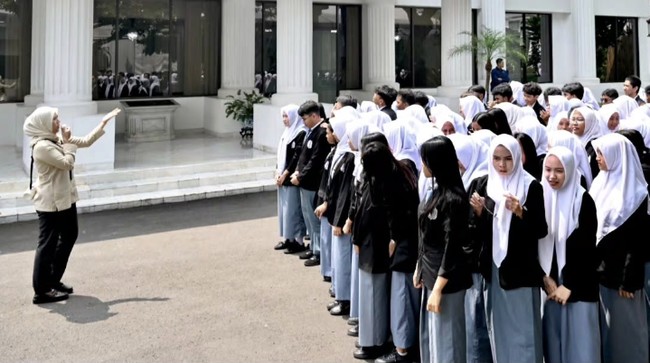
The Minister for the Protection of Indonesian Migrant Workers (BP2MI), Mukhtarudin, is targeting the placement of 40,000 vocational high school (SMK) graduates and members of the general public as Indonesian migrant workers through the ‘SMK Go Global’ programme. The programme was launched by the government as an effort to improve the quality of human resources and expand access to work for Indonesian citizens on the international stage. “Once the budget from the Ministry of Finance is confirmed, we will break down the figures, and the timing of its disbursement will determine the types of preparations needed, the sectors to focus on, and the target countries, because SMK Go Global’s key performance indicator is placement,” he stated during a working meeting with Commission IX of the Indonesian House of Representatives on Tuesday. He explained that the programme involves not only training but also the placement of prospective migrant workers tailored to specific demands. The government is identifying industrial sectors requiring labour, target countries for placement, and developing programmes suited to the needs of overseas industries. Mukhtarudin outlined that SMK Go Global is part of the National Safe Migration Movement ecosystem, which prioritises comprehensive protection for Indonesian workers. This means workers will receive government protection before, during, and after their employment abroad. Prior to placement, prospective migrant workers will receive socialisation through programmes such as Safe Migration, Golden Migrant Villages, Migrant Centres, and cyber surveillance. The strategic programme involves mapping overseas job markets, aligning supply and demand, job matching, promoting cooperation agreements, mapping vocational institutions to meet standards, and adjusting educational curricula and worker competencies to the needs of the global job market. “Protection during placement will cover the placement itself, strengthening inter-agency functions, mediation assistance, vocational support, legal aid provision, monitoring and evaluation of employers, jobs, and working conditions, as well as consular services,” he detailed. As a form of support for prospective migrant workers, the government is providing 2,000 training classes, assuming 20 participants per class. Training will cover seven job sectors or positions, focusing on technical skills, language, and certification, although these sectors cannot yet be detailed as certain processes are still pending. “But we already have priority sectors; we just need to break down which are the most feasible, as the KPI is placement up to visa processing, depending on which countries are most viable,” he clarified. Training activities will be distributed across 23 provinces throughout Indonesia, with priority destination countries including Japan, South Korea, Germany, Malaysia, Singapore, parts of Europe, Turkey, and Taiwan. After their work contracts end, migrant workers will also receive repatriation services, empowerment for retired workers and their families, as well as social reintegration and rehabilitation. These comprehensive services are expected to result in improved welfare for migrant workers and their families, ultimately helping to address poverty, reduce unemployment, and increase the value of cross-border remittances.