
Government Targets 30% Investment Share of GDP, This Project Becomes the Mainstay
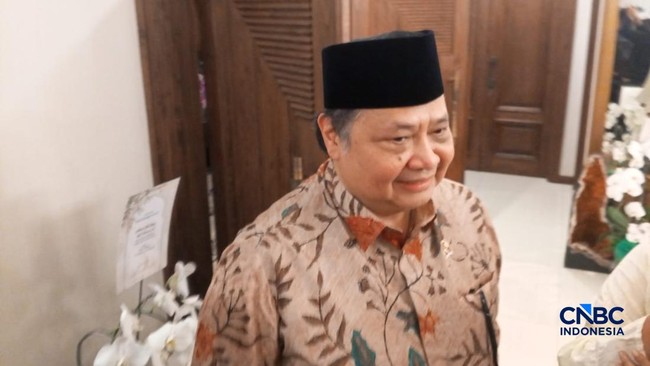
The Indonesian government is targeting to keep the investment share of gross domestic product (GDP) above 30% throughout this year, in pursuit of a 5.4% economic growth target in 2026. “Our target for investment is 30% or more of GDP,” said Coordinating Minister for the Economy Airlangga Hartarto during a press conference on first-quarter 2026 investment realisation on Thursday (23/4/2026). However, since the fourth quarter of 2024 and the fourth quarter of 2025, the investment share or gross fixed capital formation (GFCF) against GDP growth has been slightly above 30%. It did dip slightly to 28.03% in the first quarter of 2025. The government believes that to maintain this investment share of GDP, numerous supporting instruments have been created, one of which is the existence of the Danantara Investment Management Agency. Additionally, throughout the first quarter of 2026, foreign investment or foreign direct investment (FDI) grew by 8.5% to a value of Rp 250 trillion, while domestic investment or domestic direct investment (DDI) grew 6% year-on-year to Rp 248.8 trillion. “The government is optimistic that this target can be achieved. Moreover, the World Bank and IMF are encouraging Indonesia’s economic growth of at least 5.2%. This aligns with the government’s 5.4% target,” he emphasised. Airlangga stated that with the increasing weight of GFCF in GDP calculations, the government also has flagship projects targeted to drive a surge in direct domestic investment. The project to be promoted for investment by investors is the diversification of the new and renewable energy sector. This is particularly due to the war in the Middle East now disrupting supplies of conventional energy, such as crude oil. “So the fastest is renewable energy based on solar panels, where the 100 gigawatt target is one of the mainstays of growth. Because the 100 gigawatt domestic production has reached 5.93 gigawatts and the first phase is in the 3T region, around 13.5 gigawatts,” said Airlangga. “So that is a lever for additional investment on top of what is currently being invested from both domestic and foreign sources,” he emphasised.