
Government Targets 100 Per Cent Waste Management by End of 2029
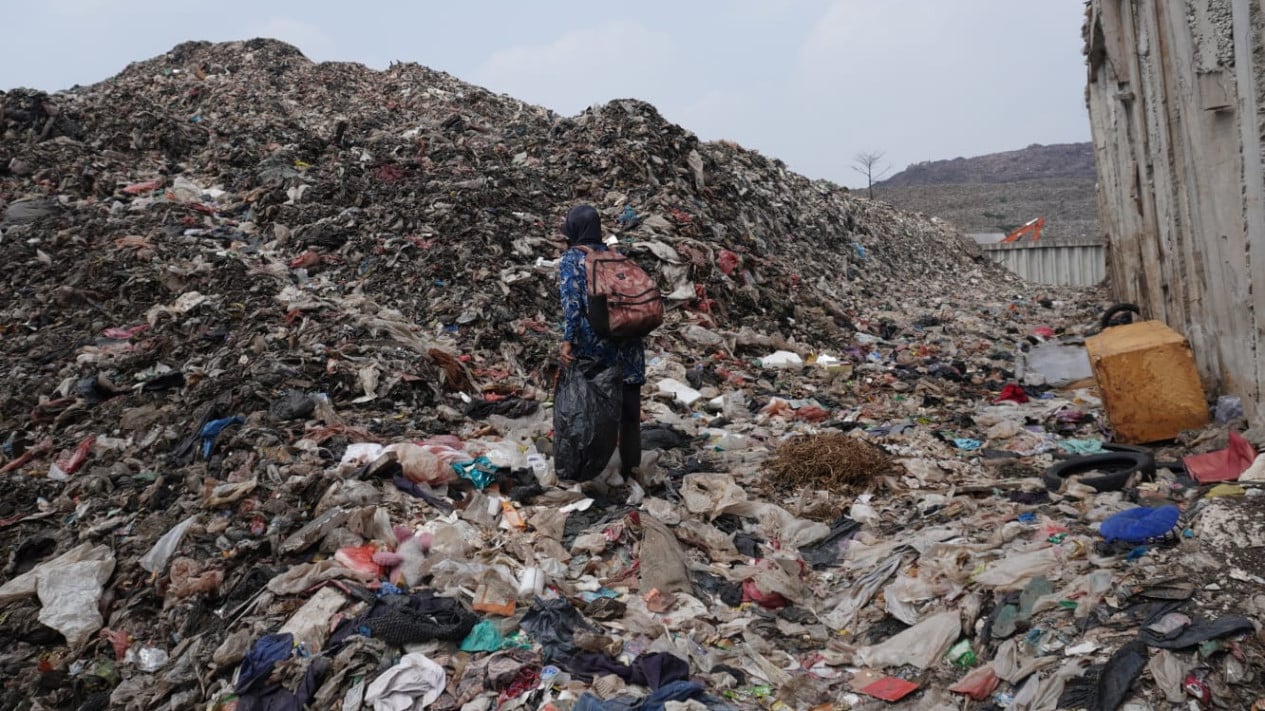
The Indonesian government has set a target of 100 per cent waste management by the end of 2029. Various waste management efforts based on environmentally friendly technology will be implemented.
These efforts cover the processing of both new waste and waste that has already accumulated at final processing sites (TPA), in order to produce renewable energy, including electricity.
Melda Mardalina, Director of Waste Handling at the Ministry of Environment (KLH), said the urgency of accelerating waste management is primarily driven by conditions in metropolitan areas and large cities, which generate significant volumes of waste.
“The urgency of developing waste management is inseparable from the waste emergency in metropolitan areas and big cities. A number of landfills have exceeded capacity and are still managed using open dumping systems, which causes environmental pollution. Meanwhile, building new landfills is increasingly difficult due to land constraints,” said Melda at a media briefing with the Government Communication Agency (Bakom RI) in Jakarta, quoted on Tuesday, 8 September 2026.
According to KLH data, waste generation in Indonesia currently reaches approximately 144,562 tonnes per day. As much as 75 per cent of waste remains unmanaged, while 72 per cent of landfills are still operated using the open dumping method (disposing of waste in open areas). These conditions have also caused around 35.69 per cent of waste to leak into the environment.
“Given these conditions, acceleration measures that are structural, massive, and integrated are required. One of these is the development of environmentally friendly technology, including waste-to-energy processing facilities as one of the options for downstream waste management,” said Melda.
Under Presidential Regulation Number 109 of 2025 on Urban Waste Handling through Waste Processing into Renewable Energy Based on Environmentally Friendly Technology, the government has begun setting the direction for maximum acceleration of waste management. The regulation aligns with the mandate of the National Medium-Term Development Plan (RPJMN), namely the target of 100 per cent waste management by 2029.
The waste management strategy is being carried out through an upstream-to-downstream approach. On the upstream side, the government is encouraging waste separation at source as well as the addition of waste collection facilities and infrastructure.
On the middle side, institutional and financing strengthening is being carried out alongside the reactivation and optimisation of waste management facilities.