
Government Takes This Strategy to Ensure Pertamina Ships Remain Safe in the Strait of Hormuz
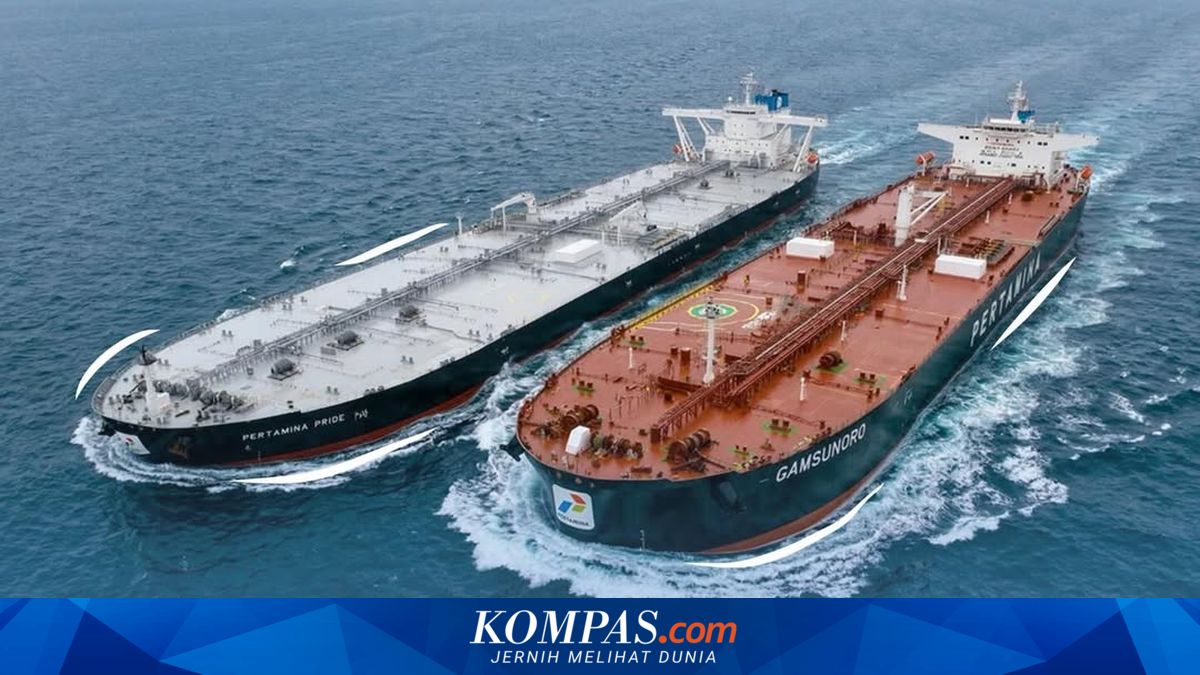
The government is strengthening coordination to ensure the security of Indonesian ships’ passage through the Strait of Hormuz, while safeguarding national energy resilience amid escalating geopolitical tensions in the region.
The government, along with relevant parties, is continuously intensifying coordination to support the smooth passage of Indonesian ships in the Persian Gulf area so they can cross the Strait of Hormuz safely.
Spokesperson for the Ministry of Energy and Mineral Resources (ESDM), Dwi Anggia, stated that they are actively coordinating with the Ministry of Foreign Affairs and other stakeholders to ensure the process runs smoothly, while keeping the national energy supply stable.
“The Ministry of ESDM continues to communicate and coordinate intensively with the Ministry of Foreign Affairs to ensure that the passage of Indonesian ships through the Strait of Hormuz can proceed safely and smoothly. In this process, it’s not just about the cargo, but the safety of the crew is the government’s top priority,” said Anggia in Jakarta on Sunday (29/3/2026).
“In its development, there has been a positive response from the Iranian side. Currently, this is being followed up by relevant parties on technical and operational aspects,” said Nabyl.
Pertamina also expressed appreciation for the full support from the Indonesian government in handling this situation. Currently, Pertamina through Pertamina International Shipping (PIS) is preparing technical and administrative aspects so that the two ships, namely Pertamina Pride and Gamsunoro, can cross the Strait of Hormuz safely.
“Our priority remains on the safety of all crew members, as well as the security of the ships and their cargo. We ask for prayers and support from all Indonesians so that this process can go well,” said Vice President Corporate Communication of Pertamina, Muhammad Baron.
This step aligns with the directive from President Prabowo Subianto to the Minister of ESDM, Bahlil Lahadalia, to expand oil import sources from various countries to maintain the continuity of domestic supply.
For information, throughout 2025 Pertamina imported 135.33 million barrels of crude oil, with around 19 percent or 25.36 million barrels coming from Saudi Arabia.
The rest of Indonesia’s crude oil supply comes from various sources, including Africa, Latin America, the United States, Malaysia, and several other countries. In addition, Indonesia also has long-term cooperation with Singapore and Malaysia for fuel product supplies.