
Government Synergises University Research and Renewable Energy Infrastructure to Drive Energy Transition
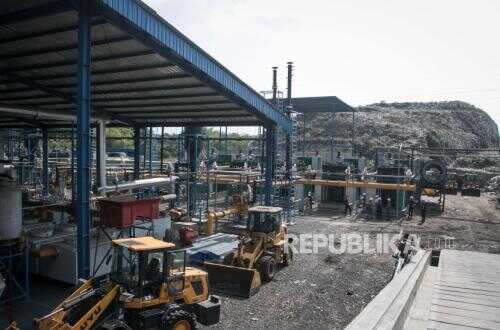
REPUBLIKA.CO.ID, JAKARTA – The government continues to accelerate the energy transition by developing power plants based on local, environmentally friendly resources. This strategic step is being implemented through an integrated upstream-to-downstream approach, from academic research on waste processing technology in major cities to the development of new and renewable energy (NRE) infrastructure in remote areas such as Papua Tengah.
At the national level, the Ministry of Higher Education, Science, and Technology (Kemdiktisaintek) is collaborating with universities and industry to design measurable and sustainable Waste-to-Energy (WtE) plants. In a meeting involving representatives from overseas universities, the Bandung Institute of Technology (ITB), and PT Rekayasa Industri (Rekind), Minister Brian Yuliarto emphasised that the design of WtE plants must be based on clear calculations, both in terms of capacity, cost, and environmental impact.
“This is not just about building, but about how the solution is technically effective and sustainable economically and ecologically,” said Minister Brian in Jakarta, Thursday.
The approach being adopted is a combination of community-scale waste processing and centralised facilities. This strategy is considered capable of minimising waste mobility and improving the stability of Refuse Derived Fuel (RDF) quality. With organic waste accounting for 55 percent of the total, processing at the initial stage is considered strategic to reduce transportation loads and accumulation at final waste disposal sites (TPA). Academics are encouraged to contribute to developing data-based calculations regarding ideal capacity, regional typology, and logistical efficiency so that the system design is appropriately targeted according to the characteristics of each region.
While waste processing research is underway in major cities, the development of NRE infrastructure based on natural resources is also starting to realise the target of clean energy in eastern Indonesia. PT PLN Unit Pelaksana Pelayanan Pelanggan (UP3) Nabire, for example, ensures that it will begin construction of NRE plants in 2026 to increase electricity supply in Papua Tengah Province.
The Manager of PLN UP3 Nabire, Rakhel Rumbewas, explained that this step is part of a national program to reduce dependence on diesel power plants (PLTD) which are fuel-intensive and polluting. “The development of NRE such as solar and hydro power can reduce pollution while also reaching areas that are difficult to access,” he said in Nabire, Tuesday.
Currently, PLN Nabire has been operating solar power plants in the archipelago and is preparing for expansion in Enarotali, Paniai Regency, to supply electricity to inland areas. The process of coordinating with local governments regarding land acquisition is being intensified because it is a key factor in accelerating development.