
Government Support Through PSO and Pioneer Trains Keeps Rail Fares Affordable
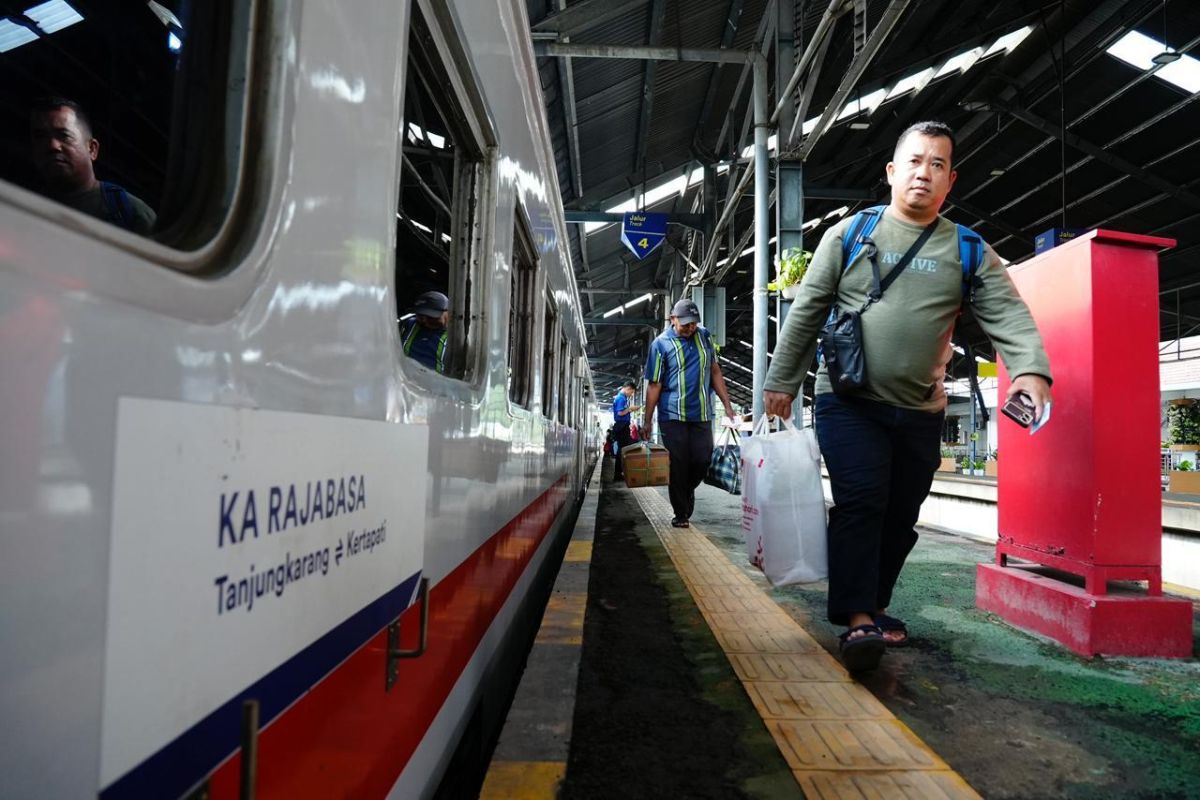
Government support through Public Service Obligation (PSO) and pioneer train services is playing a key role in keeping rail fares affordable and expanding transport access for the public across various regions. Throughout the first half of 2026, KAI Group served 258,993,359 passengers, an increase of 7.55 percent compared to the 240,805,920 passengers recorded in the same period of 2025. These services include PSO, Pioneer Trains, government assignments, and commercial services. Based on volume grouping for entities and services that also operate PSO, Pioneer Trains, or government assignments, a total of 235,137,908 passengers were recorded in Semester I 2026. This figure represents approximately 90.79 percent of all KAI Group passengers. This group includes PSO long-distance and local trains, KAI Commuter, Jabodebek LRT, some KAI Airport services, South Sumatra LRT, and the Makassar–Parepare train. The 90.79 percent figure illustrates the passenger share within these entity and service groups. Several entities within this group also operate commercial services, so the number of direct subsidy recipients still refers to the respective service schemes. Vice President Corporate Communication of KAI, Anne Purba, stated that government support helps ensure rail services can meet the needs of the public with diverse travel characteristics and regional conditions. “PSO helps keep fares for certain journeys affordable, while Pioneer Trains open and maintain transport access in areas that still require government support. Both schemes help the public obtain travel options that suit their needs,” Anne said. For long-distance and local train services managed by KAI, 9,541,158 passengers used PSO trains during January–June 2026. This figure increased by 8.08 percent compared to the 8,827,887 passengers in Semester I 2025. This total consisted of 5,958,724 long-distance PSO train passengers, a 4.88 percent rise from 5,681,340 passengers in Semester I 2025. Meanwhile, local PSO trains served 3,582,434 passengers, a 13.85 percent increase from 3,146,547 passengers. PSO train services are used by the public for work, school, trade, visiting family, and reaching educational, economic, health, and public service centres in other cities. “Government support provides room for travel needs to be served at assigned fares. Affordability is an important part of maintaining public mobility and economic activity,” Anne said. In urban and regional services, KAI Commuter served 204,151,200 passengers during Semester I 2026, a 6.58 percent increase compared to 191,540,583 passengers in the same period of 2025. This figure represents all KAI Commuter passengers across various regions and service schemes. Some services receive PSO support, while others are operated commercially. Meanwhile, Jabodebek LRT served 16,018,911 passengers in Semester I 2026, a 22.84 percent increase from 13,040,403 passengers in the same period of 2025. This service supports the daily mobility of people in the Jakarta, Bogor, Depok, and Bekasi areas. According to Anne, the high usage of urban services shows the public’s great need for high-capacity mass transportation that is integrated and easily accessible. “Mass transportation helps people carry out their daily journeys in a more orderly manner. Government support and policies are needed so that services, capacity, integration, and fares can be managed according to the public’s needs,” Anne said. In airport train services, the PSO group served 3,048,132 passengers during Semester I 2026, a 3.14 percent increase compared to 2,955,306 passengers in Semester I 2025. This figure consists of 908,898 passengers on the Yogyakarta International Airport Train, 793,519 passengers on the Srilelawangsa Train for the Medan–Kualanamu route, and 1,345,715 passengers on the Srilelawangsa Train for the Medan–Kuala Bingai route. The commercial YIA Xpress Airport Train served 434,765 passengers in Semester I 2026. This volume is recorded separately from the PSO service group. “Airport trains provide travel options to and from airports. Support for certain services helps the public gain access at more affordable fares,” Anne said. Through the Pioneer Train scheme, South Sumatra LRT served 2,206,496 passengers during January–June 2026. In the same period, the Makassar–Parepare train served 172,011 passengers. Overall, the two pioneer services served 2,378,507 passengers in Semester I 2026. The presence of these services helps open access, introduce rail-based mass transportation, and support social and economic activities for the public in South Sumatra and South Sulawesi. “The benefits of Pioneer Trains are directly related to the availability of access for the public. Their presence provides mobility options while supporting the development of public transport and community activities in the regions,” Anne said. Anne added that the operation of public transport requires joint efforts between the government, regulators, operators, local governments, and relevant stakeholders. “Government support through PSO and Pioneer Trains helps keep trains present as an affordable, safe, and reliable transport option. KAI expresses its appreciation for the policies and collaboration that maintain public travel access across various regions,” Anne concluded.