
Government Stresses Waste Problem Must Be Resolved at Source
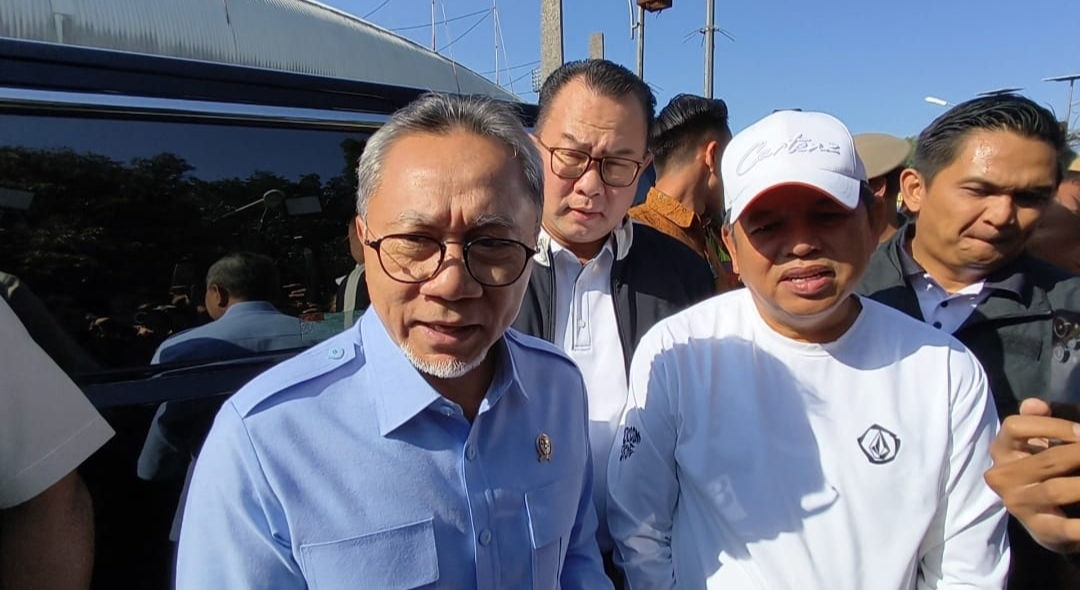
Coordinating Minister for Food Affairs Zulkifli Hasan has revealed that Indonesia’s waste problem must in future be resolved at its source, or upstream. The waste issue has become an emergency and requires serious handling from all of society.
Zulkifli made the remarks while attending the declaration of the joint ‘Sort Waste from Home’ action in Bandung on Friday (24/7).
The PAN politician said he had been given a task by President Prabowo Subianto to resolve the waste problem within the next two years.
He said the volume of waste in the Greater Bandung area is approaching 2,000 tonnes per day. Appropriate and serious steps are therefore needed, one of which is resolving the issue from the upstream level.
The waste management model is to be completely overhauled by ensuring waste is fully processed where it originates. “For example, at an office here, the waste must be dealt with here. It must. On campus, waste must be dealt with on campus. If there’s a mall, the waste must be resolved at the mall. Waste must be resolved at schools. Markets must resolve their own waste. Restaurants must resolve their own waste. We can no longer be irresponsible — throwing away our rubbish, having it loaded onto trucks and taken to open dumps. That will never be resolved,” he said.
He added that separating household waste between organic and inorganic types is the key before waste is transported or processed further. Inorganic waste has high economic value as it can be recycled, while organic waste can be processed into fertiliser.
“Therefore, for households, once again the keyword is separation. If waste is separated using such a simple method, it can already be broken down. The organic portion becomes useful — it can become fertiliser or other things,” he said.
60 CITIES
Zulkifli acknowledged that the waste problem is not confined to Greater Bandung, but also occurs in other regions.
“It has entered the emergency category. The emergency is not only Greater Bandung, Jakarta and South Tangerang — almost sixty cities are in an emergency. This is causing extraordinary problems,” he said.
He believes waste can bring positive value if managed well, for instance by being converted into electrical energy. Over the past eleven years, the permitting process for waste-to-electricity projects has been extremely convoluted due to excessive bureaucracy.
On the President’s direct instruction, these regulatory obstacles have now been cut and simplified.
The accelerated measures are targeted for completion within two years at the latest to finish handling in emergency zones, particularly stopping open dumping practices that violate the law and could result in criminal sanctions for regional governments.
However, he noted that the emergency waste management programme through the waste-to-energy scheme only covers around 22.5% of the total national waste volume.
“The remainder is a collective task that must be resolved through appropriate technology, such as micro-capacity processing equipment developed by BRIN and domestic universities,” he asserted.