
Government Strengthens MSME Protection to Maintain Competitiveness
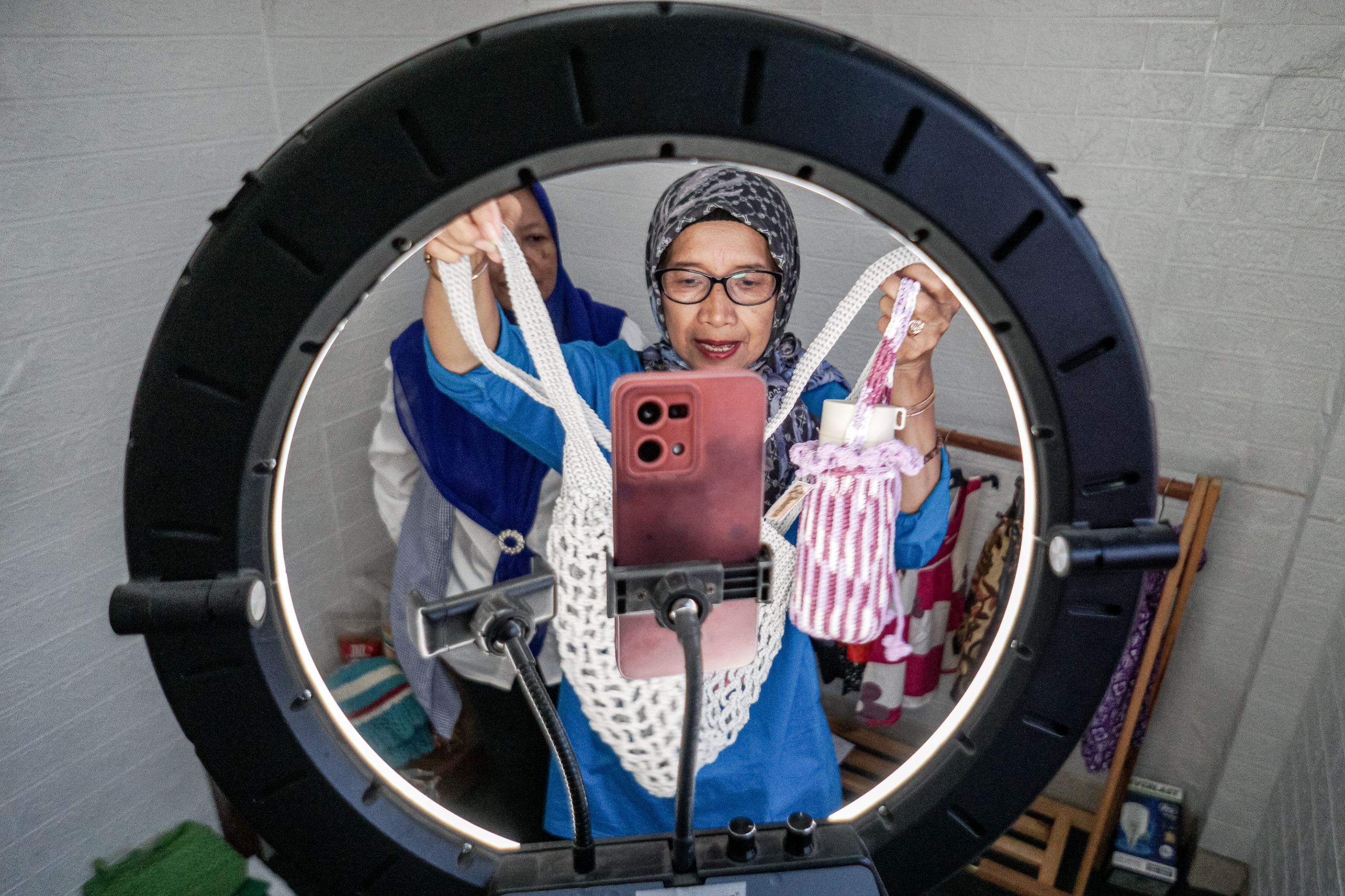
The government is strengthening its support for micro and small enterprises (MSEs) through a series of policies covering business protection, taxation, and digital trade. The move aims to create a fairer business climate while ensuring the sustainability of MSEs amid challenges in purchasing power and increasingly fierce product competition.
This enhanced protection is realised, among other measures, through the issuance of Minister of MSMEs Regulation No. 3/2026 concerning the Protection and Competitiveness Enhancement of Micro and Small Enterprises in Trading Through Electronic Systems (PMSE). The regulation serves as a foundation for e-commerce platforms, or Electronic System Trading Operators (PPMSE), to build partnerships that are fairer, more transparent, and equitable with MSEs selling online.
On the other hand, the government is also providing tax certainty through Government Regulation (PP) No. 20/2026. This policy offers several tax facilities for micro and small enterprises while encouraging them to improve their business governance.
Deputy for Small Enterprises at the Ministry of MSMEs, Temmy Satya Permana, stated that the issuance of Ministerial Regulation No. 3/2026 is a government step to strengthen the position of MSEs within the digital trade ecosystem. According to him, the growth of trade through digital platforms has opened wider markets for MSEs. However, partnerships with e-commerce platforms also need to be regulated so that business actors are not in a weak position when determining various cost components. “Through this rule, every e-commerce platform is required to clearly list all types of fees charged to MSE entrepreneurs in the partnership agreement,” Temmy said.
Ministerial Regulation No. 3/2026 not only regulates protection aspects but also provides a stimulus to enhance the competitiveness of domestic products. Non-MSE category e-commerce platforms are required to provide a service fee discount of at least 50% on every transaction obtained by verified MSE entrepreneurs who only sell domestic products. This facility can be applied for by business actors through the integrated service SAPA UMKM. “We recognise that MSEs face increasingly tight competition, including due to the proliferation of imported products on e-commerce. To maintain the competitiveness of local products, we have prepared an incentive scheme in the form of a minimum 50% service fee discount,” Temmy added.
Protection for MSMEs is also strengthened from the taxation side. Through PP No. 20/2026, the government provides certainty regarding Final Income Tax (PPh Final) facilities for individual taxpayers and sole proprietorships. Temmy emphasised that the regulation is not intended to increase the burden on MSMEs, but rather to ensure that tax facilities can still be utilised by micro and small enterprises that need support. “Through PP No. 20/2026, the government further asserts its support for MSMEs, particularly micro and small enterprises. Individual taxpayers and sole proprietorships with a turnover below Rp4.8 billion can still utilise the 0.5% Final PPh rate without a time limit,” Temmy said. Furthermore, entrepreneurs with an annual turnover of up to Rp500 million continue to receive a 0% tax rate facility. The government considers that this policy can provide greater space for micro and small enterprises to grow, increase production capacity, and strengthen competitiveness.
The effort to maintain the sustainability of digital business actors is also reflected in the government’s decision to postpone the implementation of income tax collection through marketplace platforms. Minister of Finance Purbaya Yudhi Sadewa stated that the policy, originally scheduled to take effect in August 2026, has been postponed considering the condition of public purchasing power and economic growth, which are deemed not yet strong enough. “We will postpone it for now. I said, when purchasing power and the economy have improved,” he remarked. The government will soon issue a regulation regarding the postponement. Purbaya stressed that the decision was taken to maintain the momentum of economic growth, which still requires support. He considered that the second quarter 2026 economic growth of 5.29% is not yet strong enough, so various policies that could potentially suppress consumption need to be reviewed. “Growth of 5.29% is not yet strong enough. We want to grow even faster. If the indicators improve, we will implement it,” he concluded.