
Government Strengthens Migrant Worker Placement KUR to Support SMK Go Global Programme
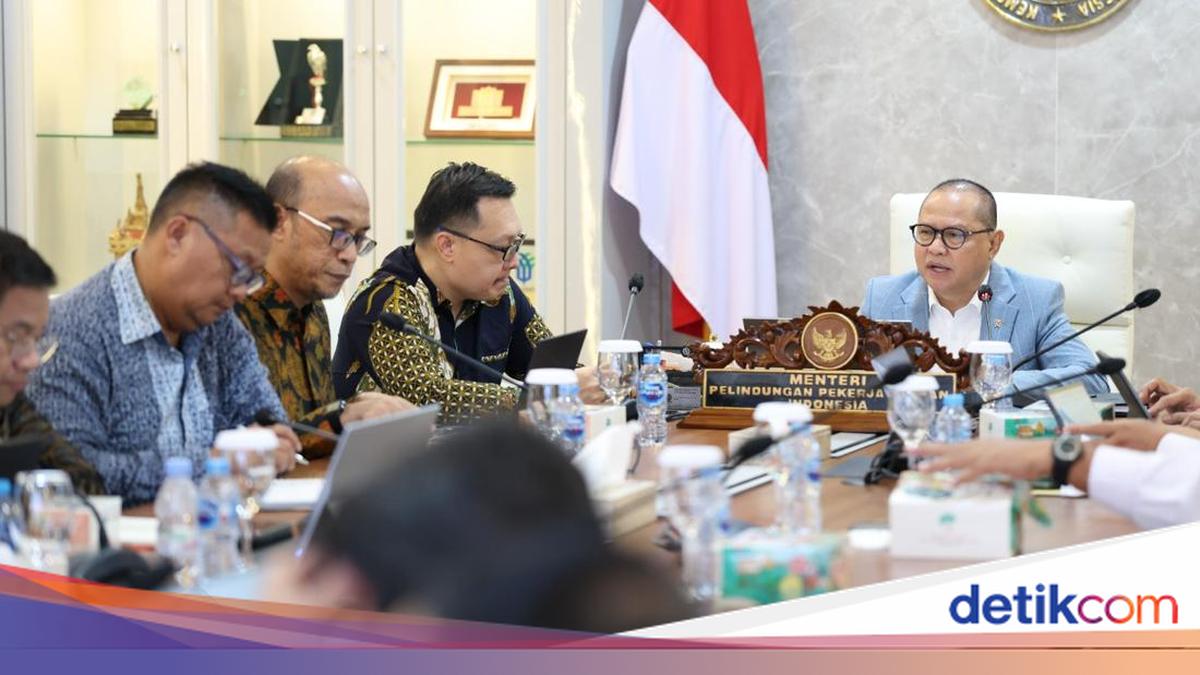
The Coordinating Ministry for Economic Affairs and the Ministry of Indonesian Migrant Worker Protection (KP2MI) are strengthening coordination across ministries, agencies and the banking sector to optimise the distribution of the People’s Business Credit (KUR) for Indonesian migrant worker placement. The move is intended to help workers take up overseas job opportunities while strengthening financing for participants in the SMK Go Global programme.
The issue was discussed at a coordination meeting on optimising migrant worker placement KUR to support the use of overseas job opportunities through the SMK Go Global programme. The meeting was held at KP2MI’s office in Jakarta on Wednesday (4 November).
Attendees included Ferry Irawan, Deputy for Coordination of SOE Business Management and Development at the Coordinating Ministry for Economic Affairs, and Leontinus Alpha Edison, Deputy for Coordination of Community Economic Empowerment and Migrant Worker Protection at the Coordinating Ministry for Community Empowerment.
Migrant Worker Protection Minister Mukhtarudin called for the distribution of migrant worker placement KUR to be optimised, ensuring prospective workers have adequate access to financing before leaving to work abroad.
“Optimising financing is important to support the SMK Go Global programme and prevent prospective Indonesian migrant workers (CPMI) from falling into illegal or high-interest loans that could burden them before they even start work,” Mukhtarudin said in a statement on Wednesday (4 November 2026).
He said the placement KUR facility had a ceiling of Rp443.5 billion, supported by 20 lending banks.
Disbursement had reached 84.5 per cent, Mukhtarudin said, describing the financing scheme as an important instrument for supporting SMK Go Global. The government has allocated about Rp1 trillion from the state budget to build prospective migrant workers’ capacity through the programme, he added.
However, financing support should not end with training and skills development. The costs of departure must also be addressed so that participants who have been prepared for work can proceed with placement.
Costs to be taken into account include medical check-ups, travel tickets and other administrative requirements. These costs vary depending on the destination country.
“In some countries, placement costs are covered by the employer, but there are also costs that prospective migrant workers still have to pay themselves,” Mukhtarudin said.
He stressed that departure costs could obstruct the placement process if prospective workers could not afford them. This could lead them to seek informal loans, including illegal lending at high interest rates.
Migrant worker placement KUR is therefore expected to provide a more affordable, safe and regulated financing alternative, so workers do not have to take on burdensome debt before earning an income in their destination country.
Mukhtarudin also highlighted migrant workers’ contribution to the national economy through remittances. He said remittances amounted to about Rp253 trillion in 2024, rising to Rp288 trillion in 2025. The figures, he said, demonstrated the importance of financing and protection for migrant workers as part of their contribution to Indonesia’s economy.
He expressed hope that placement KUR disbursement would continue to increase in the coming months, particularly to support SMK Go Global participants who already have overseas job opportunities.
Data on placement agencies, or Indonesian Migrant Worker Placement Companies (P3MI), with top accreditation will also be provided to support the financing process.
Mukhtarudin praised Bank Syariah Indonesia’s (BSI) KUR distribution scheme, which does not require a guarantor. He hoped that no further technical obstacles would impede placement KUR disbursement to SMK Go Global participants following the coordination meeting.
The meeting also called for joint outreach materials and official guidance on the mechanism for distributing migrant worker placement KUR. The guidance is expected to give prospective workers, placement agencies and banks a shared understanding of the requirements, application stages and financing arrangements.
Edison urged lending banks to maximise their role in supporting the programme. He also proposed outreach roadshows in several destination countries with well-developed banking systems, to strengthen financing support and broaden cooperation with relevant parties in those countries.
A representative of BPI Danantara said the institution was ready to support the SMK Go Global programme through the migrant worker placement KUR scheme. The support forms part of efforts to strengthen cooperation between the government and financial sector and widen access to financing for prospective migrant workers.
On supervision and financial capability, Bayu, a representative of the Financial Services Authority’s (OJK) Department of MSME and Islamic Finance Regulation and Development, stressed the importance of cooperation between OJK and KP2MI.
“Financial literacy and money-management capacity among migrant workers need to be strengthened so they understand how to use financing, meet repayment obligations and manage their income while working abroad,” Bayu said.
The SMK Go Global programme aims to reach 40,000 participants between August and December 2026: 24,000 vocational and senior secondary school graduates, and 16,000 people from the wider community. It is planned to run 2,000 classes across eight employment sectors and 23 BP3MI regions.
The coordination is also part of efforts to build an integrated system for preparing and placing migrant workers, covering skills development, certification, financing and protection while they work abroad.
Through coordination among ministries and agencies, regulators, Danantara and banks, the government is seeking to ensure that migrant worker placement KUR is used to its full potential. Stronger financing is expected not only to support skills development through SMK Go Global, but also to provide prospective workers with appropriate funding through to their departure.
The aim is for training skilled migrant workers to go hand in hand with inclusive access to finance, safe placement procedures and protection from harmful lending practices.
The meeting was also attended by BPI Danantara representatives Aloysius Budi Santoso, Senior Director of Portfolio Governance, and Aditya Arisusetio, Senior Director of Human Capital DAM. OJK representatives came from its Special Examination and Regional Banking Supervision Department, MSME and Islamic Finance Regulation and Development Department, and Government Bank Supervision Department.
KUR-lending banks at the meeting included BNI, represented by SEVP Commercial & SME Andy Yusdiman and Business Programme Division Head Faizal Isnaeni; Bank Mandiri, represented by Vice President Wenry Okto Fransius Tampubolon; BSI, represented by Micro Business Group Product Department and Business Strategy Department Head Asmiyatul Zumroh; and Bank BTN, represented by Micro Business Vice President Royansyah Putra Ginting.
Source: jawawa.id (https://jawawa.id/newsitem/government-strengthens-migrant-worker-placement-kur-to-support-smk-go-global-programme-1793793174)
Originally published by detikcom (https://news.detik.com/berita/d-8738457/pemerintah-perkuat-kur-penempatan-pmi-untuk-dukung-program-smk-go-global), translated from Indonesian