
Government Strengthens Daycare Governance Through Cross-Agency Collaboration
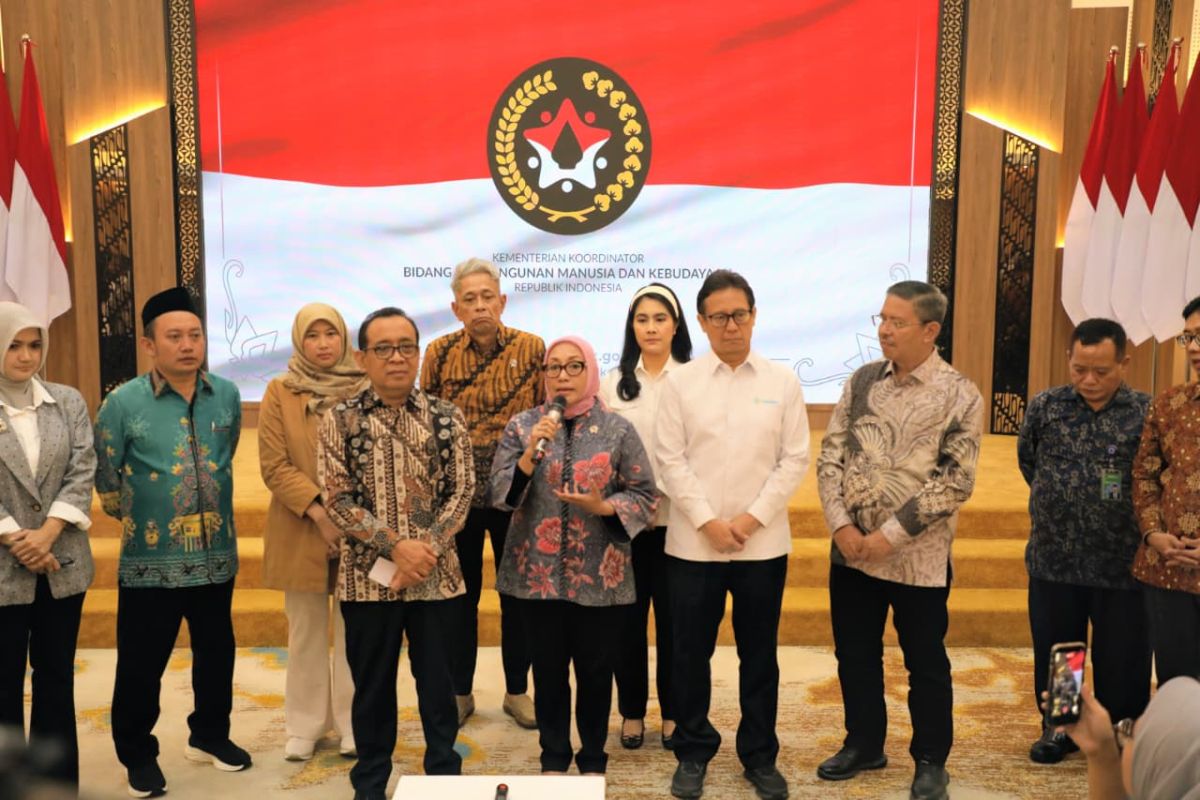
Jakarta (ANTARA) - The government is striving for collaboration to create a one-stop regulation aimed at improving the quality of child care facilities or daycares.
Minister for Women’s Empowerment and Child Protection (PPPA), Arifatul Choiri Fauzi, emphasised the importance of strengthening daycare service governance as a strategic step to ensure a safe, high-quality, and integrated alternative child care system through cross-ministerial and agency collaboration.
“This is part of the government’s rapid response to handle the case that occurred at one of the daycares in Yogyakarta in a holistic and comprehensive manner,” said Arifah in Jakarta on Friday, after the Ministerial Level Meeting chaired by the Coordinating Ministry for Human Development and Culture.
Ministries and agencies, she said, have shown serious commitment to strengthening alternative child care through various programmes supporting child services in each institution as part of these collaborative efforts.
She gave examples, including the Child Care Centre (TPA) programme by the Ministry of Basic and Secondary Education, the Ministry of Social Affairs with the Prosperous Foster Garden (TAS), and the Ministry of Population and Family Planning through the Loving Child Foster Garden (TAMASYA).
The Ministry of PPPA, as the lead for child issues, has prepared guidelines for child-friendly daycare standards or Child-Friendly Foster Garden (TARA).
“To date, there are 70 daycares, consisting of 16 at the ministry/agency level and 54 at the provincial, regency, and city levels, including five daycares in the Special Region of Yogyakarta Province that have met TARA standards,” she said.
TARA encompasses seven main components that must be fulfilled, including institutional legality, availability of competent human resources, and adequate facilities and infrastructure, including the provision of CCTV accessible to parents.
In addition, she said, TARA also regulates service planning based on child rights principles, child growth and development reporting, child safety systems, risk management, as well as monitoring and evaluation mechanisms.
Based on coordination results with the Yogyakarta City Government, she said, there are currently 37 daycares that have permits and 33 that do not. To improve comprehensive and integrated child care quality, the Special Region of Yogyakarta Provincial Government has taken the initiative to become a pilot project for developing child-friendly daycares.
“Based on our coordination results, various efforts have been carried out by the Yogyakarta City Women’s and Children’s Protection Technical Implementation Unit (UPTD PPA) and related agencies, including opening a complaint post for parents of child violence victims through a hotline service, as well as providing psychological and legal assistance for parents and victims.
“To date, these services have been accessed by 217 people. Of that number, around 130 people require psychological assistance and 70 others need assistance to ensure child growth and development.
“We discussed many things that need to be improved going forward, starting from standardisation, licensing, programme integration, integrated information systems, including field supervision, as well as incentives.”
She mentioned that the formation of a task force on rapid improvements to daycare governance has been agreed upon, both for long-term, medium-term, and short-term periods. In addition, they discussed the establishment of a single integrated data portal to create an integrated regulatory framework.
The practice also conveyed that the government will formulate one integrated academic paper as a reference for each ministry and agency in preparing regulations according to their respective sectors.
These efforts are carried out to guarantee daycare service quality standards, not only as a care facility but also as an educational space that ensures children grow and develop in a healthy environment. In addition, the central government will also encourage strengthening collaboration with local governments, particularly in implementing authority and supervision of services in the field.