
Government Strategy to Prevent New Hotspots in Forest and Land Fires
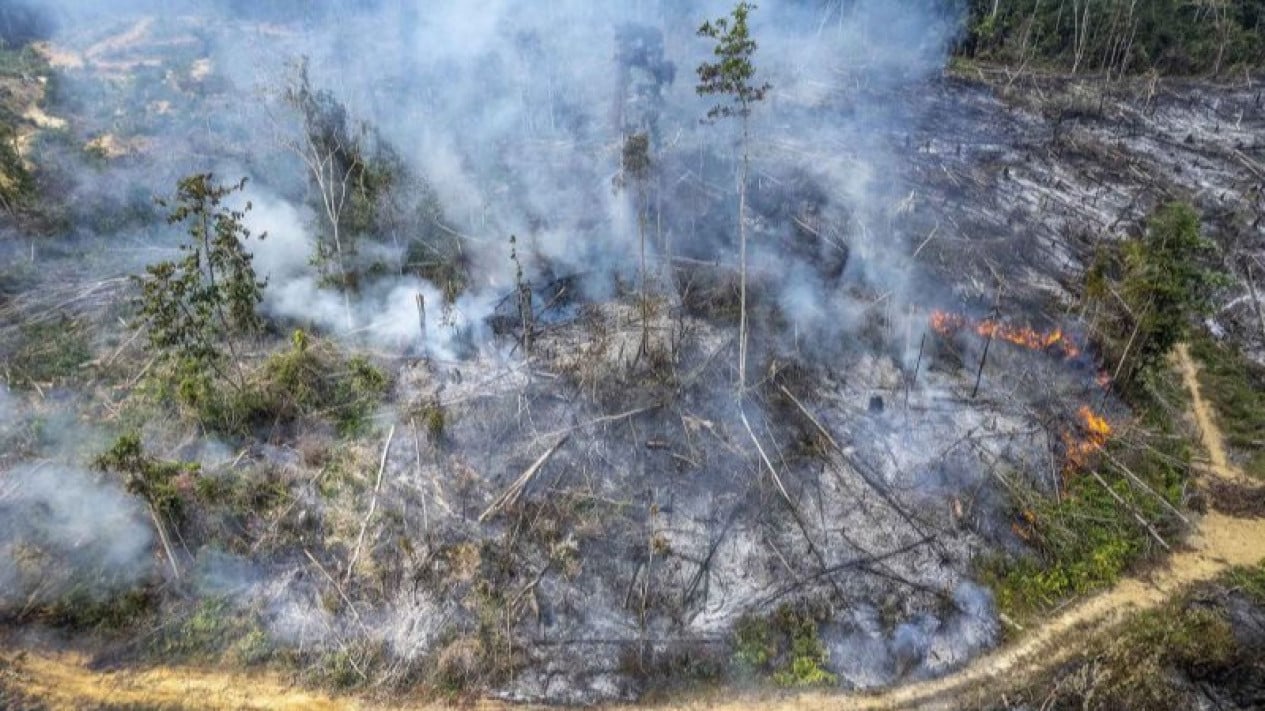
The National Disaster Management Agency (BNPB) has announced it is tightening security in areas affected by forest and land fires (karhutla). The measure is intended to prevent the expansion of burned areas and the emergence of new fire hotspots.
“We have begun guarding the affected areas so that there are no additional hotspots caused by irresponsible individuals,” said Berton SP Panjaitan, Acting Head of the BNPB Data, Information and Disaster Communication Centre, during a press conference on Monday, 31 August 2026.
He said the government task force has commenced guarding operations via both land and air routes.
In this effort, BNPB is carrying out blockades in affected karhutla areas that have been successfully brought under control to prevent the fire from spreading to unburned areas. In addition, BNPB has also placed personnel on standby at locations where fires have been successfully extinguished to anticipate the re-emergence of flames at night.
Berton added that this is being carried out in tandem with ongoing firefighting efforts by BNPB and other elements, implemented through two strategies: ground and air operations.
Ground operations include patrols, mapping of hotspots and fire points in the field (ground checking), direct fire suppression, wetting of peatlands, and cooling. The Ground Task Force has also constructed new wells and canals to provide water sources closer to fire points and hotspots.
Meanwhile, air operations involve a fleet conducting water bombing and weather modification operations (OMC). Data as of 30 August 2026 shows that 53 aircraft have been deployed to handle karhutla, consisting of 19 aircraft for patrol and OMC, and 34 aircraft for water bombing.
During the same period, 2.3 million litres of water have been used for water bombing operations in affected areas. In weather modification operations, the Air Task Force has seeded 5,600 kilograms of sodium chloride (NaCl) into cloud formations to trigger rain.
“We will certainly undertake various efforts, including firefighting and, of course, cooling once the firefighting has been completed,” he said.