
Government Simplifies Subsidised Fertiliser Redemption Process for Farmers
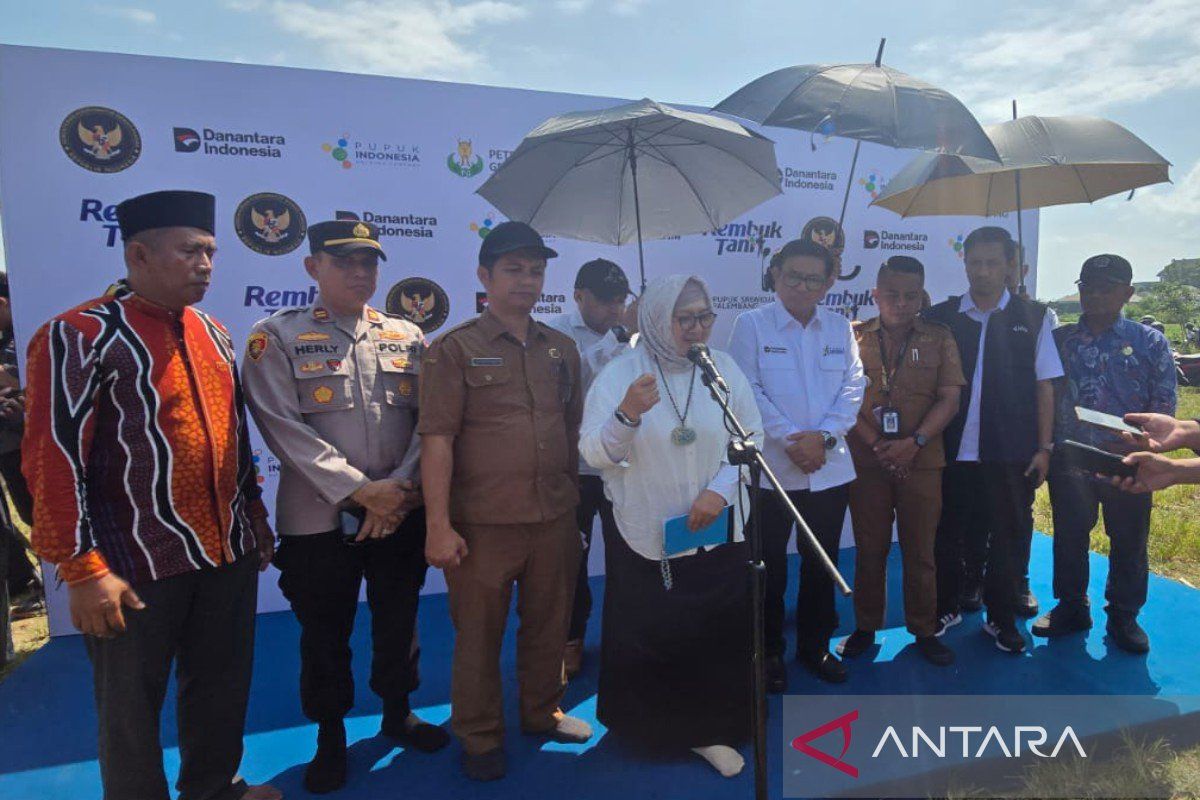
The government has begun simplifying the process for farmers to redeem subsidised fertiliser in an effort to ease their burden and cut through bureaucracy previously deemed overly complicated.
“The current pattern for redeeming subsidised fertiliser for farmers is no longer like it used to be. Previously, it required layered administrative validation and verification. Now, it’s not like that anymore,” said Deputy for Food and Agribusiness Coordination at the Coordinating Ministry for Food, Widi Astuti, during a farmers’ dialogue in Tunjung Village, Burneh, Bangkalan Regency, East Java, on Tuesday.
She explained that the central government took this step so that farmers in the regions no longer need to wait a long time or get caught up in complicated bureaucracy to purchase fertiliser.
Astuti, who attended the event representing Coordinating Minister for Food Zulkifli Hasan, also expressed appreciation for the geospatial-based agricultural innovation developed by the Bangkalan Regency Government. “This breakthrough by the Bangkalan Regency Government is highly effective because it can precisely record land ownership, the extent of agricultural areas, and the real-time estimated fertiliser needs of farmers in the field. The system is even equipped with the ability to detect the potential and availability of water sources at each coordinate point,” she said.
Astuti stated that the results of the field review regarding the agricultural innovation implemented by the Bangkalan Regency Government would be reported directly to the Coordinating Minister for Food so that the programme could be used as a national-scale pilot project for implementation in other regions. “This innovation developed by the Bangkalan Regency Government is truly inspiring and deserves to be replicated in other areas,” she said.
Meanwhile, Head of the Agriculture, Food, Culture, and Fisheries Office of Bangkalan Regency, Henry Kusuma Karyadinata, thanked the central government for the policy of lowering fertiliser prices, which has proven to ease the operational burden of farming in Madura. On the occasion, Henry also presented a positive trend in the grain commodity sector.
“Currently, the price of unhusked rice at the farmer level in Bangkalan has climbed to a range of Rp7,000 to Rp7,500 per kilogram. This achievement is far more favourable to farmers’ welfare compared to the previous period when prices had plummeted to Rp4,000 to Rp4,500 per kilogram,” he said.
Henry added that the updating of agricultural data in the westernmost regency of Madura Island has also been digitally integrated into a single data system. Through this geospatial data, the profile of land owners, the expanse of land area, and the required fertiliser quotas have been accurately mapped. The data integration programme currently covers four out of the 18 districts in Bangkalan Regency and is projected to be completed within the next two months.
“Through this data integration, Bangkalan is ready to prove that if facilities, infrastructure, and fertiliser supplies are provided on time and according to needs, the national food self-sufficiency target can definitely be achieved,” he said.
The farmers’ dialogue was attended by hundreds of representatives from 1,305 farmer groups spread across 273 villages and 8 sub-districts in 18 districts throughout Bangkalan Regency. The Bangkalan Regency Government facilitated the event so that farmers could convey their aspirations directly to the central government, while also presenting the successful programmes achieved and the support of Bangkalan farmers in contributing to the success of the central government’s priority programmes.