
Government Simplifies Foreign Worker Permits, Process Takes Maximum 5 Days
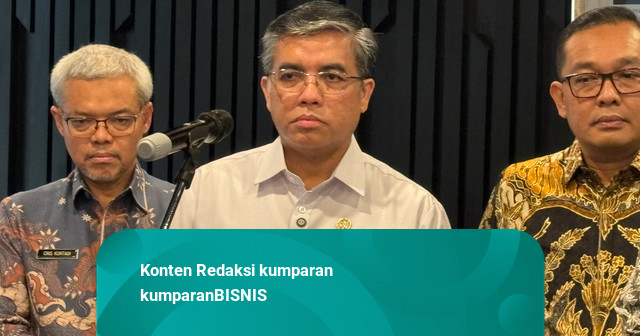
The government is integrating foreign worker (TKA) licensing services to provide ease of use and time certainty for investors injecting capital into Indonesia.
This integration is marked by the signing of two Joint Decrees (SKB) by the Minister of Manpower Yassierli, the Minister of Immigration and Correctional Services Agus Andriando, and the Minister of Investment and Downstreaming/Head of BKPM Rosan P. Roeslani. The decrees regulate the integration of the Online Single Submission (OSS) system, the Labour Service Information and Application System (SIAPkerja), and the All Indonesia Application, alongside the formation of a technical team to manage the integration of these three systems.
Rosan stated that this integration will provide certainty to investors regarding the completion time for required foreign worker permits. “With this collaboration, it provides significant certainty because they can know exactly when they can obtain the necessary permits,” said Rosan following the signing of the SKB at the BKPM office on Wednesday (9/9).
He noted that the target for completing foreign worker permits is a maximum of 5 days, which aligns with the provisions in Government Regulation (PP) Number 28 of 2025 concerning the Implementation of Risk-Based Business Licensing. “Approximately 4-5 days, which is in accordance with PP 28. I am confident it will be completed within five days,” he said.
With this time certainty, the government hopes that a simpler licensing process will increase investment attractiveness and encourage the inflow of foreign direct investment (FUT) into Indonesia. “This will certainly improve the investment climate and the existing industrial climate in Indonesia, so the hope is that this will also have a positive impact on FDI and, hopefully, the creation of quality jobs,” said Rosan.
Rosan added that the integrated services agreed upon by the three ministries are planned to begin operating by the end of September. “The implementation is planned to start at the end of this month as a result of the agreement between the three of us,” he said.
Through the three-ministry SKB, the OSS system under the Ministry of Investment and Downstreaming/BKPM will be integrated with SIAPkerja from the Ministry of Manpower and the All Indonesia Application from the Ministry of Immigration and Correctional Services. The OSS will serve as a single entry point for business actors and act as a gateway connecting the licensing processes across the three ministries.
Meanwhile, SIAPkerja is used by the Ministry of Manpower to process services, conduct feasibility assessments, and issue approvals for the Foreign Worker Utilisation Plan (RPTKA). Furthermore, the All Indonesia application is used by the Ministry of Immigration and Correctional Services to verify and issue Limited Stay Visas (VITAS), Limited Stay Permits (ITAS), and Permanent Stay Permits (ITAP).
In addition to cutting administrative processes, this integration aims to provide time certainty through the implementation of a Service Level Agreement (SLA). The government is also preparing a ‘positive fiction’ mechanism. This means that if the established service deadline is exceeded, approval can be automatically issued through the system integrated with OSS, in accordance with applicable regulations.
Ensuring Unskilled Foreign Workers Cannot Enter
The government also ensures that the integration of investment licensing with the foreign worker licensing process will not create a loophole for the entry of unskilled workers. Minister of Investment and Downstreaming/Head of BKPM Rosan Roeslin stated that while investment permits enter through his ministry, documents and requirements related to foreign workers will still be processed by the relevant ministries.
“The permit indeed enters through us, but the process will still be carried out by the relevant ministries, including the Ministry of Manpower and the Ministry of Immigration and Correctional Services,” said Rosan.
According to Rosan, once the process in the relevant ministries is completed, it will return to the Ministry of Investment and Downstreaming. He mentioned that this integration pattern is a practice also implemented in many countries through the ‘one-stop service’ concept, aimed at providing certainty for investors and reducing uncertainty in the licensing process.
Meanwhile, Minister of Manpower Yassierli emphasised that the integration of licensing does not eliminate the screening process for foreign workers. Every investment bringing in foreign workers is still required to prepare RPTKA documents. This document will be reviewed by the Ministry of Manpower, using a ‘positive list’ as a reference—a list of positions or jobs permitted to be filled by foreign workers, considering the needs of the workforce and the availability of skilled local labour.
“We have what is called a positive list, which specifies criteria where there are no experts in Indonesia, and subsequently, there must be knowledge transfer,” said Yassierli.
Thus, system integration does not mean that investors applying for investment permits automatically receive permits to employ foreign workers. Requirements regarding job roles, competence, and the need for foreign workers must still be met.
Yassierli noted that integration with the Ministry of Immigration and Correctional Services will allow the status of foreign workers to be better monitored. When the period of employment or the need for a foreign worker ends, their status as a foreign worker must also end. Meanwhile, Minister of Immigration and Correctional Services Agus Andrianto added that the government will strengthen supervision to ensure that foreign workers in Indonesia are working in accordance with regulations.