
Government Seeks Special Civil Servants to Implement Prabowo's Priority Programmes
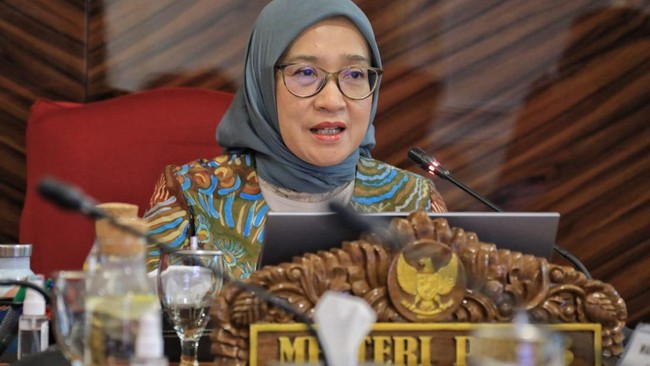
The Merah Putih Cabinet government has convened a Ministerial-Level Meeting to discuss the fulfilment of human resources (HR) in implementing President Prabowo Subianto’s Quick Best Results Programmes (PHTC). The meeting was held between the Minister for State Apparatus Utilisation and Bureaucratic Reform (PANRB), Rini Widyantini, and the State Secretary, Prasetyo Hadi, at the Ministry of PANRB office in Jakarta on Thursday (2/4/2026). “This meeting is crucial to ensure that HR optimisation is not merely an administrative process, but a strategic effort to provide competent, integrity-driven HR ready to support the implementation of national priority programmes,” Rini stated, as quoted from a press release on Thursday (2/4/2026). The focus of HR optimisation to support the President’s PHTC is divided into several main clusters, namely the Merah Putih Village/Urban Ward Cooperatives (KDKMP), Fishing Villages, education, and health. Ministries and agencies responsible for each cluster need to follow up on HR projections. In addition to fulfilling HR for those programmes, Rini also emphasised in the meeting the need for collaborative work among ministries, agencies, and local governments to support various national priority programmes. Policy synchronisation in implementing the President’s PHTC across government institutions is required to accelerate decision-making, collaboration, and programme impacts for society. She emphasised the importance of integrated collaboration oriented towards shared outcomes. Rini also highlighted that a collaborative work approach and network governance will serve as a reference to ensure all government elements move in the same direction, interconnected, and do not operate independently in implementing the PHTC. Through the collaborative and network governance approach, each institution becomes part of a network that mutually strengthens development outcomes, no longer the responsibility of one party but the collective responsibility of all government elements. In addition to the need for flexible and adaptive HR fulfilment policies, stronger oversight mechanisms are also required to maintain HR quality,” Rini asserted firmly.