
Government Seeks Closure Sanctions for Environment-Damaging Companies in Human Rights Law Revision
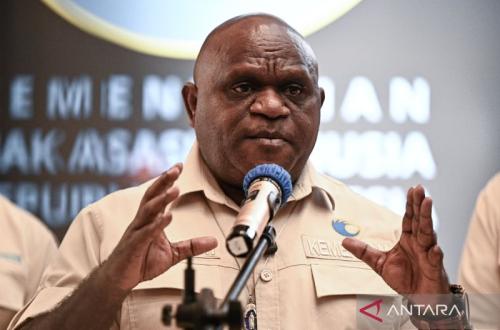
The Ministry of Human Rights is pushing to strengthen human rights and environmental provisions in the revision of the Human Rights Law. The government is also preparing a presidential regulation on Business and Human Rights that would grant authority to impose firm sanctions, including closing companies found to have damaged the environment.
Human Rights Minister Natalius Pigai, speaking at a hearing with House of Representatives Commission XIII held online from Jakarta on Tuesday (17 November), said that the inclusion of human rights and environmental provisions referred to the preamble of the 1992 Rio Conference. The move responds to lawmakers’ concerns about environmental and human rights issues.
Through the revision of the Human Rights Law, the government is seeking to strengthen the judicial system so it can prosecute ecocide and biocide in future. Pigai cited major cases such as Fukushima, Lapindo, Minamata and Chernobyl in Ukraine as examples of environmental crimes that should be subject to prosecution.
Draft Business and Human Rights presidential regulation at the Palace
Pigai said the draft presidential regulation on Business and Human Rights was now at the Presidential Palace, awaiting approval. The regulation would authorise the state to take action against corporations found to have violated human rights and damaged ecosystems and biological life.
“If a company is proven to have committed human rights violations, the minister will report it to the President. The President will then instruct the Human Rights Minister to close the company, ban it from banking services, or issue a stern reprimand. That is in the presidential regulation,” Pigai said.
He stressed that the Ministry of Human Rights was ready to follow up if the House of Representatives initiated an inspection of conservation areas such as Ujung Kulon National Park. The ministry would also recommend that the President impose sanctions if violations were found.
Pigai also said that major corporations such as Freeport could be summoned to Parliament using this legal instrument. While the presidential regulation awaits approval, the Ministry of Human Rights is coordinating with the Ministry of Energy and Mineral Resources to review business permits that could threaten environmental sustainability.
Environmental and wildlife conservation principles
Pigai cited Rwanda as a country that had received international recognition for successfully conserving wildlife in its natural habitat. He also referred to Indonesia’s Komodo dragons, which can breed only on Komodo Island because of their connection to their original environment, or milieu.
According to Pigai, forcibly moving animals from their natural habitat in Ujung Kulon would run counter to environmental conservation principles. He compared such action to the forced relocation of a human community, such as moving Papuans to Manado, which he said could constitute a gross human rights violation.
Source: jawawa.id (https://jawawa.id/newsitem/government-seeks-closure-sanctions-for-environment-damaging-companies-in-human-rights-law-revision-1794937898)
Originally published by Republika (https://news.republika.co.id/berita/tonpyi5330000/pemerintah-dorong-sanksi-penutupan-perusahaan-perusak-lingkungan-dalam-revisi-uu-ham), translated from Indonesian