
Government Says Forest-Fire Suppression Is 80% Successful
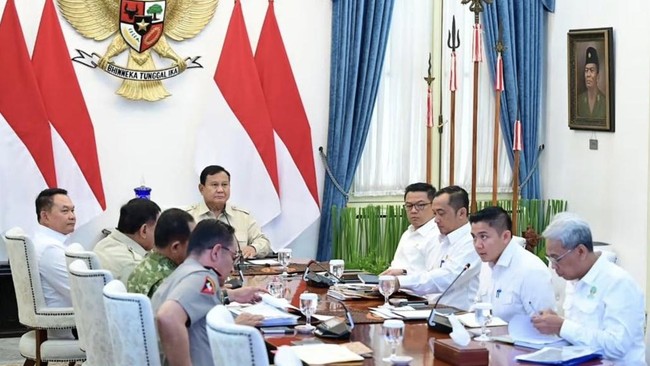
President Prabowo Subianto chaired a limited meeting on Monday (12 October) to discuss efforts to tackle forest and land fires affecting several parts of Indonesia. According to the National Disaster Mitigation Agency (BNPB), around 639 hectares of land were still burning across six provinces. The government is currently concentrating its suppression efforts in two provinces: Central Kalimantan and South Sumatra.
The fires in Indonesia have drawn global attention because their effects are also being felt in neighbouring Singapore and Malaysia.
Although fires remain widespread and have caused thick haze to spread to neighbouring countries, the government says suppression efforts have achieved a success rate of more than 80%.
“Ground operations are supported by more than 60,177 combined personnel, with an average suppression success rate of over 80% of the area newly burned each day,” the Cabinet Secretariat’s official account said in an Instagram post.
Aerial operations, including water-bombing in several areas, are continuing to accelerate suppression efforts. The government is also using weather-modification operations to make use of developing rain clouds, as the rainy season is expected to begin across much of the country between mid- and late October 2026.
“The President has asked for efforts to tackle forest and land fires to be strengthened, with all resources deployed optimally to speed up suppression and prevent the fires from spreading.”
After the meeting with President Prabowo, Coordinating Minister for Political and Security Affairs Dudung Abdurachman said the government had no plans to declare the fires a national disaster.
“Not yet. We are still capable of dealing with it,” Dudung said.
Dudung said the meeting did not discuss offers of assistance from other countries to help put out the fires.
He said firefighters on the ground faced several challenges, including areas that were difficult to reach, the need to manage wildlife, and the limited reach of vehicles and heavy equipment. Suppression efforts are currently focused on ground operations because the thick smoke is making it difficult for helicopters to operate.
In addition to emergency suppression, Dudung said the President had also called for intensified prevention efforts involving regional leaders.