
Government Saves Rp1.95 Trillion in Travel Budgets Through Civil Servants' WFH Policy
JAKARTA, CNBC INDONESIA — The government has recorded savings in travel budgets and utilities during the implementation of the once-a-week work-from-home (WFH) policy for civil servants (ASN).
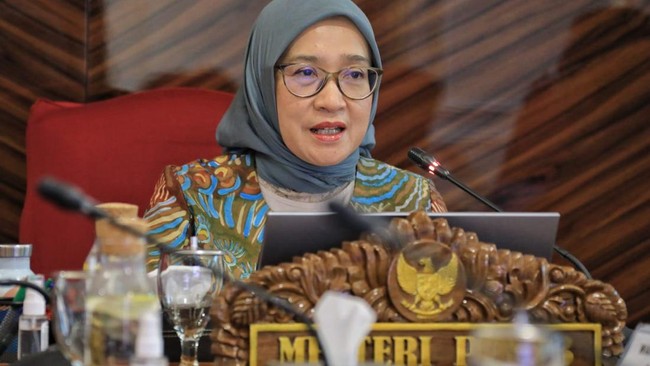
Minister of Public Administration and Bureaucratic Reform (PANRB) Rini Widyantini said the April 2026 WFH evaluation showed Rp1.95 trillion in travel efficiency savings.
Further savings of Rp65.6 billion in government utilities were achieved, with a national increase of 100,817 electronic signatures (TTE) as evidence of accelerated bureaucratic digitalisation.
“Efficiency does not mean reduced services. Today’s efficiency means changing how the government operates. Work flexibility is the gateway, while government digital transformation is the main change,” Rini stated in a press release on Friday, 29 May 2026.
Beyond government spending savings, the WFH evaluation for civil servants and PPPK staff showed maintained public service quality. She claimed 95% of public services remained stable or improved during flexible work implementation, with public satisfaction preserved and all complaints handled through official channels.
She noted these achievements stem from the transformation of civil servants’ work culture, supported by Digital Public Infrastructure (DPI) foundations, including digital identities, inter-agency data exchange, and government digital payments. These foundations are prerequisites for an integrated, non-siloed, and trustworthy bureaucracy.
“Work culture transformation must drive civil servants (ASN) to work more effectively, agilely, and results-oriented. Work flexibility does not lower service quality but rather strengthens professionalism and performance accountability,” Rini added.
The government also noted key points in the evaluation, including the need to strengthen digital work culture and adjust coordination patterns between units and agencies. Each agency is urged to ensure optimal public service delivery despite flexible work arrangements.
“Moving forward, work flexibility must be more maturely implemented. Not only flexible in location, but also stronger in governance, coordination, and organisational performance,” Rini stressed.
Given the positive evaluation results, including energy savings, the once-weekly WFH policy for ASN will be extended, as stated by Coordinating Minister for Economic Affairs Airlangga Hartarto.
“Based on the two-month WFH evaluation, the government has decided to extend the policy through new circulars from the PANRB Minister for central government agencies and the Interior Minister for local governments,” Airlangga said.
He added the policy will be accompanied by further guidance for civil servants to ensure flexible work remains productive, disciplined, and aligned with public service needs.
Through this evaluation, the government hopes civil servants’ work culture transformation will strengthen bureaucratic effectiveness, accelerate government digital transformation, and support efficiency and environmental sustainability.
Source: jawawa.id (https://jawawa.id/newsitem/government-saves-rp1-95-trillion-in-travel-budgets-through-civil-servants-wfh-policy-1780020804)
Originally published by CNBC Indonesia (https://www.cnbcindonesia.com/news/20260529043031-4-738539/uang-perjalanan-dinas-hemat-rp195-t-selama-asn-wfh), translated from Indonesian