
Government Rice Reserves Claimed to Reach 5.3 Million Tonnes
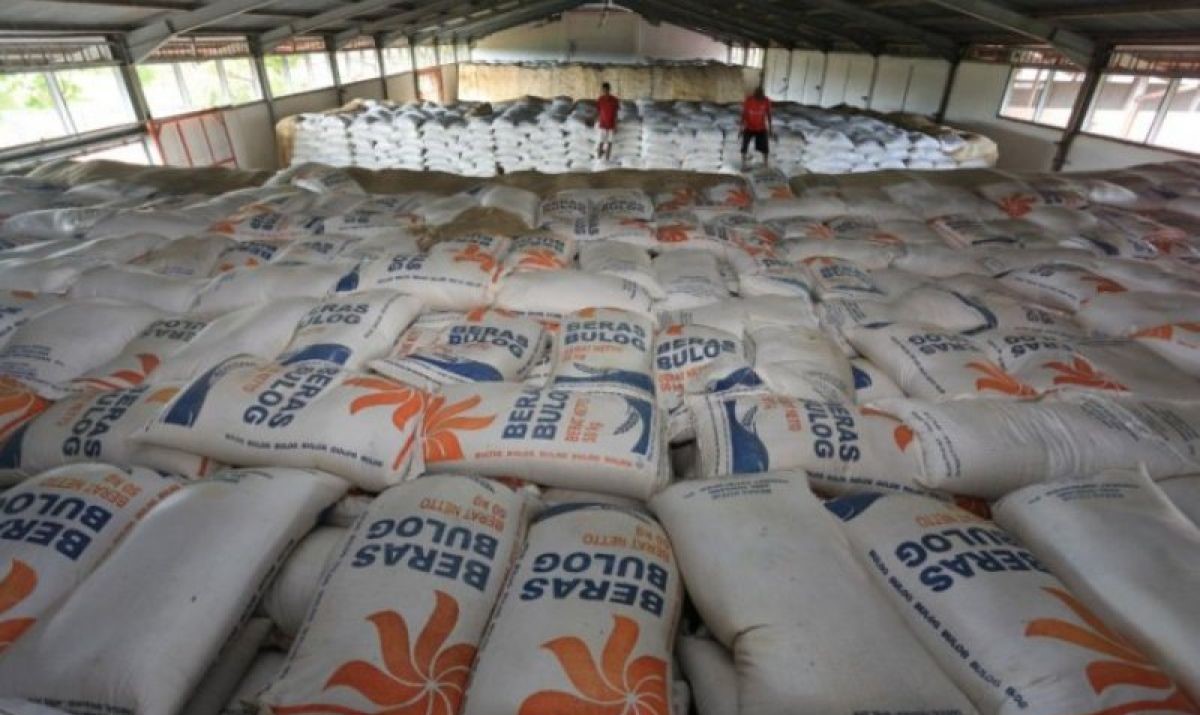
Indonesia’s food security is showing signs of increasing stability. The Government Rice Reserves (CBP) managed by Perum Bulot have now reached 5.3 million tonnes, marking the highest achievement in national records. This strong rice availability reinforces Indonesia’s position in maintaining food supplies amidst various global challenges and food inflation dynamics.
Yudhi Harsatriadi Sandyatma, Head of the Food Supply Stabilisation Working Team at the National Food Agency (Bapanas), stated that the current national food balance is in a good position, particularly for rice, which is the backbone of public consumption. He noted that the 5.33 million tonnes managed by Bulog represents an extraordinary achievement for the republic.
According to Sandyatma, strengthening food stocks is a vital factor in maintaining the balance between food availability and affordability. These two aspects are the primary foundations for controlling food inflation and protecting public purchasing power. He emphasised that availability and affordability are two inseparable sides of the same coin in relation to stabilising food supply and prices.
To ensure food remains affordable, Bapanas is strengthening market supervision through the formation of the 2026 Task Force for Cleaning Up Price, Quality, and Food Safety Violations. This task force, involving various ministries, agencies, local governments, and law enforcement, is tasked with monitoring the implementation of Maximum Retail Prices (HET), Reference Selling Prices (HAP), quality, and food safety in the field.
Bapanas also continues to implement various instruments for food supply and price stabilisation, such as the Cheap Food Movement (GPM). As of 8 June 202ability, the GPM has been implemented 5,237 times across 36 provinces and 377 regencies/cities. This programme serves as a primary instrument to dampen price volatility and strengthen public access to staple foods.
The strengthening of national food security also receives strong support from Bank Indonesia (BI) through the Food Inflation Control and Prosperous Food Movement (GPIPS), in collaboration with the Central Inflation Control Team (TPIP) and Regional Inflation Control Teams (TPID).
Bank Indonesia Deputy Governor Ricky P. Gozali emphasised that all food inflation control programmes are directed at three main objectives: keeping food inflation controlled, ensuring the continuity of supply across time and regions, and increasing supply chain efficiency so that benefits can be felt by both consumers and farmers. He added that GPIPS is not just a price stabilisation movement but part of an effort to build a productive, integrated, and prosperous food system capable of facing climate change and global challenges towards ‘Indonesia Emas 2045’.
Furthermore, BI Regional Department Head Rudy Brando Hutabarat revealed that market operations in Sumatra have reached 2,436 times, while in Java, they have reached 1,911 times, representing a 56% increase compared to the previous year. These operations are synchronised with Provincial and Regional Governments to help stabilise the market.
As of May 2026, rice stocks stored in Bulog warehouses across Indonesia have reached 5.39 million tonnes due to increased absorption of domestic production. Minister of Agriculture Andi Amran Sulaiman noted that the strengthening of national rice production and absorption signals a more robust foundation for Indonesia’s food self-sufficiency.
Source: jawawa.id (https://jawawa.id/newsitem/government-rice-reserves-claimed-to-reach-5-3-million-tonnes-1781142643)
Originally published by Media Indonesia (https://mediaindonesia.com/ekonomi/899285/cadangan-beras-pemerintah-diklaim-sentuh-53-juta-ton), translated from Indonesian