
Government reviews future smelter development
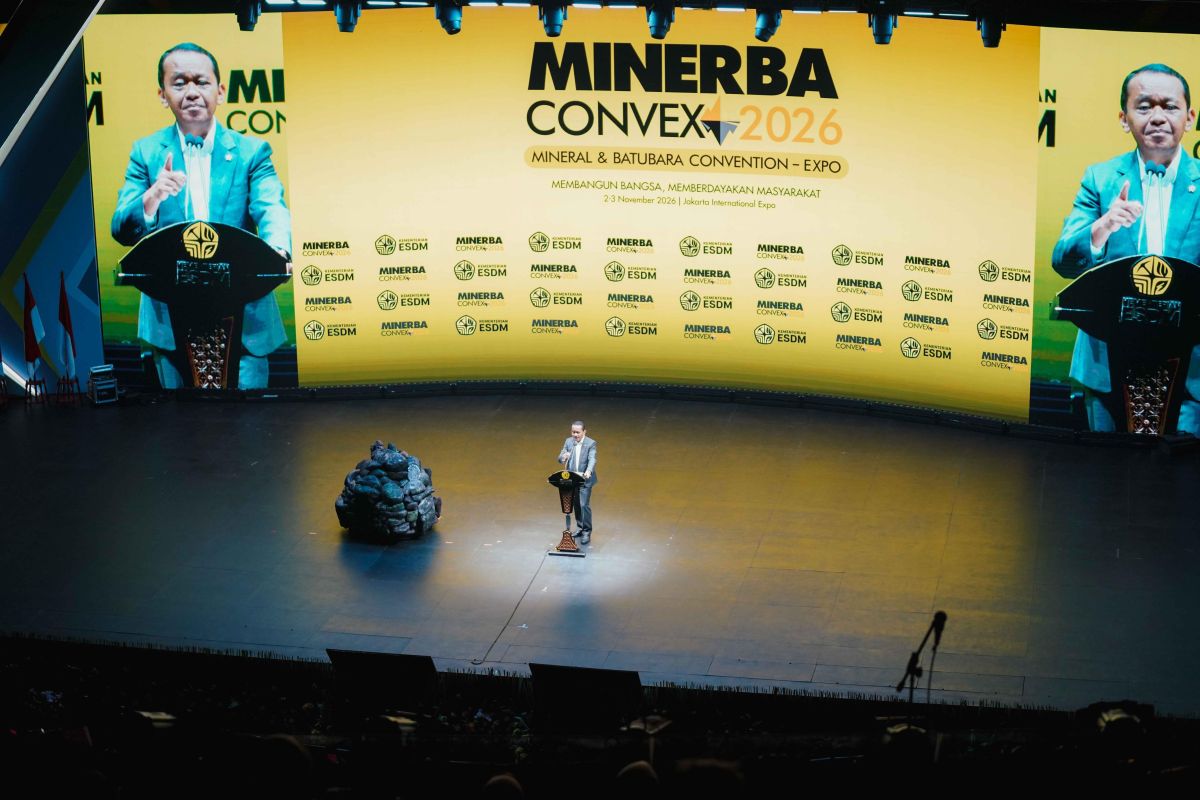
Jakarta (ANTARA) — The government is reviewing future smelter development, considering whether facilities should produce only intermediate goods or be geared towards finished products.
Coordinating Minister for Downstreaming and Energy Transition and Energy and Mineral Resources Minister Bahlil Lahadalia said in Jakarta on Tuesday that most products from the downstream industry and smelters were still at an intermediate stage.
“I have told businesspeople that most of our downstream industry’s products are still in the middle, at only 50–60 per cent. Smelters are now proliferating,” Bahlil said when opening the 2026 Mineral and Coal Convention and Exhibition (Minerba Convex) in Jakarta on Monday (2 November 2026).
Bahlil said the government was therefore weighing whether smelters producing only semi-finished goods should still be permitted, or whether further rules were needed.
“What we need to encourage is finished products, so that semi-finished raw materials are not all exported. Indonesia must receive the full benefit. This is what we are now reviewing,” he said.
Bahlil said Indonesia’s nickel export value was only US$3.3 billion in 2017–2019. After the government halted nickel exports and built domestic processing industries, the value rose to US$34 billion.
He said policy consistency was key to that success. As an example, he cited the electric vehicle battery ecosystem, which is now integrated from mining and smelting through to precursor materials, cathodes and batteries.
Bahlil said the idea had been met with doubt when he put it forward in 2020. The United States now sources precursor and cathode materials from Indonesia.
Indonesia also has three battery factories, including a plant in Karawang, West Java, which was inaugurated in 2024.
Mineral and Coal Director General Tri Winarno added that the next step was to deepen the industrial chain towards products with increasingly higher added value, including intermediate materials and components for the battery industry.
The review signals the direction of the next phase of downstreaming. The government wants to ensure that minerals processed domestically do not stop at semi-finished goods, but are made into finished products that deliver greater added value to Indonesia.