
Government Reveals Reasons for Easing Foreign Worker Permits in Indonesia
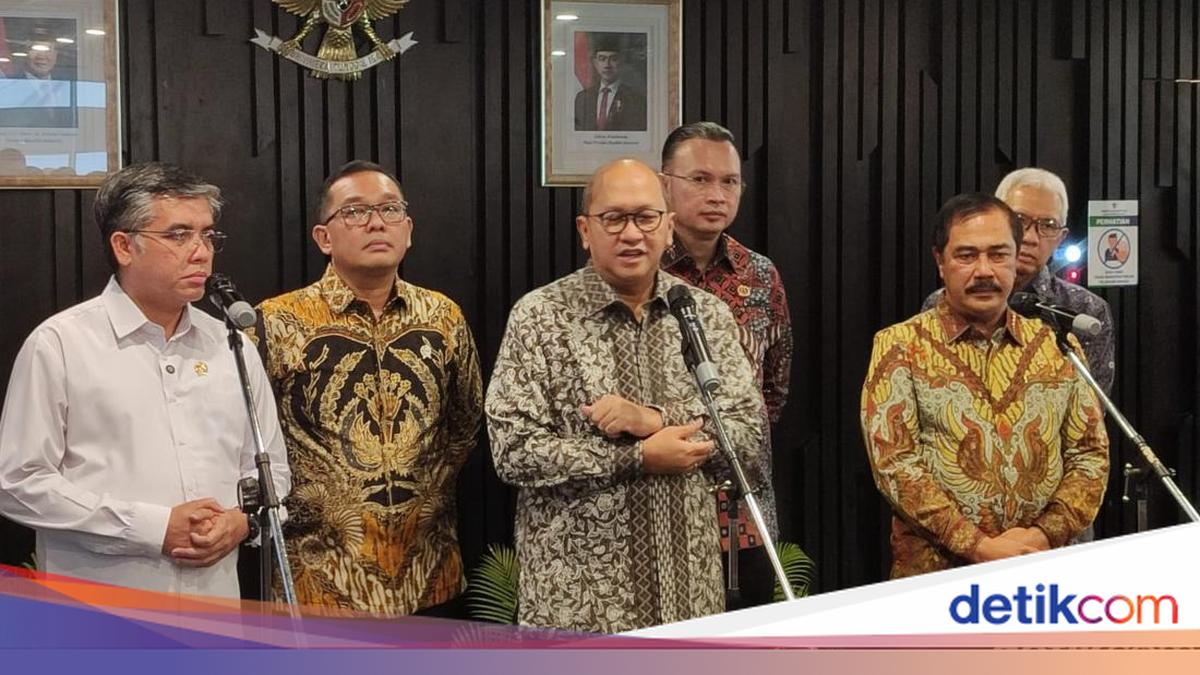
The government will simplify the licensing process for foreign workers (TKA) accompanying capital investments in Indonesia. This move is intended to promote ease of doing business and provide certainty to strengthen the national investment appeal.
This policy is marked by the signing of two Joint Ministerial Decrees (SKB) between the Minister of Manpower, Yassril, the Minister of Immigration and Correctional Services, Agus Andrianto, and the Minister of Investment and Downstreaming/Head of BKPM, Rosan P. Roeslani. These decrees regulate the integration of foreign worker services in the context of capital investment.
“This SKB is a collaborative step to support the smooth process of capital investment while creating an increasingly conducive investment climate in Indonesia,” Rosan explained in an official statement on Thursday (10/09/2026).
Specifically, one decree concerns the integration of the Online Single Submission (OSS) system owned by the Ministry of Investment and Downstreaming/BKPM with the Manpower Service Information and Application System (SIAPkerja) of the Ministry of Manpower, and the All Indonesia Application of the Ministry of Immigration and Correctional Services. This integration covers the validation of the Foreign Worker Utilisation Plan (RPTKA) as well as applications for Limited Stay Visas (VITAS), Limited Stay Permits (ITAS), and Permanent Stay Permits (ITAP) for foreign workers involved in investment. Another decree concerns the formation of an Integration Technical Team.
Rosan emphasised that this inter-system integration is part of the government’s effort to provide investment services that are increasingly easy, fast, and provide certainty for business actors. “With this collaboration, it provides significant business certainty, because foreign workers can know exactly when they can obtain the required permits,” said Rosan.
Furthermore, the man who also serves as the CEO of Danantara believes that easing foreign worker access to work in Indonesia has the potential to drive foreign investment into the country. This is because several sectors still require foreign workers, who are typically brought in by companies when investing. “The hope is that this integration will also have a positive impact on Foreign Direct Investment entering Indonesia, and certainly on the creation of quality jobs. We see that in several industrial sectors, the need for foreign workers is still necessary, and we hope this can facilitate the transfer of knowledge and technology to our human resources,” Rosan added.
Foreign Worker Permits Eased Through System Integration
Rosan stated that the licensing process for each service is now targeted to be completed in approximately four days. If the permit is not issued within five days, the relevant permit will be issued automatically according to the established mechanism.
“With this mechanism, the permit process takes about 4 days for each service. This is a continuation of the PP 28 reforms, and if it is not completed within 5 days, the permit will be issued automatically,” he said.
Furthermore, he explained that this SKB also ensures service time certainty through a Service Level Agreement (SLA). If the service deadline is exceeded, documents can be issued based on a ‘positive fictitious’ mechanism integrated with the OSS.
Additionally, the integration allows for service access as well as the exchange and utilisation of data between systems, making the process more transparent. Within this integration, the OSS functions as a single entry point and integration gateway for business actors applying for RPTKA validation as well as VITAS, ITAS, and ITAP applications.
The Ministry of Manpower will carry out the service process, eligibility assessment, and issue RPTKA validation through SIAPkerja. Meanwhile, the Ministry of Immigration and Correctional Services will perform verification and issue approvals for VITAS, ITAS, and ITAP through the All Indonesia Application. Once the entire process is complete, the issuance data is subsequently flowed back into the OSS system.