
Government Respects Demonstrations, Reaffirms Commitment to Address Public Issues
Jakarta (ANTARA) - The government respects and values students’ aspirations, including those expressed through demonstrations, as part of the freedom of expression guaranteed in a democracy, while reaffirming its commitment to addressing a range of public issues.
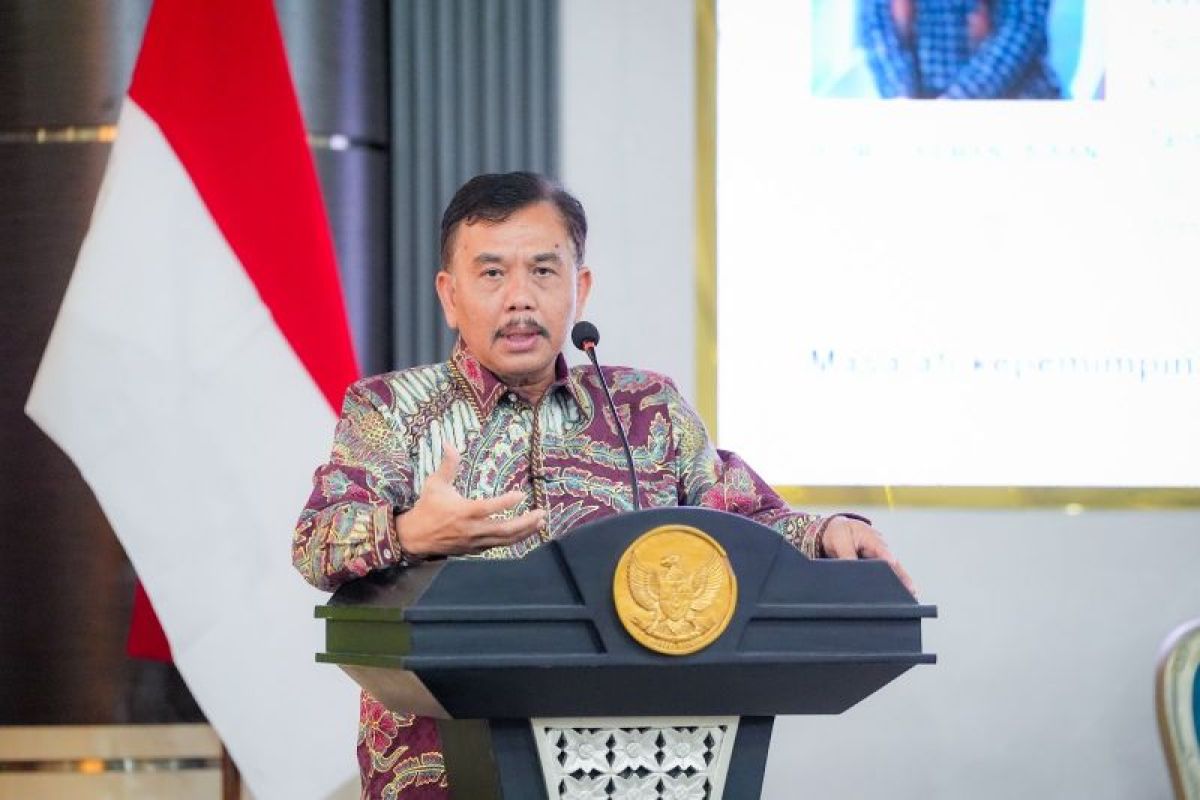
Syahganda Nainggolan, head of the Indonesian Government Communications Agency (Bakom), said in a statement received in Jakarta on Wednesday that criticism, public aspirations and oversight are important parts of national life.
He said these aspirations provide input for the government as it continues to evaluate and improve the quality of its policies and public services.
“The government respects and values students’ expression of their aspirations, including through demonstrations, as part of efforts to nurture democracy,” Syahganda said.
He said the government therefore understood the various concerns raised by students during demonstrations.
The issues highlighted include the environment, the economy, education, legal reform and governance, as well as the protection of human rights and democracy.
Syahganda said these issues were among the government’s priorities and were being addressed through various policies and concrete measures.
On environmental issues, for example, the government is stepping up efforts to extinguish forest and land fires.
It is also seeking to protect affected communities, strengthen prevention and ensure that the law is enforced against parties suspected of being responsible for the fires.
As of 25 October 2026, there had been 287 police reports involving individuals, with 244 suspects, as well as 104 reports involving companies, with 14 companies named as suspects.
“This shows that the response to forest and land fires involves operational action on the ground as well as legal action against parties suspected of being responsible,” Syahganda said.
On the economy, he said the government continued to work to maintain economic stability, expand employment opportunities and promote more evenly distributed development.
These efforts are reflected, among other things, in Indonesia’s year-on-year economic growth of 5.45 per cent in the first half of 2026.
Investment realisation from January to September 2026 reached Rp1,539.2 trillion, creating 2.19 million direct jobs.
“The government recognises that economic growth must be accompanied by higher purchasing power, better-quality jobs and equal access to opportunities, so that the public can feel the benefits of development more widely,” he said.
In education, the government is increasing its support, with the budget rising from Rp757.82 trillion in the 2026 state budget to Rp824 trillion in the 2027 budget.
The funds are intended to widen access to education, improve learning, renovate schools, accelerate the digitalisation of education and improve teachers’ welfare.
For example, more than 55,451 schools were renovated in 2025-2026, with a target of renovating more than 71,000 by the end of 2026.
The education digitalisation programme has reached 368,310 educational institutions, benefiting more than 51 million students.
To support digital learning, the government distributed 288,865 digital devices and related equipment, including laptops and data-storage devices, in 2025.
In 2026, 72,258 devices had been distributed towards a target of 742,536. In addition, 126,097 schools had received technical assistance in using the equipment.
“The government has also provided electricity to 2,389 schools and internet access to 8,152 schools that were not connected, so that the use of learning technology can be more evenly distributed,” Syahganda said.
On legal reform, Syahganda said President Prabowo Subianto’s administration was committed to eradicating corruption, collusion and nepotism without discrimination through law enforcement, preventing budget leakage and recovering state assets.
According to an official government statement on 6 October 2026, the Task Force for the Control of Forest Areas (Satgas PKH) had cumulatively recovered state finances worth Rp52 trillion. The task force had also brought more than 6.2 million hectares of forest under control.
These achievements form part of efforts to protect state assets so they can be used to the greatest possible benefit of the public.
On 22 October 2026, the task force also shut down illegal gold-mining operations by PT Kristalin Eka Lestari in Nabire, Central Papua, covering an area of 275.36 hectares.
The government also revoked the company’s mining business licence, which covered an area of 3,500 hectares.
“This is part of law enforcement against illegal mining, as well as efforts to protect forest areas and ensure natural resources are managed in accordance with regulations,” he said.
On human rights and democracy, the government reiterated its commitment to respecting citizens’ constitutional rights, including the freedom to express opinions peacefully.
Its commitment to respecting human rights is also reflected in its recognition of communities’ struggles in the nation’s history.
One example was the inauguration of the Ibu Marsinah Museum on 16 May 2026, in tribute to the struggle for workers’ rights.
Syahganda added that President Prabowo continued to make space for dialogue with academics, experts and various sections of society to hear their views and input on government policies.
One such initiative was the “The President Answers” forum, which lasted more than 12 hours.
“The government believes democracy must be continually safeguarded through openness to criticism, respect for differing views and protection of people’s rights in accordance with the Constitution,” he said.
Syahganda stressed that these achievements did not mean that all problems had been resolved. He said challenges remained and would require sustained effort, evaluation and improvement.
Students’ aspirations therefore provide important input to help ensure that government policies are better targeted and deliver tangible benefits to the public.
“The government is committed to continuing its work, keeping dialogue open and ensuring that development, law enforcement and governance always serve the people’s interests,” he concluded.