
Government Regulating Subsidised Fuel Consumption; Organda Proposes New Measures
The Government plans to restructure the criteria for recipients of subsidised fuel. In response to this plan, the Central Executive Board (DPP) of the Land Transportation Organisation (Organda) has suggested that the allocation of fuel supplies, particularly subsidised diesel, should be prioritised for public transport.
Kurnia Lesani Adnan, Secretary General of DPP Organda, stated that the distribution of subsidised fuel still frequently causes difficulties for the transport sector. Long queues at petrol stations are noted to often trigger disturbances.
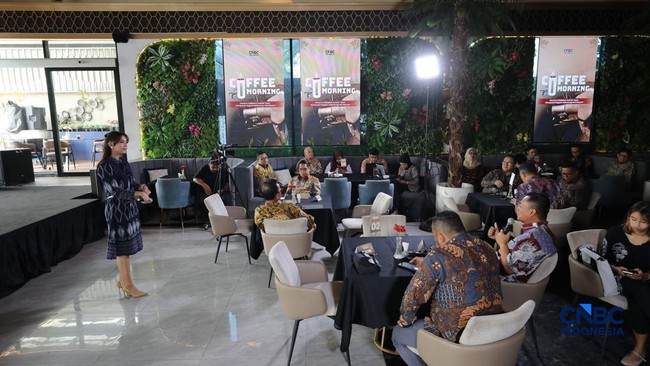
“As stakeholders, the major issue is diesel; the queues, the fights, and the disturbances are persistent and unresolved. We have spoken to all relevant parties,” he said during a CNBC Indonesia Coffee Morning event titled “Formulating Precise Subsidy Policies: Can the State Protect the People’s Rights?”, as reported on Thursday (1/10/2026).
According to him, the current pattern of fuel subsidy distribution is not yet targeted correctly. He believes that determining subsidy recipients should not be based solely on vehicle engine capacity, but should instead consider the economic condition of the vehicle owner and the vehicle’s function.
“The system itself is inaccurate. It should not be about CC (engine capacity), but about the poor and mass transport. Barcodes can be downloaded without requiring vehicle registration (STNK) or checking if taxes are active—only a photo is needed,” he said.
Kurnia assessed that this situation creates unfairness for transport operators who have fulfilled their licensing and taxation obligations. He noted that public transport vehicles that are administratively compliant receive the same subsidy rights as vehicle owners who neglect their obligations.
“Those of us who are compliant with licensing and tax payments have the same rights as those who ignore their obligations. Therefore, if the government is serious about resolving this issue, subsidised fuel or diesel should be reserved for public transport, specifically yellow-plate vehicles,” he argued.
Responding to Organda’s proposal, the Director General of Oil and Gas at the Ministry of Energy and Mineral Resources (ESDM), Laode Sulaeman, stated that his department appreciates the suggestion and will use it as input for determining future policies.
He also acknowledged an increase in diesel consumption since May 2026, rising from the usual 55,000 kilolitres (kl) per month to over 60,000 kl per month.
“We are grateful and consider this valuable input because, looking at the diesel consumption pattern, it changed after May from approximately 55,000 kl to over 60,000 kl per month. This serves as a lesson and we will take this feedback on board,” he said during the same event.
“From the government’s side, we are working to examine the causes one by one. It turns out 2026 is different from 2025; for example, the dry season is longer, leading to higher fuel demand,” he added.
“Furthermore, supply-side issues are also difficult; rivers previously used as modes for fuel delivery have dried up, which is occurring in various regions of Indonesia. This El Niño phenomenon has caused rapid increases in fuel demand,” he concluded.