
Government Pursues Rp 2,258 Trillion Investment to Drive 6% Economic Growth
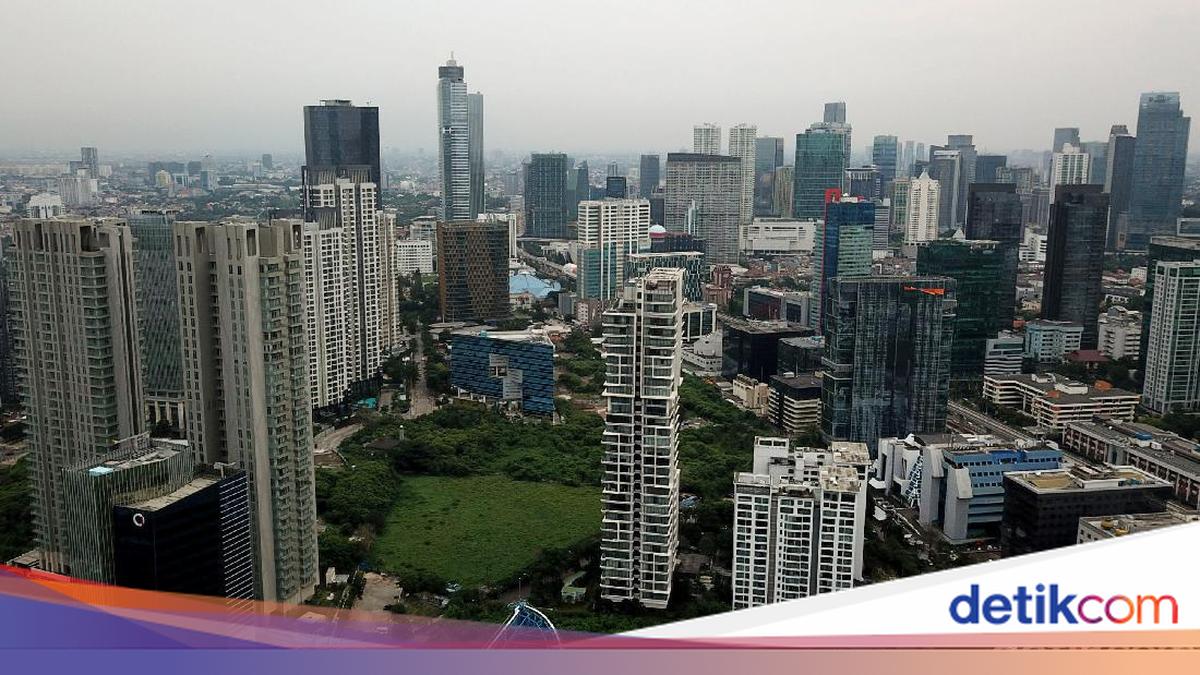
The government is targeting national economic growth of 6% by 2027. To achieve this, national investment is projected to grow by 8-9%, with capital requirements reaching between Rp 2,218 trillion and Rp 2,258 trillion.
Haryo Limanseto, Spokesperson for the Coordinating Ministry for Economic Affairs, stated that the transition towards a green economy, blue economy, and the strengthening of food, energy, and water security are being continuously accelerated as the primary drivers of national economic transformation.
He emphasised that the sustainability of the green economy requires strong synergy between the availability of clean energy and the acceleration of digital infrastructure.
“The government is committed to orchestrating the energy transition and digital development as the twin engines driving sustainable economic growth. The synergy between the availability of affordable clean energy and the acceleration of digital infrastructure is the key to creating a globally competitive investment climate while accelerating the achievement of long-term growth targets,” he stated in a written briefing on Sunday (4/10/2026).
Haryo noted that the reliability of green energy is an absolute prerequisite to support electricity demand, which is projected to reach 700-800 TWh by 2030, in line with President Prabowo Subianto’s directive to increase power generation capacity to 100 GW peak based on renewable energy.
The acceleration of the energy transition is supported by the construction of a transmission network spanning 47,758 kilometres-circuit to ensure a reliable electricity supply for industries and data centres.
Meanwhile, energy equality is being realised through the Village Electricity programme, which has reached 1,505 locations in 2025 and is targeted to cover 4,390 locations by 2026, aiming for an electrification ratio of over 99% with the energy security index rising to 7.13.
Opportunities for green economic acceleration are also bolstered by the wealth of strategic mineral resources such as nickel, tin, bauxite, copper, gold, and coal. Clean energy-based downstreaming programmes are projected to significantly increase added value, including the development of the electric vehicle ecosystem, which has the potential to provide up to 67 times more value given the global demand of US$ 5.91 trillion by 2045.
The abundance of critical minerals and the potential for raw materials for solar panels, such as silica sand, place Indonesia in a strategic bargaining position within the global supply chain. This momentum has successfully attracted interest for partnerships from the European Union, the United States, and Canada to collaborate on energy transition technology development and the diversification of the global critical mineral supply chain in Indonesia.
Regarding financing and human resources, the government is encouraging the use of green financing schemes such as green bonds, blended finance, JETP, and AZEC. These schemes are being aligned with improvements in workforce quality through the expansion of University Graduate Internship and Vocational Programmes to meet the needs of the green industry.
“The integrated optimisation of green energy potential and digitalisation represents a golden moment for Indonesia to assert its position as an energy host and a major player in the global energy transition. Through innovative financing schemes and the preparation of a high-quality workforce, the government is optimistic that the green economy sector can accelerate the achievement of net-zero emission targets while creating new, high-quality jobs,” he concluded.