
Government Pursues Growth Through 'Pro-Growth, Pro-Welfare' Strategy
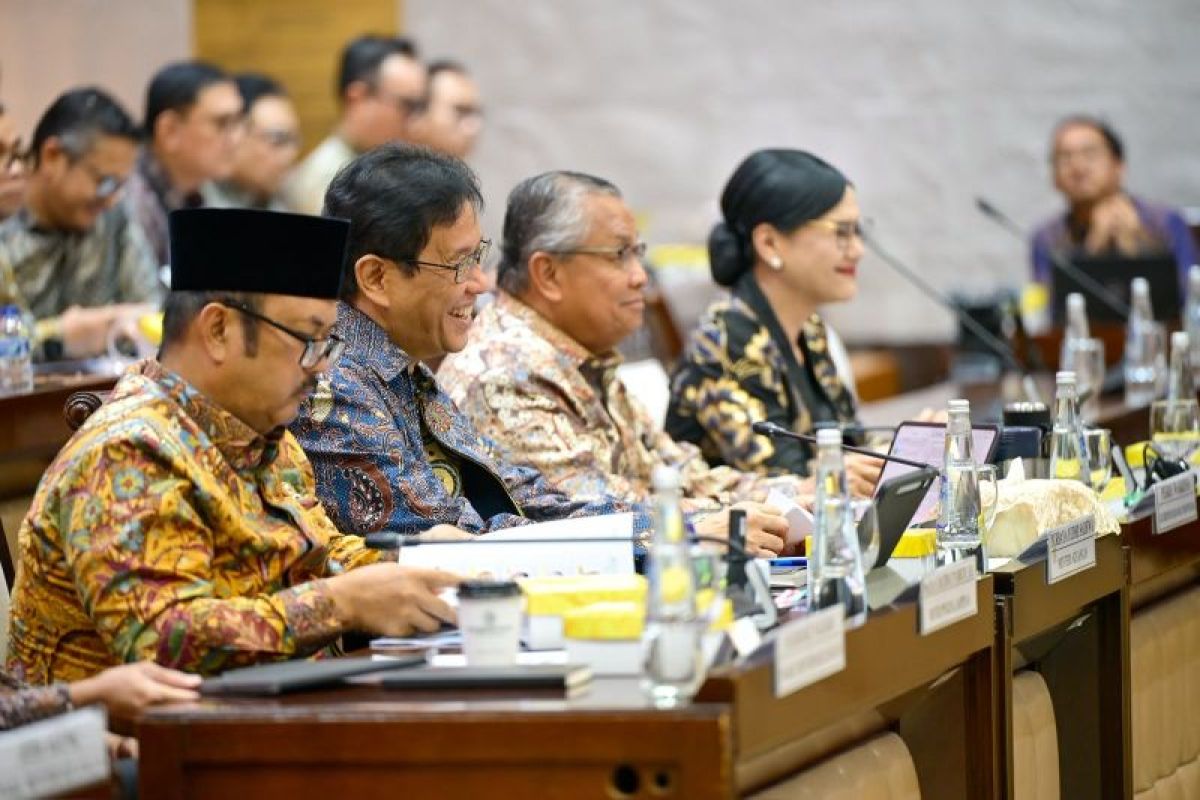
The government is pursuing national economic growth in 2027 through a pro-growth and pro-welfare strategy. “Through the pro-growth, pro-welfare strategy, the government is targeting higher economic growth alongside accelerating improvements in welfare,” said Finance Minister Purbaya Yudhi Sadewa during a working meeting with Commission XI of the Indonesian House of Representatives in Jakarta on Wednesday. Under this strategy, the government is targeting economic growth in 2027 within a range of 5.8 per cent to 6.5 per cent as part of the trajectory towards 8 per cent economic growth by 2029. Investment is also projected to grow within a range of 6.5 per cent to 7.5 per cent to support this target, particularly in high-value-added sectors. The government will also continue deregulation and address investment bottlenecks to improve the national investment climate through licensing simplification, strengthening legal certainty, and enhancing cross-sector and inter-institutional coordination. In parallel, the government will maintain the State Budget (APBN) as healthy, credible, and sustainable through optimising state revenue, improving spending quality, and prudent financing management to safeguard economic stability and accelerate national economic transformation. Purbaya explained this optimism is supported by the resilience of the national economy demonstrated in the first quarter of 2026, which recorded growth of 5.61 per cent year-on-year, inflation of 3.08 per cent, a continued trade balance surplus, and foreign exchange reserves of 144.9 billion US dollars, equivalent to 5.6 months of imports. Entering the second quarter, Purbaya noted that domestic economic activity is also showing an improving trend. Consumer optimism remains intact, public spending activity has increased, and a number of economic indicators such as motor vehicle sales, electricity consumption, cement consumption, and manufacturing activity are showing positive developments. The government continues to keep fiscal policy responsive and anticipatory amid global dynamics still marked by geopolitical uncertainty and financial market volatility. “The State Budget not only functions as a shock absorber to maintain economic stability, but also as a development instrument capable of protecting the public while simultaneously driving stronger and higher-quality economic growth,” Purbaya stated.