
Government Pursues Downstreaming Investment to Drive Technology and Job Creation
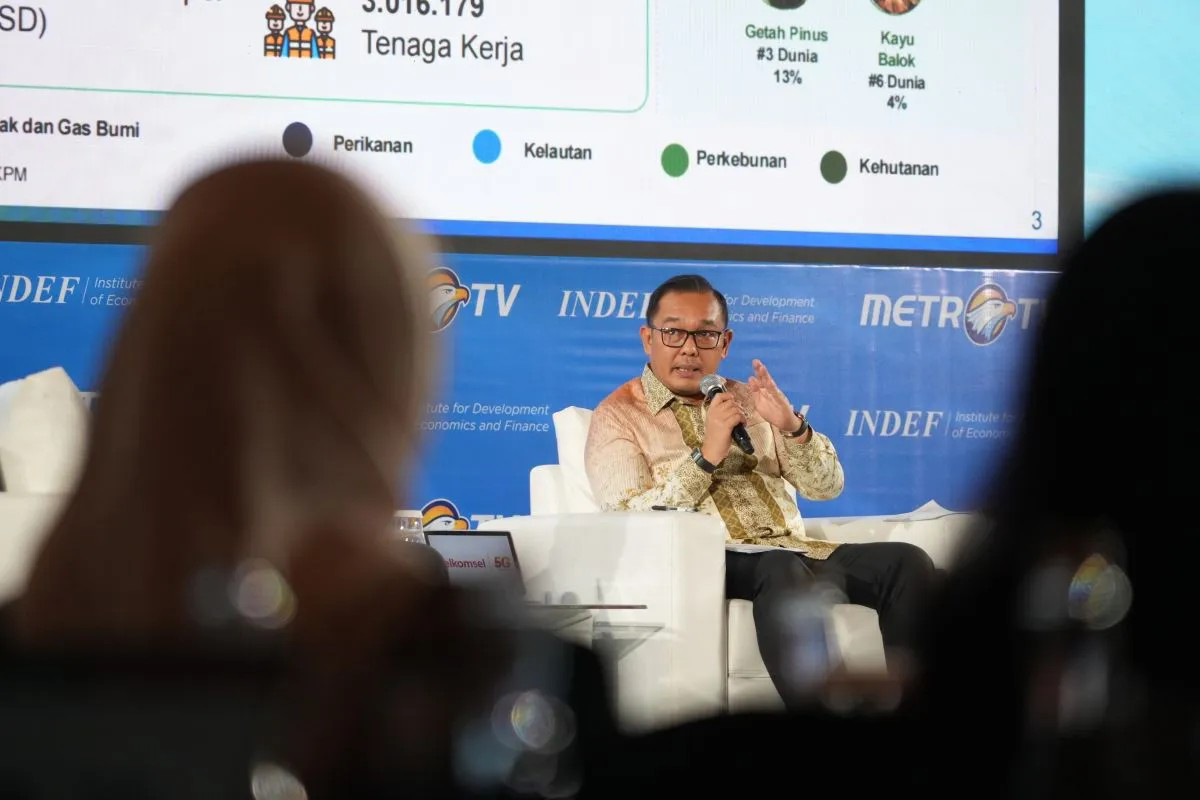
The government is not merely pursuing the scale of investment entering Indonesia. Investment in the downstream sector is also directed towards facilitating technology transfer, encouraging research and innovation, and strengthening the mastery of more complex production processes.
The Deputy Minister of Investment and Downstreaming/Deputy Head of BKPM, Todotua Pasaribu, stated that the government is preparing three strategies to attract investment while strengthening downstreaming, namely strategic planning, execution, and the provision of incentives.
“When we speak about the role of the Ministry of Investment and Downstreaming/BKPM, we are talking about strategic planning, how to execute effectively, and incentives,” Todotua said in a written statement on Saturday (5/9/2026).
“Investment entering Indonesia needs to be directed not only towards the construction of production facilities but also towards bringing technology transfer, research and innovation, and the mastery of more complex production processes,” he added.
Data from the Ministry of Investment and Downstreaming/BKPM shows that investment realisation in the downstream sector reached Rp300.1 trillion throughout the first semester of 2026. This value is equivalent to 29.7% of the total national investment realisation. Compared to the same period in the previous year, downstream investment realisation increased by 6.9%.
Of the total investment, Foreign Direct Investment (FDI) remains the largest contributor with a value of Rp212.8 trillion, or approximately 70.9%. Meanwhile, Domestic Direct Investment (DDI) was recorded at Rp87.3 trillion, or about 29.1% of the total downstream sector investment realisation. This composition indicates that the role of foreign investors remains dominant in financing downstream projects entering Indonesia.
However, the government believes that incoming investment must generate broader benefits, including increasing domestic industrial capacity and technological capabilities. In addition to investment quality, the government also highlighted the distribution of downstream projects.
In the first semester of 2026, 75.7% of downstream investment realisation, or equivalent to Rp227.3 trillion, originated from projects located outside Java. This figure shows that downstream investment is serving as one of the instruments to drive economic activity in various regions of Indonesia, particularly areas with natural resource bases and industrial development potential.
The government is striving to ensure that the downstream process does not stop at processing raw materials into semi-finished products. Investment is also directed towards increasing the complexity of production processes so that the added value generated domestically becomes even greater.
To support this direction, the Ministry of Investment and Downstreaming/BKPM previously formulated the Strategic Investment Downstreaming Roadmap for 2022 and 2023. This roadmap maps the downstreaming potential of 28 commodities spread across eight main sectors. From this mapping, the government estimates a potential investment value of up to USD 618.1 billion. In addition to investment, downstreaming is also projected to create approximately 3 million new jobs.
Due to this vast potential, the government needs to ensure project readiness, regulation, infrastructure, and incentive schemes so that planned investments can truly be realised. Todotua noted that the execution aspect is a crucial part of the government’s strategy.
“The execution of the downstream process in Indonesia must be supported by certainty and ease of doing business through the improvement of the business climate and the refinement of business licensing policies,” said Todotua.
From a regulatory perspective, the government is conducting business climate reforms through the implementation of risk-based business licensing. This policy includes streamlining the authority to issue business licences, increasing business certainty, and simplifying the licensing process.
One of the refinements to this policy is carried out through the issuance of Government Regulation Number 28 of 2025 concerning the Implementation of Risk-Based Business Licensing. The government is also integrating the licensing process through the Online Single Submission (OSS) system. This integration aims to reduce the potential for overlapping authorities and make the licensing process more systematic and measurable.
Source: jawawa.id (https://jawawa.id/newsitem/government-pursues-downstreaming-investment-to-drive-technology-and-job-creation-1788623468)
Originally published by akurat.co (https://akurat.co/riil/888146/pemerintah-kejar-investasi-hilirisasi-yang-bawa-teknologi-dan-lapangan-kerja), translated from Indonesian