
Government Proposes International Financial Centre Bill for 2026 Legislative Programme
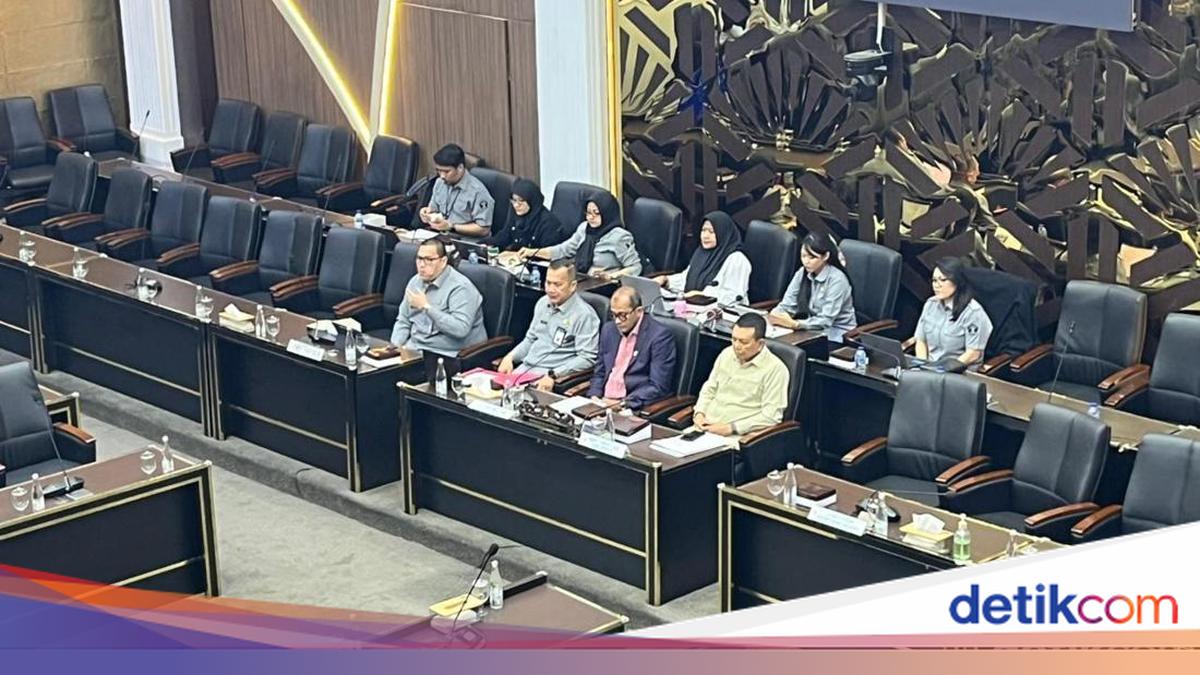
The government has proposed that the Bill on the Indonesian International Financial Centre be included in the evaluation of the 2026 Priority National Legislation Programme (Prolegnas). The government considers there to be a national urgency to immediately establish the regulation.
This was conveyed by Deputy Minister of Law Eddy Hiariej during a working meeting with the House of Representatives’ Legislation Body (Baleg) at the parliament complex in Senayan, Jakarta, on Tuesday (23/6/2026). Eddy stated that the establishment of the Bill on the Indonesian International Financial Centre is mandated by Law Number 4 of 2026 concerning the Development and Strengthening of the Financial Sector (P2SK), which was recently enacted.
“Based on the provisions of Article 248A of Law Number 4 of 2026 amending Law Number 4 of 2023 on the Development and Strengthening of the Financial Sector, the provisions regarding the operation of an international financial centre shall be regulated by law,” Eddy said.
“The law must be established no later than three months from the promulgation of Law Number 4 of 2026, which was on 17 June 2026,” he continued.
He noted that the International Financial Centre Bill is not currently included in the 2026 Priority Prolegnas list. Therefore, the government is proposing that its deliberation be conducted outside the Prolegnas based on the provisions of Article 23 paragraph (2) of Law Number 12 of 2011 concerning the Establishment of Legislation.
He assessed that there is a national urgency to immediately form the regulation. According to him, sustainable economic growth and financial sector deepening are necessary to realise public welfare.
“The urgency of establishing the Law on the Indonesian International Financial Centre is that to prosper all the people and the nation of Indonesia as mandated by the 1945 Constitution of the Republic of Indonesia, sustainable economic growth as well as deepening and diversification of the national economy are required, through an effective contribution to the financial sector,” he explained.
“To realise this condition, it is necessary to establish an Indonesian International Financial Centre in an area granted special authority as a driver of sustainable Indonesian economy in the future, which is a concentration of financial services and a centre for technology development and financial services support, as well as a trusted financial centre managed based on the principles of efficiency, transparency, and integrity,” he continued.
He explained that the purpose of establishing the Indonesian International Financial Centre is to enhance Indonesia’s competitiveness as an international financial hub. Additionally, it aims to encourage financial sector deepening and innovation.
“Attracting investment and financial sector players, both national and international. Facilitating financing for the real sector, national strategic projects, sustainable financing, climate financing, infrastructure financing, and/or other financing. Strengthening the financial sector’s contribution to the national economy,” he clarified.
Therefore, the government proposed that the Bill on the Indonesian International Financial Centre be included in the evaluation of the 2026 Prolegnas. Eddy stated this is to provide a legal foundation for the development of an international financial centre in Indonesia and to increase the competitiveness of the national financial sector.
“The government proposes that the Bill on the Indonesian International Financial Centre be included in the evaluation of the 2024 National Legislation Programme to provide a legal basis for the development of the Indonesian International Financial Centre and to support the enhancement of national economic and financial sector competitiveness,” he concluded.