
Government Promotes Integrated Training-to-Placement Pathway for Poor Communities in Batang
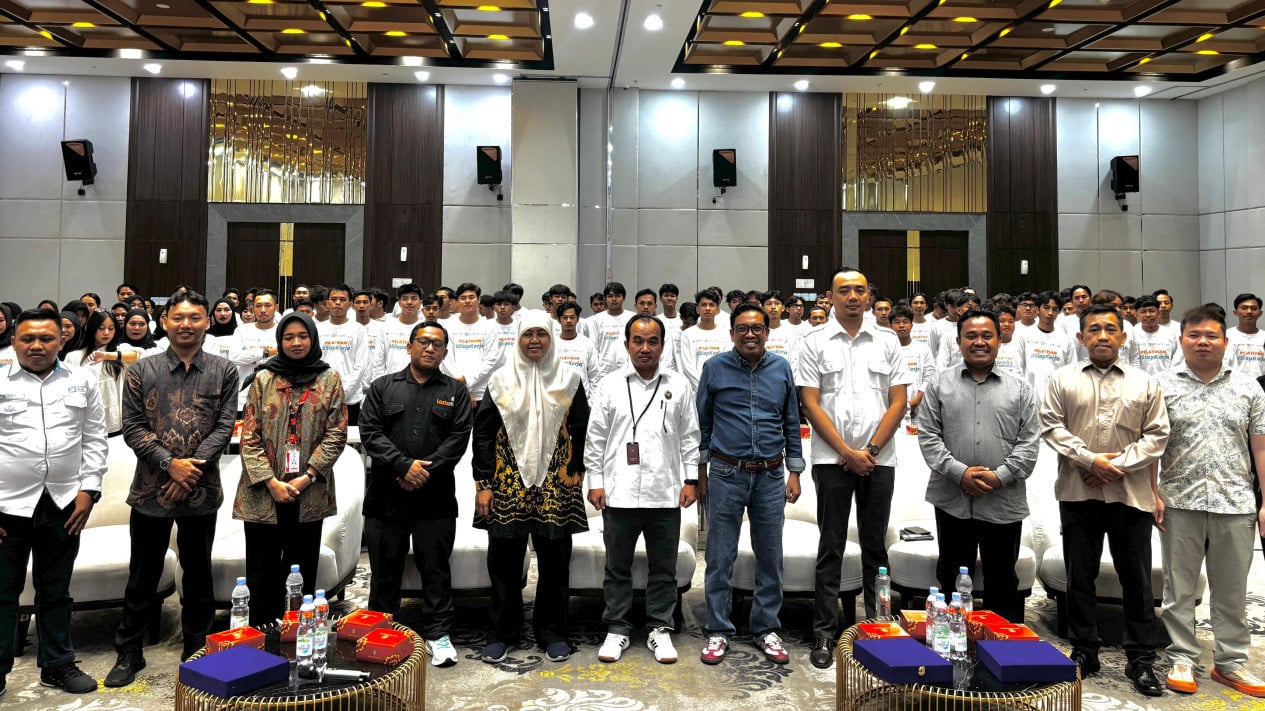
Batang, VIVA – One hundred underprivileged residents of Batang Regency have taken their first step towards work in manufacturing with their first stitches. The Ready-for-Work Training programme for garment sewing machine operators, combined with job-placement assistance, was officially launched at the hall of the Batang Industropolis Special Economic Zone (SEZ) on Monday (2 November 2026).
Abdul Haris, Deputy for Coordination of Community Empowerment in Villages, Disadvantaged Regions and Certain Regions at the Coordinating Ministry for Community Empowerment, said the success of job-training programmes should be measured by how many participants find work and remain employed after placement, rather than by the number of people trained.
The training, organised by Ruang Amal Indonesia and LAZISMU, runs from 2 to 7 November 2026. All participants are from underprivileged families, or are mustahik, in Batang Regency.
Abdul Haris said employment challenges were not simply a matter of whether vacancies were available.
“Our employment challenge is not merely whether vacancies exist, but also the gap between the skills jobseekers have and those sought by industry,” Deputy Abdul Haris said in remarks delivered by Assistant Deputy Tri Haryanto on Wednesday (3 November 2026).
The gap is reflected in data from Statistics Indonesia (BPS). The open unemployment rate in May 2026 stood at 4.65 per cent, equivalent to 7.22 million people out of a national labour force of 155.41 million. In Batang Regency, the rate was 5.07 per cent in 2025, or around 26,000 people.
According to Abdul Haris, for many jobseekers the biggest obstacle is not a lack of willingness to work, but the absence of the necessary skills and pathways into employment.
Batang, however, has an asset that many other regions do not. The Batang Industropolis SEZ, inaugurated by President Prabowo Subianto in March 2025, is designed to accommodate up to 250,000 workers when fully operational. In March 2025, the zone was reported to employ 7,008 people, around 80 per cent of whom—approximately 5,600—were from Batang Regency.
Yet having an industrial zone on one’s doorstep does not necessarily mean that its doors are open.
“Geographical proximity, however, does not automatically mean proximity to opportunity,” Abdul Haris stressed.
He explained that labour-intensive industries need workers who are ready to start, while underprivileged families often lack the skills, certification and pathways needed to apply.
Source: jawawa.id (https://jawawa.id/newsitem/government-promotes-integrated-training-to-placement-pathway-for-poor-communities-in-batang-1793695937)
Originally published by VIVA.co.id (https://www.viva.co.id/berita/nasional/1940706-pemerintah-dorong-integrasi-pelatihan-hingga-penempatan-untuk-masyarakat-miskin-di-batang), translated from Indonesian