
Government Promotes Human Resource Development and Regional Economy Through Kickboxing
The government continues to strive to strengthen the national sports industry to ensure it can consistently achieve achievements and provide a positive impact on the economic sector. Therefore, strengthening governance and the ecosystem has become a vital part of promoting sports as a productive and value-added sector.
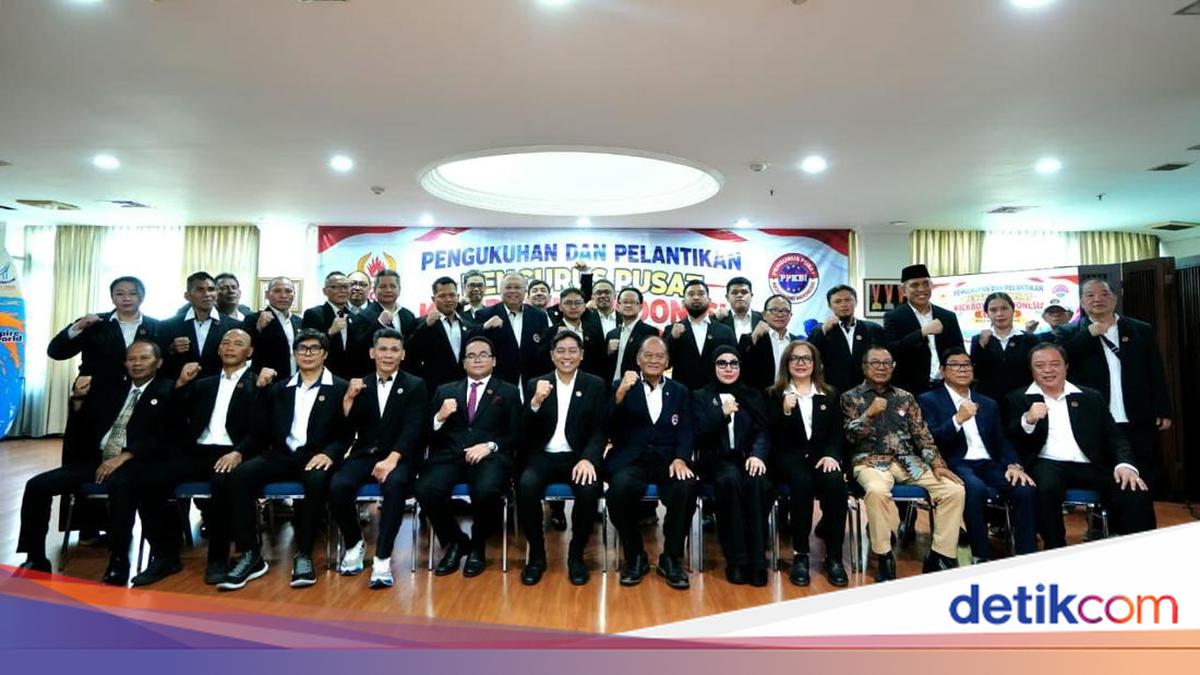
During the inauguration of Haryo Limanseto, Expert Staff for Regional Development at the Coordinating Ministry for Economic Affairs, as Vice Chairman for Institutional and Communication Affairs of the Central Board of Kickboxing Indonesia at the KONI Headquarters on Wednesday (16/9), the need to strengthen the organisation and training of kickboxing in Indonesia was emphasised. This initiative aims to create broader synergy between sports development, human resource development, and the optimisation of regional economic potential.
“Sports have a broader dimension; within them lies character building, talent development, the creation of economic activities, and the potential to elevate the reputation and excellence of regions. Therefore, the development of the sports ecosystem needs to be carried out in an integrated manner,” Haryo stated in a written statement on Thursday (17/9/2026).
Kickboxing is one of the sports branches that continues to grow in Indonesia and possesses significant potential. At the 2025 SEA Games in Thailand, the Indonesian kickboxing contingent successfully secured one gold, one silver, and four bronze medals. Meanwhile, at the 2025 Senior National Championship and Junior Open Kickboxing Championship, more than 250 athletes from 19 provinces participated.
“This development shows an expanding base for kickboxing training in various regions, which has the potential to drive economic activity through the organisation of competitions and sporting activities involving the accommodation, transport, culinary, sports equipment, event organising services, and regional MSME sectors,” he added.
He explained that strengthening this ecosystem aligns with the government’s focus on developing the sports industry as a sector that can provide added value to the economy. The sports industry encompasses not only the organisation of matches but also various supporting activities such as sports equipment and apparel, sponsorship, broadcasting, and other commercial activities.
From a regional development perspective, hosting sporting events can also serve as an instrument to introduce regional potential and stimulate local economic movement.
“Moving forward, we need to see how sports can grow alongside the economic ecosystem in the regions. Sporting events can serve as a space for athletes to achieve, for the community to participate, and for local businesses to thrive. With good collaboration, sports can provide broader benefits to society,” Haryo expressed.
Beyond the economic aspect, sports development also plays a strategic role in building healthy, productive, disciplined, and competitive human resources. The government places the improvement of human resource quality and sporting achievements as part of the national development agenda, including through the development of high-performance sports training centres in the regions.
In line with this, the General Chairman of the Central Board of Kickboxing Indonesia, Ngatino, stated that the current focus will be on developing the athlete training ecosystem. Sustainable athlete development will continue through organisational strengthening, improving the quality of coaches and athletes, providing facilities and infrastructure, and developing competitions that provide space for young talents to grow.
Sports development certainly requires a consistent process and cross-party collaboration, ranging from the government, sports organisations, the business world, communities, to the general public. The goal is to build an ecosystem that can produce achievements while providing social and economic benefits.
“Looking ahead, we plan to hold a national championship in early November, which will include a gala night to recognise the 10 best athletes. Furthermore, by 2027, we have prepared plans for the professional circuit and will begin searching for another 10 athletes to be prepared as professionals, as this is a crucial point in selecting Indonesia’s representatives for international competition,” Ngatino concluded.
Source: jawawa.id (https://jawawa.id/newsitem/government-promotes-human-resource-development-and-regional-economy-through-kickboxing-1789613947)
Originally published by detikcom (https://news.detik.com/berita/d-8666314/pemerintah-dorong-pengembangan-sdm-ekonomi-daerah-melalui-kickboxing), translated from Indonesian