
Government Promises Investment Climate Evaluation
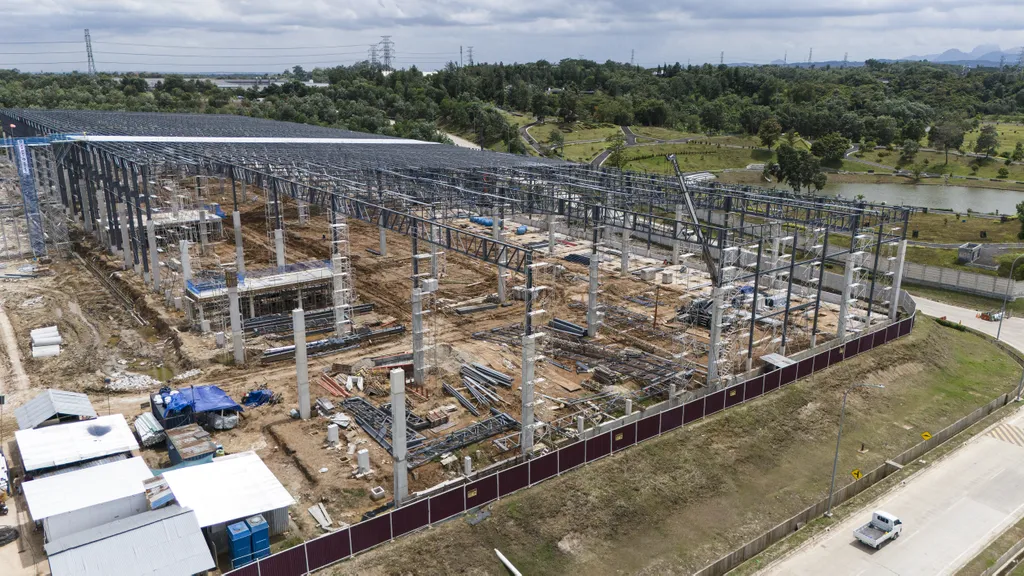
The task force will be effective if the President mandates a strong and clear execution and deadline, as well as compels ministries and regional governments to simplify business permits.
By Aguido Adri, Dimas Waraditya Nugraha
15 Mei 2026 19:24 WIB · English
JAKARTA, KOMPAS — The government considers the input letter from Chinese investors as material for evaluation to improve the investment climate in Indonesia. This aspiration is deemed important amid increasingly fierce global competition for foreign capital flows.
The Deputy Minister of Investment and Downstreaming/Deputy Head of the Investment Coordinating Board, Todotua Pasaribu, stated that the letter submitted by the China Chamber of Commerce in Indonesia is regarded as constructive input for the government. Notes from business actors can assist the government in mapping the obstacles faced by investors on the ground.
“We consider such input to be positive as it provides an overview of the challenges faced by business actors. It serves as material for the government to evaluate and improve policies as well as investment services,” said Todotua when confirmed on Friday (15/5/2026).
A letter from Chinese entrepreneurs previously attracted attention after circulating among business actors and government officials. In the letter, investors highlighted several issues deemed to hinder the smooth flow of investment, ranging from the licensing process, regulatory certainty, to operational constraints in the field.
China has been one of the largest investors in Indonesia in recent years. Capital flows from that country have significantly entered the mineral downstream, energy, and manufacturing sectors. Therefore, Todotua assesses that input from Chinese business actors is crucial to maintaining the sustainability of investments in these strategic sectors.
Todotua opines that such input is common in international business relations. The government needs to capture this signal as part of efforts to maintain Indonesia’s competitiveness as an investment destination.
Competition among countries to attract foreign capital, he continued, is currently becoming increasingly intense. Therefore, the government needs to respond quickly to any issues perceived by investors to prevent the relocation of investments to other countries.
He added that Indonesia has several advantages to maintain the interest of global investors. In addition to abundant natural resources, the large domestic market serves as a major attraction. Indonesia’s strategic geographical position in the Asian region also provides distinct advantages in the regional supply chain.
The government, according to Todotua, is also continuously promoting the downstream agenda as one of the priorities for economic development. Through this program, the government aims to expand the processing of commodities domestically so that added value is no longer enjoyed in the destination countries for exports.
Commodities such as coal, oil and gas, as well as agricultural products are prioritized sectors. Domestic processing is expected to create broader benefits, ranging from job creation to enhanced economic growth.
“The hope is that the commodities we possess are not only exported in their raw form but are processed domestically so that the economic benefits are greater for the community and the national economy,” he stated.
The government has also promised to open a dialogue with investors to follow up on various challenges faced. According to Todotua, intensive communication is necessary so that bureaucratic obstacles and technical issues in the field can be addressed promptly.
The Chairperson of Apindo, Shinta Kamdani, stated that issues related to investment and business certainty continue to recur due to the ongoing lack of synchronization in policy implementation among agencies.
Apindo believes that the government shares the same spirit and goals as the business world, which is to create a healthy investment climate and strong business certainty. However, its implementation in the field often encounters differences in interpretation and sectoral egos.
“Often, the direction of policy at the national level is already positive, but in its implementation, there still arise differences in interpretation, sectoral egos, and a lack of synchronization between institutions,” said Shinta, in a written message to Kompas, Friday (15/5/2026).
This situation has led to the emergence of new regulations that are, in fact, counterproductive to efforts in deregulation and the simplification of licensing. As a result, the business world faces uncertainty in executing business planning, business expansion, long-term investments, and product innovation.
According to Shinta, the consistency of policies is a fundamental factor for both foreign and domestic investors. Regulatory ambiguities make business actors more cautious in making strategic decisions due to additional costs, legal risks, and operational uncertainties.
“Global investors always compare Indonesia with other countries in the region that offer simpler, faster, and more consistent processes,” he said.
Both foreign and domestic investors affected by long-term policy inconsistencies can impact job creation and the competitiveness of the national industry.
Apindo also highlights the practice of illegal levies and informal costs, which are considered to be a serious obstacle to Indonesia’s investment competitiveness. Informal costs increase uncertainty in business calculations amid the still high operational costs in Indonesia, ranging from logistics, energy, to borrowing costs.
In addition to affecting operational efficiency, the practice of informal costs is also considered to worsen investors’ perceptions of the quality of governance and the ease of doing business in Indonesia.
Regarding the establishment of the Deregulation Task Force, Shinda continued, the success of the task force cannot be measured solely by the number of regulations that are cut,