
Government Prioritises Investment Potential Despite Tax Haven Concerns over Financial Centre
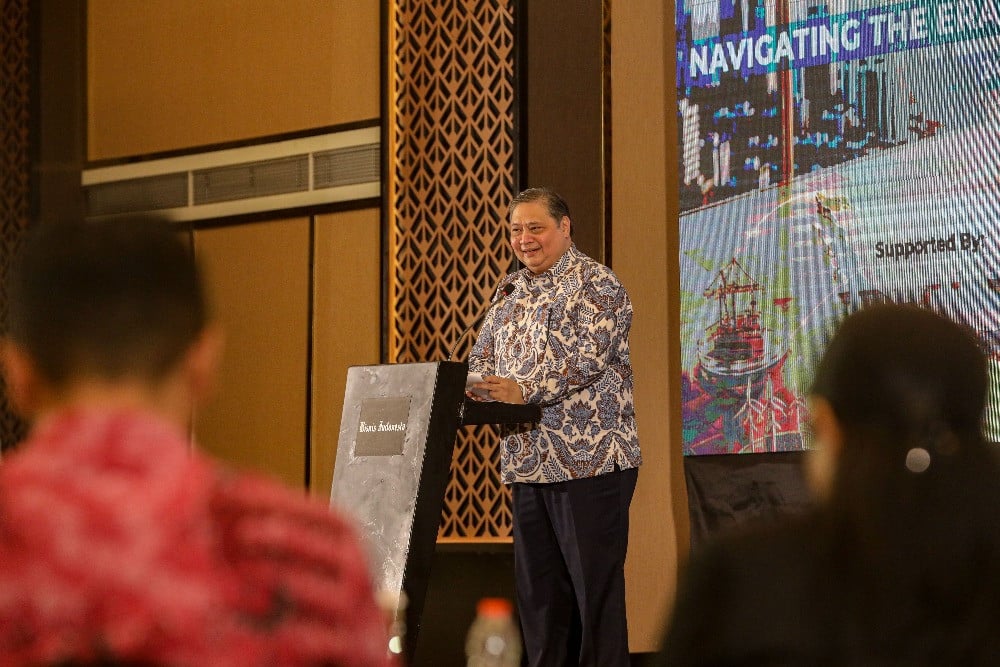
The government does not deny the possibility of Indonesia becoming a tax haven with the establishment of the Indonesia International Financial Centre (PFII), which has now gained legality through the Law on the Development and Strengthening of the Financial Sector (P2SK).
To note, the PFII, or financial centre that the government intends to build in Bali, will accommodate family offices and various other foreign financial institutions. This vehicle to attract global investment is planned to follow the model established in Dubai, United Arab Emirates (UAE).
The government does not deny that through the PFII, Indonesia could become a tax haven similar to Singapore, Hong Kong, or the UAE. However, the potential for investment entering the country through a financial centre could be double the amount of realised investment in Indonesia annually.
“In Dubai, there is a tax haven. In Singapore, there is a tax haven. It comes back to this: currently, with traditional investment, we see about Rp2,200 trillion per year. Compare that to Singapore, which can attract investment related to its financial centre equivalent to Rp5,000 trillion,” stated the Coordinating Minister for Economic Affairs, Airlangga Hartarto, to journalists at the Coordinating Ministry for Economic Affairs office, Jakarta, on Wednesday (24/6/202leg).
According to data from the Ministry of Investment and Downstreaming/Investment Coordinating Board (BKPM), Indonesia’s average realised investment during 2021-2025 reached Rp1,434.5 trillion. This year, the government targets realised investment to reach Rp2,041.3 trillion.
Airlangga explained that the global funds entering Singapore via its financial centre can reach Rp5,000 trillion. These global funds then become investments that flow out of the financial centre, even to other countries.
This also explains why Singapore is recorded as the largest source of Foreign Direct Investment (FDI) in Indonesia. The funds entering initially originate from other countries and are then channelled in the form of FDI.
Airlangga believes Indonesia can seize even greater opportunities. Unlike Singapore, Indonesia possesses many real-sector projects domestically, including those managed by Danantara. Global capital entering the PFII is expected to serve as a new source of financing for these projects.
“The Dubai financial centre is also a reference; they attract around US$800 billion. Therefore, we must attract the global picture. In the world, there are limited financial centres: Singapore, Dubai, Hong Kong, and parts of America,” he concluded.
Following the legalisation in the P2SK Law, the government will draft a separate Bill for the Indonesia International Financial Centre. This legal framework is targeted for completion by August 2026.
In early May 2026, Minister of Finance Purbaya Yudhi Sadewa floated the idea of tax exemptions on assets of global investors entering the PFII. This aligns with global practices as well as the special tax treatment and facilities regulated under the PFII clause in the P2SK Law.
Purbaya stated that fiscal authorities would provide tax exemption incentives for such assets, provided that the inflow of global investor capital could also contribute to Indonesia’s foreign exchange reserves.
“If they request it, I will give 0%. Why? Because even with 0% tax, it is fine, as long as the money enters the [Special Economic Zone for Finance]. This should be linked to strengthening our foreign exchange reserves,” he explained to journalists at the Ministry of Finance office, Jakarta, on Monday (4/5/2026).
Furthermore, Purbaya mentioned that this tax exemption could also apply if global assets entering the SEZ could increase foreign investment in the State Securities (SBN) market. The hope is that funding for development will be strengthened.
“They can buy government bonds; if they request low interest, I will provide the facility. Why? Because this can reduce pressure on our bonds from other buyers in America or elsewhere. Thus, the supply of bond buyers will increase. This is a strategic step that may be realised in the near future,” he explained.
Tax Haven
Economist from Universitas Paramadina, Wijayanto Samirin, explicitly stated that the PFII could turn Indonesia into a money laundering haven. This is especially concerning if combined with the government’s intention to provide special treatment to global capital owners purchasing Danantara, Patriot, and Merah Putih bonds.
As is known, both the PFII and these two special Danantara bonds are regulated under the P2SK Law.
“This is a very dangerous policy; it could cause Indonesia to become a money laundering haven,” he told Bisnis.
Under the P2SK Law, the purchase of Patriot and Merah Putih Bonds is guaranteed and protected by the state from general or special criminal prosecution, taxation, and civil lawsuits. This special treatment is also aimed at investors who were participants in the Tax Amnesty and Voluntary Disclosure Programs (PPS) in previous administrations.
This regulation opens opportunities for participants of the Tax Amnesty or PPS who have not yet completed their obligations to repatriate their wealth into the country to participate in Danantara’s new financing scheme.
However, for Wijayanto, the concern is not the ‘amnesty’ for participants of these two programs. What is more concerning is those purchasing these two special Danantara bonds, as it may be to gain protection against corruption or financial crimes committed previously.
Wijayanto believes the PFII will complete the money laundering ecosystem in Indonesia. In his view, financial institutions within the PFII, such as family offices, could potentially conduct anonymous trading of Danantara bonds.
Source: jawawa.id (https://jawawa.id/newsitem/government-prioritises-investment-potential-despite-tax-haven-concerns-over-financial-centre-1782337828)
Originally published by ekonomi.bisnis.com (https://ekonomi.bisnis.com/read/20260625/9/1983148/soal-pusat-finansial-pemerintah-utamakan-potensi-investasi-meski-ri-jadi-surga-pajak), translated from Indonesian