
Government Prepares Special Scheme for Free Nutritious Meals in Underdeveloped Regions
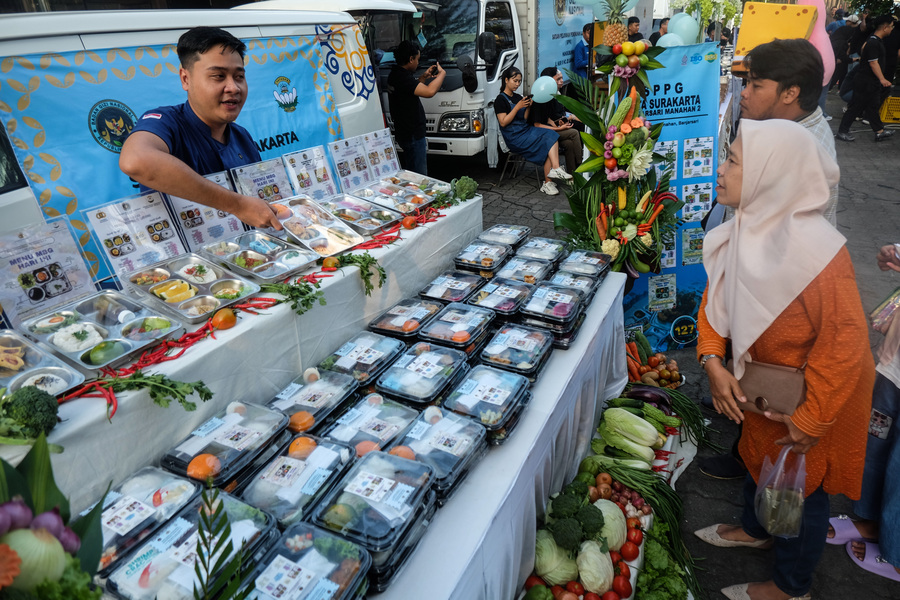
The government is currently drafting a special scheme for the implementation of the Free Nutritious Meals (MBG) programme in underdeveloped, frontier, and outermost (3T) regions. This step is being prepared to ensure the nutritional fulfilment programme can still reach communities in areas with challenging geographical conditions and different population densities compared to urban areas. Head of the Government Communication Body (Bakom RI), Muhammad Qodari, stated that the National Nutrition Agency (BGN) is designing a specific mechanism to ensure the effective implementation of MBG in 3T regions. “So, indeed, there is a separate scheme for 3T regions,” Qodari said in a statement received in Jakarta on Friday (26/6). According to Qodari, the policy aligns with the government’s move to refocus the MBG Programme. Currently, the priority beneficiaries are directed towards pregnant women, breastfeeding mothers, toddlers (3B), and communities living in 3T areas. The implementation of the Free Nutritious Meals programme in 3T regions faces different challenges compared to other areas. The main factors of concern are the difficult-to-reach geographical conditions and the relatively small population. Under the current scheme, one Nutrition Fulfilment Service Unit (SPPG) serves around 2,000 to 2,500 beneficiaries. This model is considered more suitable for application in areas with denser populations. Conversely, applying the conventional scheme in 3T regions is deemed less effective due to the limited number of beneficiaries. Furthermore, if food distribution is carried out from an SPPG located outside the 3T area, the delivery time could potentially exceed the set limit. Based on the technical guidelines for MBG implementation, each SPPG is only permitted to serve beneficiaries within a maximum radius of six kilometres with a maximum travel time of 30 minutes. “But in 3T areas, with very small populations, it indeed may not be possible to force the conventional SPPG model,” Qodari said. To overcome these challenges, the government is still finalising the most suitable MBG distribution mechanism for communities in 3T regions. One alternative being considered is utilising school canteens as service centres for the Free Nutritious Meals programme. However, the government is also preparing other, more flexible options because not all schools in 3T areas have canteen facilities due to infrastructure limitations. With this approach, the government hopes that the distribution of nutritious food can still reach all target beneficiaries without ignoring conditions on the ground. Qodari emphasised that the government remains committed to running the Free Nutritious Meals programme in 3T regions. The programme is considered to have a strategic role in reducing stunting rates, improving children’s nutritional status, and supporting the improvement of the quality of Indonesia’s human resources in the future. “The programme is very good for tackling the problem of stunting, for improving the health quality of our children, and also for increasing IQ so that our PISA scores, our mathematics scores, are not inferior to other countries. The challenge, of course, is how to ensure this programme can truly provide maximum benefits,” he said. PISA scores refer to the assessment results from the Programme for International Student Assessment (PISA), an international study organised by the Organisation for Economic Co-operation and Development (OECD) every three years. This assessment measures the ability of 15-year-old students to apply knowledge and skills to real-world situations, rather than merely memorising subject matter. The three main aspects assessed are reading literacy, mathematical literacy, and scientific literacy.