
Government Prepares Implementation of Vape Regulations
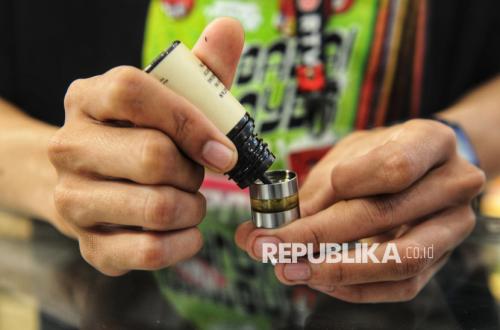
The Ministry of Health is preparing the implementation of regulations on electronic cigarettes or vapes as stipulated in Government Regulation No. 28 of 2024. The Head of the Bureau of Communication and Public Services of the Ministry of Health of the Republic of Indonesia, Aji Muhawarman, stated that the regulation governs the control of electronic cigarettes with provisions equivalent to conventional cigarettes.
“The regulation of electronic cigarettes in Government Regulation No. 28 of 2024 covers age restrictions, advertising controls, and product content standards,” said Aji in a written statement, quoted on Thursday (16/4/2026).
According to him, the regulation prohibits the use of electronic cigarettes for residents under 21 years of age and limits advertising, including on social media. In addition, vape products are required to meet maximum nicotine content standards and are not permitted to use additives that have a negative impact on health.
He added that the regulation also mandates the inclusion of pictorial health warnings and prohibits the use of electronic cigarettes in Smoke-Free Zones. Aji explained that the implementation of the regulation is planned to begin in July 2026, so the government is currently in the preparation stage.
In line with that, the Ministry of Health is preparing derivative regulations in the form of ministerial regulations and ministerial decisions as guidelines for control. “We are also conducting socialisation and education regarding the health impacts of electronic cigarettes together with health organisations and professional organisations,” said Aji.
On the other hand, Professor at the Department of Pulmonology and Respiratory Medicine, Faculty of Medicine, University of Indonesia, Prof Dr Faisal Yunus, PhD, Sp P(K), assesses that strengthening regulations is still necessary to protect public health, especially among adolescents. According to him, several aspects still need attention, including the ease of access to vape products, attractive flavours, and marketing targeting young people.
“Regulations still need to be strengthened to suppress usage rates and protect vulnerable populations,” he said. He added that several countries have begun implementing stricter policies, such as banning single-use products, limiting the use of flavouring substances, and controlling advertising.
According to him, these steps demonstrate global awareness that vapes can pose new risks if widely used by adolescents.