
Government Prepares Ethanol Mandate to Begin in 2027
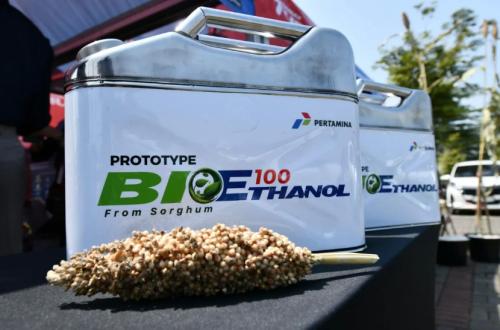
REPUBLIKA.CO.ID, JAKARTA – Minister of Energy and Mineral Resources (ESDM) Bahlil Lahadalia has said the government is preparing a mandatory ethanol programme targeted to take effect from 2027. The programme will be the next step following the implementation of the B50 Biodiesel Mandatory Programme.
Bahlil said ethanol development is a direct instruction from President Prabowo Subianto as part of efforts to strengthen national energy self-sufficiency through the use of domestic raw materials. In the initial phase, the government is targeting an ethanol blend of 10 to 20 percent in petrol.
“Beyond that, we reported that with the success of B50, we want to replicate it for petrol, namely ethanol. On the President’s instruction, we must proceed with ethanol, so the mandate will be implemented in 2027, with the first phase at 10 to 20 percent,” the Energy and Mineral Resources Minister said while delivering a report to President Prabowo Subianto at the launch of the B50 Biodiesel Mandatory Programme at the Rest Area KM 57, Karawang, West Java, quoted on Friday (10/7/2026).
According to Bahlil, ethanol development will make use of domestic agricultural commodities such as sugarcane, cassava and maize. Its management will involve Danantara, Pertamina and private business players so that the supply chain and investment can run in an integrated manner.
“So sugarcane, cassava, then maize, and these will be managed together by Danantara, Pertamina and other private parties,” he said.
President Prabowo Subianto has just officially launched the B50 Biodiesel Mandatory Programme, which requires a 50 percent blend of biodiesel in diesel fuel. The policy is part of the government’s strategic agenda to reduce dependence on fuel imports, strengthen the added value of national natural resources, and safeguard Indonesia’s economic and energy resilience.
The implementation of B50 is also projected to deliver significant economic and environmental benefits. The programme is estimated to increase foreign exchange savings from Rp133.3 trillion under B40 to around Rp170 trillion in 2026. In addition, the added value of the crude palm oil (CPO) industry is expected to rise to around Rp23.49 trillion, absorb around 2.1 million workers, and reduce greenhouse gas emissions by up to around 44.46 million tonnes of CO2.
The government has assured that the implementation of B50 is supported by technical readiness, supply, distribution and regulation. Before being applied nationally, B50 underwent testing across six sectors using diesel engines: automotive, agricultural tools and machinery, mining heavy equipment, maritime transport, power generation and railways. Interim results indicate that B50 is safe to use and meets performance and compatibility requirements across various diesel engine applications.