
Government prepares distribution of superior varieties to boost plantation downstreaming
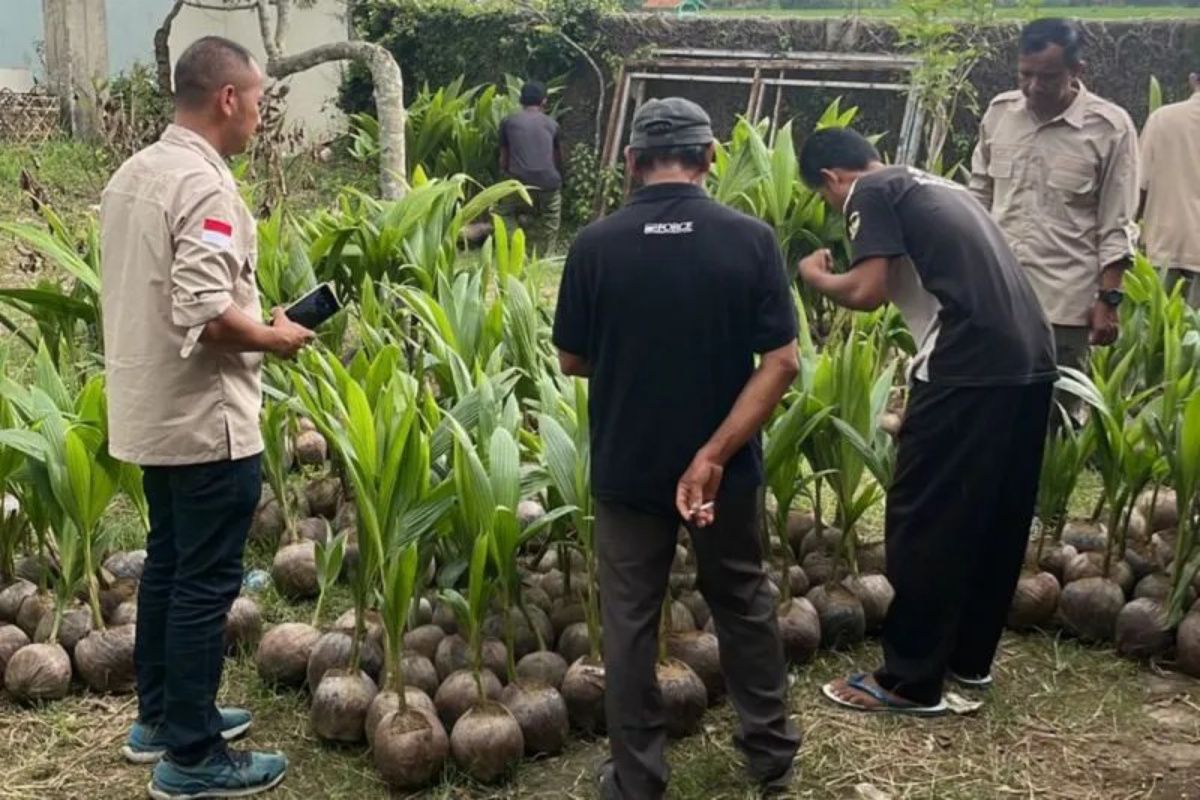
The government has prepared superior seed varieties ready for distribution for commodities including coffee, cocoa, coconut, nutmeg, cashew, and pepper, totaling approximately 200 million stems, alongside 5.8 billion sugarcane buds, to drive the downstreaming of the plantation sector.
The Chairman of the Indonesian Plantation and Forestry Seed Producers Association, Masrizal Batubara, stated that this seed provision aims to support the development and improvement of smallholder plantations covering 870,000 hectares. “In the downstreaming programme, seed source owners have distributed the best seeds available currently,” he said in a statement in Jakarta on Tuesday.
He continued that the programme involves more than just seed distribution; it will also include introduction, education, and the dissemination of premium-quality superior seeds that have previously been difficult for the public to access. According to Masrizal, several varieties ready for distribution for dwarf coconuts include Pandan Manis, Pandan Wangi, Entok, Kopyor, Red Bali, and Yellow Bali, which can be harvested at just 2.5 years of age. These superior varieties have historically been difficult to obtain and relatively expensive, with Pandan Wangi, Pandan Manis, and Kopyor costing between Rp20,000 and Rp35,000 per nut.
Furthermore, the Entok dwarf coconut features a nut size similar to deep-growing coconuts and is suitable for supporting the processing industry, while the Red and Yellow Bali coconuts are known for producing sap and oil with high lauric acid content, making them ideal raw materials for Virgin Coconut Oil (VCO). For cocoa, millions of superior seedlings are available, such as MCC 01, Sulawesi 1, and Sulawesi 2, which have a production potential of up to 2 tons per hectare per year and are disease-resistant, while MCC 02 features a bean count of up to 60, which is highly favoured by factories.
He added that for coffee, varieties such as Hibero 1, 2, and 3, as well as Sintaro, are available, with a production potential of 2.8 tons per hectare per year and a cupping score of 85, categorised as fine Robusta. For Arabica, varieties like Komasti and Andungsari offer production potentials exceeding 1.5 tons per hectare per year and possess special flavours when processed correctly. For sugarcane, varieties such as Panjalu, AAS Agribun, and the new NX 04T are available, with production potentials exceeding 1,500 quintals per hectare, a yield of over 8 per cent, and resistance to drought and fire damage.
Agus Nirmala, an official from the Indonesian Plantation Plant Seed Breeder Association, noted that these seeds are available and will be distributed from June until December 2026. “The public can access them free of charge by following the applicable regulations,” he said. He stated that the seedlings are certified by the Seed Supervision and Certification Office in each province to guarantee quality before distribution.
He expressed hope that this downstreaming programme would encourage the adoption of new superior varieties to replace older, less adaptive types, ultimately increasing production and harvests for smallholder plantations to support industrial growth and improve farmer welfare. Previously, Minister of Agriculture Amran Sulaiman emphasised that accelerating seed provision is a strategic step to boost production, farmer prosperity, and the resilience of the national plantation sector. “We want to ensure farmers can access superior seeds easily, quickly, and affordably,” he said. The Minister added that the government is undertaking deregulation to remove barriers, accelerate services, and create space for innovation. The Ministry of Agriculture continues to strengthen strategic steps to promote the downstreaming of five priority plantation commodities—coconut, cocoa, sugarcane, coffee, and cashew—alongside pepper and nutmeg, as part of the 2025–2027 national development agenda.