
Government Plans to Pay BPJS Contributions for 188 Million People: How the Scheme Would Work
Jakarta, CNBC Indonesia — The government is preparing a new financing scheme for BPJS Health contributions for people in socioeconomic deciles 1 to 8. Under the proposal, the cost of contributions for recipients of Health Insurance Contribution Assistance (PBI-JK) would be shared by the central government, provincial governments and regency and city administrations.
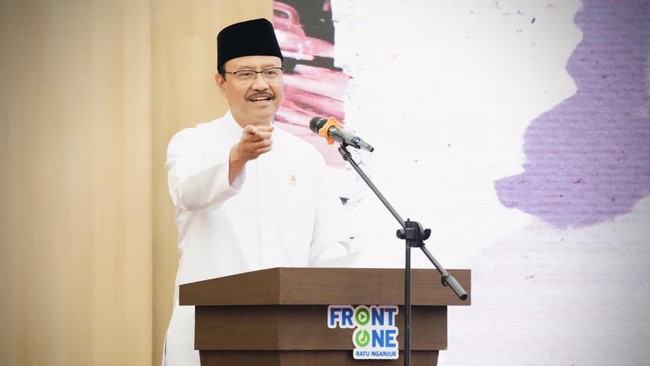
Social Affairs Minister Saifullah Yusuf, also known as Gus Ipul, said the central government would cover contributions for people in deciles 1–4 through the state budget (APBN). Contributions for people in deciles 5–6 would be covered by regency and city administrations through their regional budgets (APBD), while those for deciles 7–8 would be the responsibility of provincial governments.
Gus Ipul stressed, however, that the scheme was still only a simulation and had not become final policy.
“I should make clear from the outset that what we are presenting is still at the simulation and discussion stage. We are continuing to examine it, and there are several possible schemes, one of which is this,” Gus Ipul said at a press conference at the Social Affairs Ministry’s office in Jakarta on Tuesday (3 November 2026).
The simulation assumes a health insurance contribution of Rp42,000 per person per month.
On that basis, financing for people in deciles 1–4 is estimated at Rp52.49 trillion a year, covering 104.15 million beneficiaries. The central government would meet the full cost through the APBN.
Financing for people in deciles 5–6 is estimated at Rp23.22 trillion a year, covering 46.06 million beneficiaries. This cost would be borne by regency and city administrations.
People in deciles 7–8 are projected to require Rp19.07 trillion a year in funding for 37.84 million beneficiaries, to be covered by provincial governments.
“In total, deciles 1–8 account for 188.05 million people, requiring Rp94.78 trillion. The split is approximately 55% from the APBN, 25% from regencies and cities, and 20% from provinces,” Gus Ipul said.
Aim to protect 188 million people
Gus Ipul said the simulation had been drawn up with the Health Ministry and BPJS Health, following President Prabowo Subianto’s direction to ensure that those most in need receive social protection based on accurate data.
The proposed expansion of PBI-JK financing has three main aims. First, to extend health insurance protection so that people in deciles 1–8 are covered by the National Health Insurance (JKN) programme, including vulnerable groups at risk of falling into poverty because of medical costs.
Second, it would distribute financing responsibilities more fairly between central and regional governments according to socioeconomic decile. Third, it aims to ensure the programme is better targeted and sustainable by using the continually updated National Single Socioeconomic Data (DTSEN).
According to the Social Affairs Ministry’s mapping, 223.4 million people fall within deciles 1–8. Of these, around 188 million, or 84%, are projected to be eligible for proposed government-paid contributions.
The remaining 35.3 million people already have health insurance through their employers or are registered as independent Class I or II members.
Gus Ipul emphasised that not everyone in deciles 1–8 would automatically receive government assistance with their contributions, as some are employed and have their BPJS Health contributions paid by their employers.
“Not everyone will be included. Some are already working and their contributions are paid by their respective companies because they are wage earners,” he said.
He said he hoped the cost-sharing arrangement would clarify the responsibilities of central and regional governments and prevent overlap or disputes over who is responsible for ensuring PBI membership.
Under the proposed scheme, people whose classification changes to deciles 6–8 following data updates are still expected to receive JKN protection. Those in deciles 9–10 are expected to continue paying their contributions independently.
At present, around 156.8 million people, or 55% of the population, receive government assistance with health insurance contributions. This coverage includes PBI members, non-wage earners (PBPU) registered by regional governments, and independent Class III PBPU members.
Through the new simulation, the government aims to extend health protection while reorganising the division of financing between the APBN and regional budgets.
Source: jawawa.id (https://jawawa.id/newsitem/government-plans-to-pay-bpjs-contributions-for-188-million-people-how-the-scheme-would-work-1793847071)
Originally published by CNBC Indonesia (https://www.cnbcindonesia.com/news/20261105070755-4-782450/iuran-bpjs-188-juta-warga-mau-dibayari-pemerintah-ini-skemanya), translated from Indonesian